Choosing the right tires for a plug-in hybrid vehicle
The popularity of electric vehicles continues to rise, accounting for approximately seven percent in 20231 of all auto sales in the US. Meanwhile, potential EV owners have more to choose from as automakers continue to release new models with longer ranges and better performance.
Consumers also have more choices in the type of electric vehicle, namely whether to go full EV or opt for a plug-in hybrid vehicle (PHEV). Plug-in hybrids can fully run on electric battery power but are also equipped with a gas-powered internal combustion engine (ICE) that switches on when the battery is almost depleted.
For many drivers making the switch to a more fuel-efficient form of transportation, plug-in hybrids may be the perfect solution in reducing their use of fossil fuels while avoiding the onset of range anxiety. That’s the situation EV owners sometimes face when their car’s battery is low and the nearest charging option is far away.
Plug-in hybrids are also powered by both rechargeable batteries and regenerative braking, a step up from traditional hybrids, which are only equipped with regenerative braking and require gasoline to operate. Plug-in hybrid electric vehicles (PHEVs), on the other hand, are equipped with a plug for charging from the grid, and theoretically would never need a drop of gas to run, especially if they are only used close to home for shorter trips.
So, are plug-in hybrids closer to regular gas-powered cars and does that mean they can be treated like a regular car? Some aspects are the same, and like an ICE vehicle, plug-in hybrids need oil changes and other typical conventional car maintenance. However, they also share many of the special traits unique to electric cars, particularly a heavier weight, quieter operation and instant torque. This unique profile makes a big difference in the tires you choose for a plug-in hybrid electric vehicle.
Let’s take a closer look at what tires work best for a plug-in hybrid. Is it possible to use standard tires on a PHEV and what is the potential impact on performance and safety? Or is it better to choose special EV-specific tires for a plug-in hybrid? And if so, what does an EV owner need to look for to get the best handling, range and wear from a set of replacement tires for a plug-in hybrid?
EV ready tires for plug-in hybrids can make a difference
The biggest issue that sets plug-in hybrids apart from their fully gas-powered relatives is their heavier weight. Electric vehicles are known to be significantly heavier on average compared to conventional cars because of the battery.
PHEVs are also heavier vehicles, equipped with a battery as well as an engine, fuel tank and exhaust system. All that additional weight stresses the vehicle tires, so they need to be engineered and made with the right compounds and rubber to wear well over time.
Then there’s the instant torque, the way an EV or PHEV can so quickly accelerate. As fun as that is, this 0-to-60-seconds ability of an electric car is also harder on tires.
PHEVs can be quieter than a conventional car with a combustible engine, which means tire noise in the cabin can become an issue if the tires haven’t been designed to deliver a quiet ride.
Regenerative braking, an electric vehicle's ability to recharge its batteries using braking power, can also impact tires on a PHEV. During this process, kinetic energy that may be otherwise lost is converted into electric energy and returned to the battery.
As ingenious and revolutionary as regenerative braking is, it can lead to tires wearing faster. And since it is a key technology in plug-in hybrids, choosing special tires that can withstand the extra stress of regenerative braking is key.
Finally, there is the issue of range, the other concern a PHEV owner needs to think about when choosing tires for electric vehicles. People looking for EV-specific tires must know that Michelin tires are designed to keep rolling resistance to a minimum, basically the force-resisting motion when a tire rolls on a surface.
The lower the rolling resistance, the less power your battery needs to supply to move your car forward and the farther you can get on just battery power. Battery range for plug-in hybrid cars is usually much lower than a fully electrified vehicle because PHEV owners mostly use battery power to cover shorter distances and gasoline for longer trips.
However, low rolling resistance tires can also improve the range of PHEVs when gas is being used, resulting in improved MPGs. If you want to get the most range from your PHEV, whether running strictly on electricity or powered by the battery, low rolling resistance will get them farther.
So, when it comes to whether plug-in hybrids need special tires, the short answer is they do better if they are rolling with tires built to stand up to the greater weight and demands of a PHEV, as is generally the case for all electric vehicles.
Best tires for hybrid plug-ins
What are some of the options to consider when choosing special tires for a plug-in hybrid? Michelin’s decades of experience in tire engineering and optimal performance have uniquely positioned it for the advent of electric vehicles and the demands they place on tires.
Michelin has long been at the forefront of finding solutions to reduce tire wear, limit tire noise and keep rolling resistance to a minimum —all the very traits a good tire needs to handle the extra heft and instant torque of an electric vehicle or PHEV.
The Michelin Defender 2 tire is an excellent choice for PHEV owners focused on tire wear and long tread life. The tough durability of the Evertread™ tire compound, along with state-of-the-art tire design and construction, gives the Defender 2 tire 2 years of additional tread life compared to EV competitors.1
The Michelin Primacy MXM4 tire is another good choice for PHEVs, boasting low rolling resistance and enhanced range, up to seven percent more compared to the competition.2
What tires you put on your plug-in hybrid always has to do with your driving habits, your priorities, and also the climate you live in. If you do a lot of long highway driving, then you should look closely at the durability of a PHEV tire and potential tire wear. If you want a quiet, comfortable ride, you might consider the Michelin Primacy tire family.
These tires have been designed with an ultra-quiet tread design, but still deliver great performance handling and wear. And for PHEV owners living in winter climates, the Michelin X-Ice Snow tire is a great option for ensuring peace of mind and enhanced winter traction.
Plug-in hybrid tire maintenance
No matter what you choose as tires for a plug-in hybrid, there are a number of things you can do to optimize their performance and limit tire wear. Keeping your tires properly inflated is one of the easiest and most important ways to keep your electric vehicle tires in top shape.
Tires lose about 1.5 psi of air every month. Over time, this can result in hazardous road handling conditions and tires over heating at higher speeds. Additionally, it can affect the range of your PHEV. Making sure your tires are inflated to their correct pressure decreases rolling resistance to get you farther on a single charge. It also extends the lifespan of vehicle tires, whose treads wear down more quickly if they are rolling on too little air.
Another maintenance routine for preventing early tire wear and enhancing range on your plug-in hybrid car is tire rotation. This is sometimes even more important on PHEVs, many of which rely on regenerative braking in either the front wheels (FWD) or the rear wheels (RWD). Even if your electric car is all-wheel drive (AWD), it is recommended to rotate tires every 6,000 to 8,000 miles or at the first sign of uneven wear.
And finally, how the treads of your hybrid plug-in tires look is another important way to maintain them. The tire tread is the part of the tire that grips the road when you drive. If the tread looks worn down, your PHEV is likely losing traction, will need a longer time to brake, and it might even make be more difficult to control in inclement weather.
Visually inspecting the tread of your PHEV tires is a simple way to give you peace of mind and stay on top of when you’ll next need replacement tires for your electric car. Michelin tires have treadwear indicator bars at 2/32 of an inch of remaining tread, which is considered the minimum tread depth generally recognized as safe to drive.
You can also conduct a visual inspection with what is known as the penny test. Simply insert a U.S. penny in the tread groove with Lincoln’s head facing downward. If you can see the top of Lincoln’s head, that means it is time to replace your tires. Make sure to check tread depth with the penny test across the whole width of the tire in case of uneven tire wear.
For more facts and information about tires for electric cars, visit our FAQ page or our EV Tires page with links to in-depth articles about tires and EVs. Use the Tire Selector module here below to start shopping for the right tire for your vehicle or visit the Shop EV Tires page for an overview of Michelin’s EV-Ready tires.


Find tire dealers near you in seconds
Search among our dealers to find where your tire is available
FAQ
Read our Frequently Asked Questions.
PHEVs share characteristics of both electric and combustion vehicles. They're heavier than equivalent combustion cars due to their battery packs, though typically lighter than full EVs. The same principles apply: check the door jamb sticker for the required load index, and if the vehicle specifies XL or HL tires, replacements must meet that designation. PHEVs also benefit from low rolling resistance tires, both for electric-only range and for improved fuel efficiency when running on gasoline.
A PHEV switches between electric-only and combustion modes depending on speed, load, and battery state. In electric-only mode, the full torque is delivered from the motor; in combustion mode, the engine characteristics are different. This variable power delivery means tires experience a broader range of load and torque conditions across a typical journey than a dedicated EV would. The weight of the battery still means tire wear is accelerated compared to a non-electrified vehicle of the same size.
Yes. In electric-only mode, rolling resistance directly draws from the battery — the same relationship as a full EV. A low-rolling-resistance tire extends electric range. The effect is proportionally larger on a PHEV because the electric-only range is typically shorter — the battery is smaller — so a given reduction in rolling resistance represents a more meaningful percentage of available electric range.
Likely yes, though not to the same degree as full EVs. The battery weight and electric motor torque delivery mean PHEV tires wear faster than tires on equivalent combustion vehicles. Rotating on the shorter end of the recommended interval range, and inspecting frequently, helps maintain even wear across the set. Check your vehicle manufacturer's recommendation, and adjust if you notice uneven wear developing before the scheduled interval.
Low rolling resistance (for both electric range and fuel efficiency in combustion mode), appropriate load capacity (XL if specified), adequate tread life (PHEVs wear tires faster than combustion equivalents), and quiet operation. The same tire qualities that work well for a full EV are appropriate for a PHEV — the emphasis shifts slightly toward tread life since PHEVs may be driven more intensively than city-focused full EVs.
The seasonal tire decision for a PHEV is the same as for any vehicle — it depends on climate. In cold climates with genuine winters (temperatures consistently below 45°F, ice, snow), winter tires are appropriate and provide the same safety benefit for a PHEV as for any other vehicle. In mild climates, all-season or all-weather tires can work year-round. The fact that the vehicle is a PHEV doesn't change the fundamental climate-based calculation.
Legal Notices
1 Based on U.S. Department of Transportation Average Annual Miles per driver (13,500 miles) and Desrosiers
Automotive Consultants estimate of annual average kilometers driven in Canada (23,000 km), and on a treadwear test
using tires in size 235/45R18 on Tesla Model 3 Standard Range RWDs where the Michelin Defender 2 showed an estimated life (based on calculating the most-worn groove of a rotated set) of 72,301 miles versus the Goodyear ElectricDrive GT tire at 38,610 miles and the Pirelli P ZERO ALL SEASON Plus ELECT tire at 43,478 miles. Actual on-road results may vary.
2 Based on internal rolling resistance testing using the standard ISO 28580 method in tire size 235/45R18 XL comparing the Michelin Primacy MXM4 T1 tire (6.59 kg/ton) versus the Goodyear ElectricDrive GT tire (8.94 kg/ton) and Pirelli P ZERO ALL SEASON Plus ELECT tire (8.28 kg/ton). Considering a 2022 Tesla Model 3 RWD fitted with size 235/45R18 tires, a battery capacity of 57.5kWh, and an autonomy of 438km (272mi), under the Worldwide Harmonized Light Vehicles Test Procedure (WLTP) test conditions, this gap of 2.35 kg/ton (for Goodyear) and 1.69 kg/ton (for Pirelli) equates to a gain of autonomy of more than 8% of the initial range. Actual on-road results may vary. Third-party trademarks owned by Goodyear and Pirelli.
Related articles
-
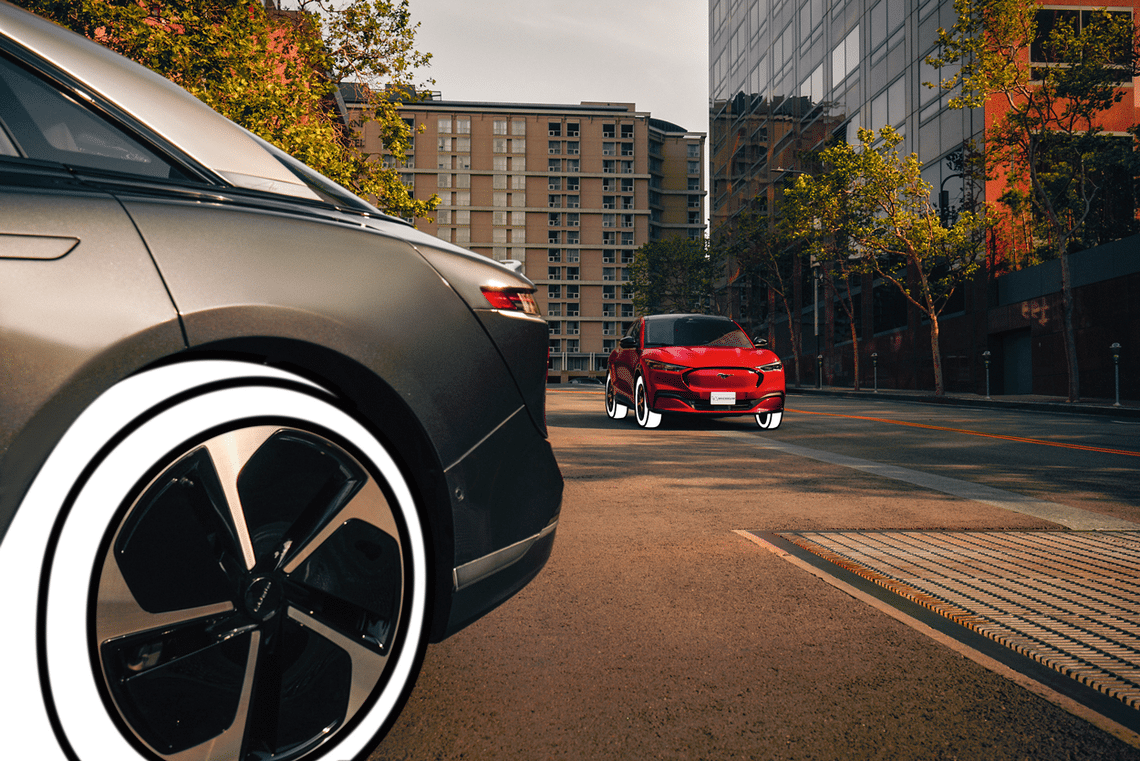
Understanding EV Tires
EV tires are not standard tires with a badge. They are engineered for three specific challenges: the added weight of battery packs (which may require XL or HL load ratings not needed on equivalent combustion vehicles), the tread wear caused by instant electric torque delivery during acceleration, and the cabin noise that becomes prominent when engine sound is absent. This page explains each challenge and what to look for when choosing a replacement tire for your EV.View more -
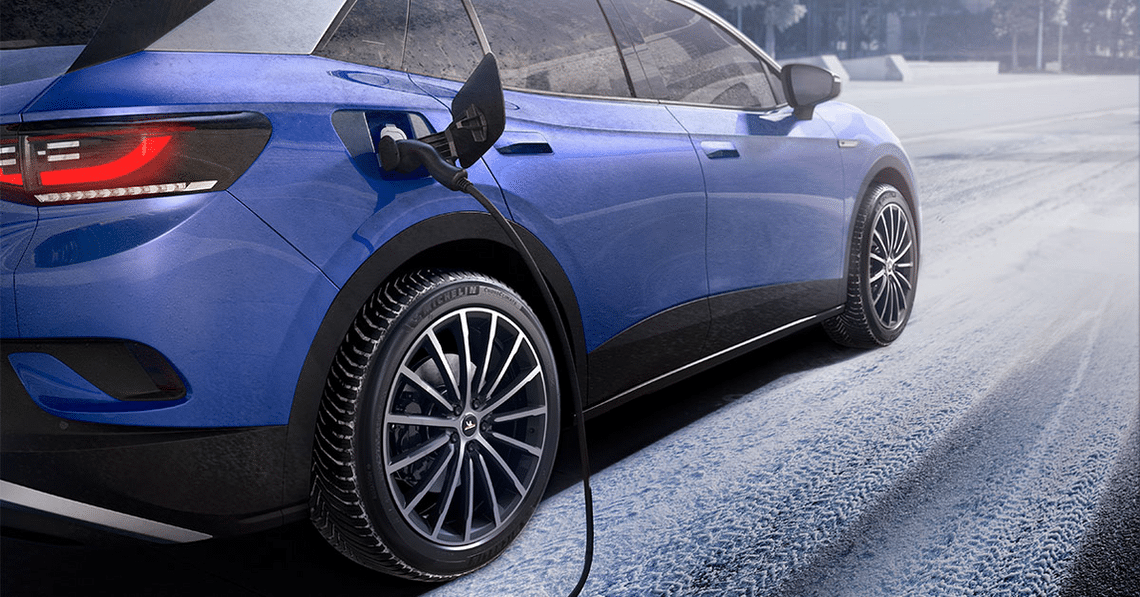
Winter Tire Guide for Hybrid and Electric Cars
Your EV or hybrid brakes on ice the same way any vehicle brakes on the same tires: the drivetrain does not help stopping. Because EVs are heavier than comparable combustion vehicles, their stopping distances on slippery surfaces are longer. Winter tires developed specifically for electric vehicles address this through cold-weather compounds for grip, combined with low-rolling-resistance construction to protect the battery range you are already managing carefully in cold temperatures.View more -

EV Winter Driving With Carl Nadeau
Professional driver Carl Nadeau explains three critical differences for EV drivers in winter: battery weight extends braking distances beyond a comparable combustion vehicle on the same tires; instant torque makes abrupt acceleration far more likely to cause wheelspin on slippery surfaces; and aggressive regenerative braking can cause rear wheel instability on ice. His specific guidance on pressure management, smooth throttle technique, and cold-weather range expectations applies uniquely to electric vehicles.View more -
What are High Load capacity tires?
If your EV came from the factory with tires marked HL on the sidewall, every replacement must also be HL-rated. HL (High Load) tires are engineered to carry more weight than XL tires at the same inflation pressure, developed specifically because some EV battery packs push vehicle weight beyond what existing tire standards covered. Fitting a standard or XL tire where HL is specified means operating the tire beyond its safe load capacity.View more -
Car noise: are electric cars quieter than gas cars?
Your EV removes engine noise but adds nothing to replace it. Tire noise, which you barely notice in a combustion vehicle, becomes the primary sound in the cabin at most speeds. Two sources dominate: tread pattern resonance (sound from air moving through the grooves) and cavity resonance (a low-frequency hum from air vibrating inside the tire itself). Acoustic foam bonded to the inside of the tire is the most effective solution specifically for cavity resonance, the type EV drivers notice most.View more -
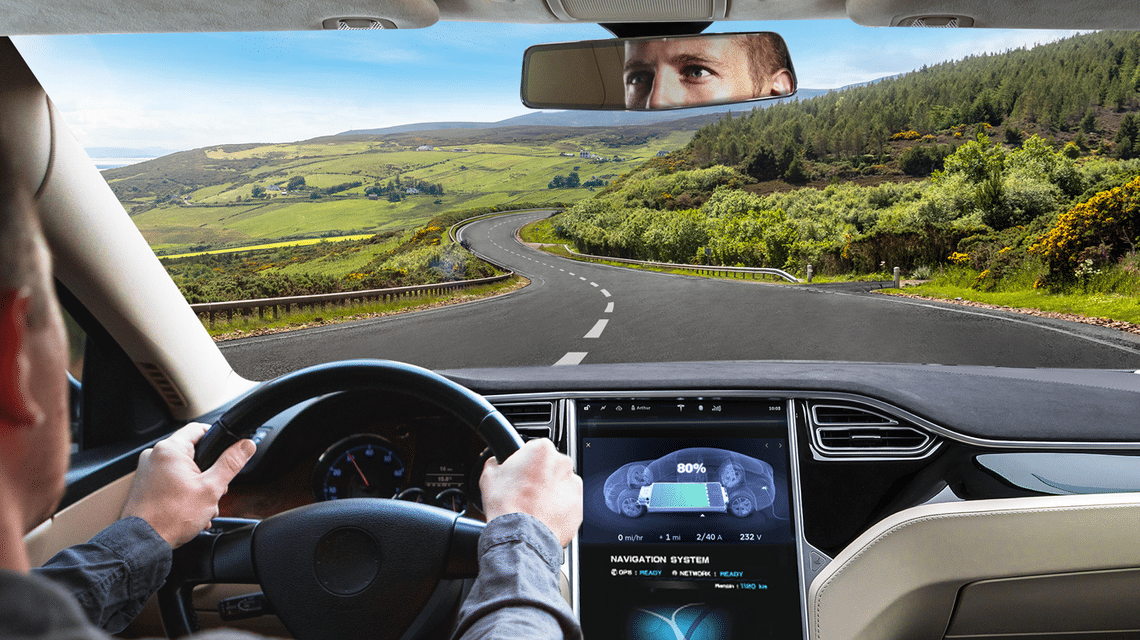
How tires impact your electric vehicle’s range
Every PSI below your vehicle's recommended tire pressure increases rolling resistance, which pulls more energy from the battery and reduces your range. This is one of the most direct and controllable factors in real-world EV efficiency. Tires with low-rolling-resistance compounds extend range further. Keeping tires at correct pressure and rotating regularly to maintain even wear are the two tire habits with the greatest consistent impact on how far your EV travels on each charge.View more -
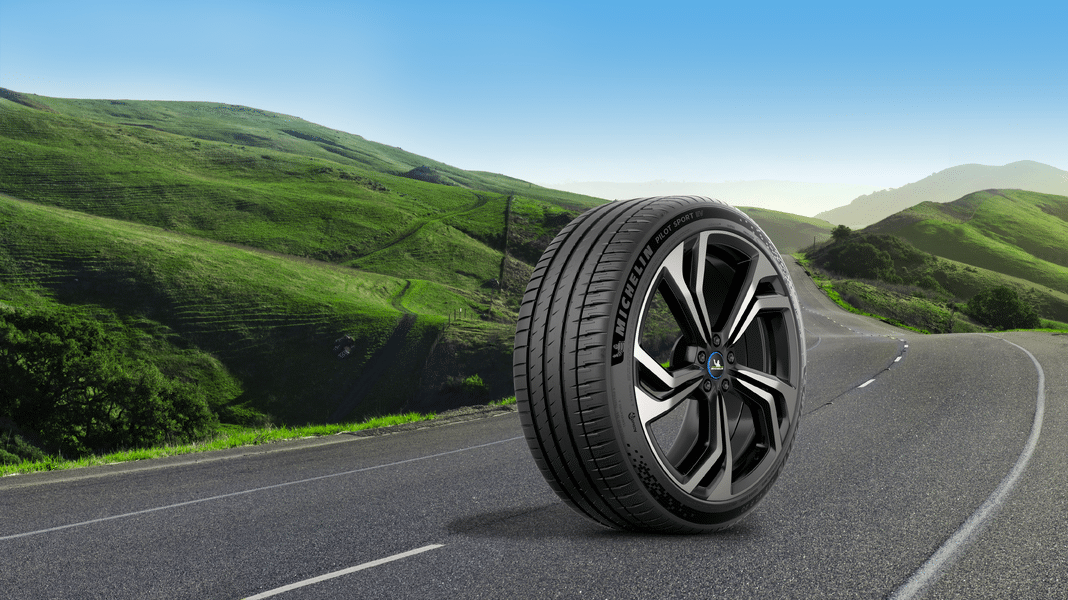
How to Reduce Tire Wear
EVs wear tires faster than comparable combustion vehicles for two specific reasons: battery weight increases the load on every tire with every mile, and instant torque delivery puts higher torsional stress on the driven tires during acceleration. Rotating tires more frequently than the standard interval, maintaining correct pressure, using smooth progressive throttle inputs rather than hard launches, and choosing tires with compounds developed for EV use all reduce wear rate in measurable ways.View more -
EV Tire Pressure and Maintenance
Do not rely on TPMS to manage your EV's tire pressure. TPMS only alerts when pressure has dropped significantly below the recommended level, not when it has dropped enough to affect range and handling noticeably. Cold weather reduces tire pressure, and underinflated tires on an EV drain the battery faster while accelerating tread wear simultaneously. Check pressure manually at least monthly using the PSI on your door jamb sticker, not the maximum printed on the tire sidewall.View more -
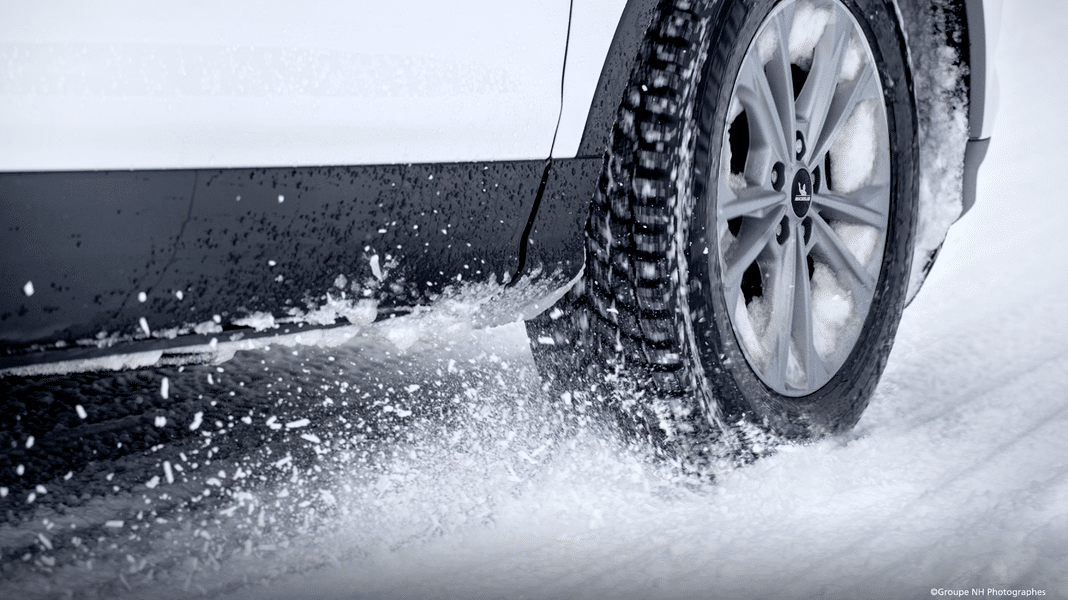
The advantages of using winter tires on an EV
Fit winter tires on your EV when temperatures consistently approach 45 degrees Fahrenheit, the threshold where all-season compounds begin losing grip regardless of whether there is snow or ice present. EV-specific winter tires balance the cold-weather grip of a dedicated winter compound with low-rolling-resistance construction, reducing the range penalty that standard winter tires can introduce. The heavier weight of an EV makes the braking advantage of winter tires proportionally more significant.View more -
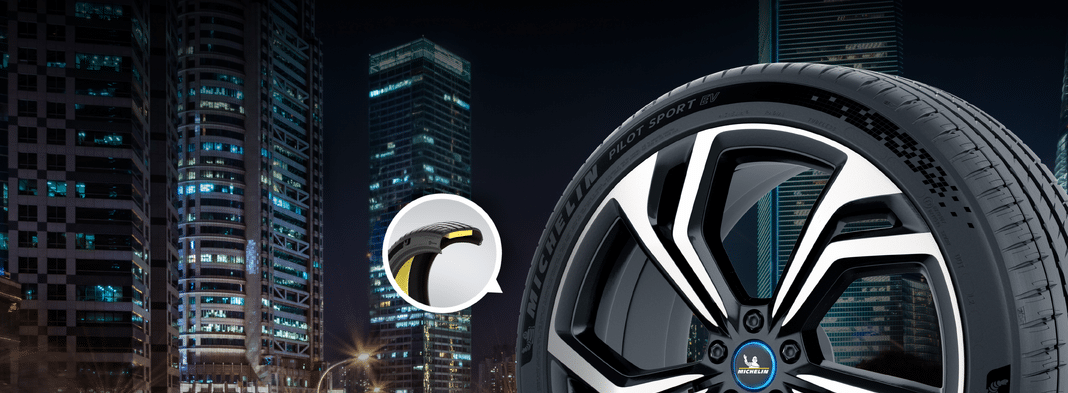
Quiet and Comfortable Ride with EV Tires
The dominant source of tire noise in an EV cabin is cavity resonance: air vibrating inside the tire at a low frequency that transmits through the wheel, axle, and body structure into the cabin. A ring of polyurethane acoustic foam bonded to the inside of the tire absorbs this resonance before it reaches the cabin. Correct inflation also reduces noise: an underinflated tire deforms more, transmits more road vibration, and generates more noise than one correctly inflated.View more -
EV Tire Buying Guide
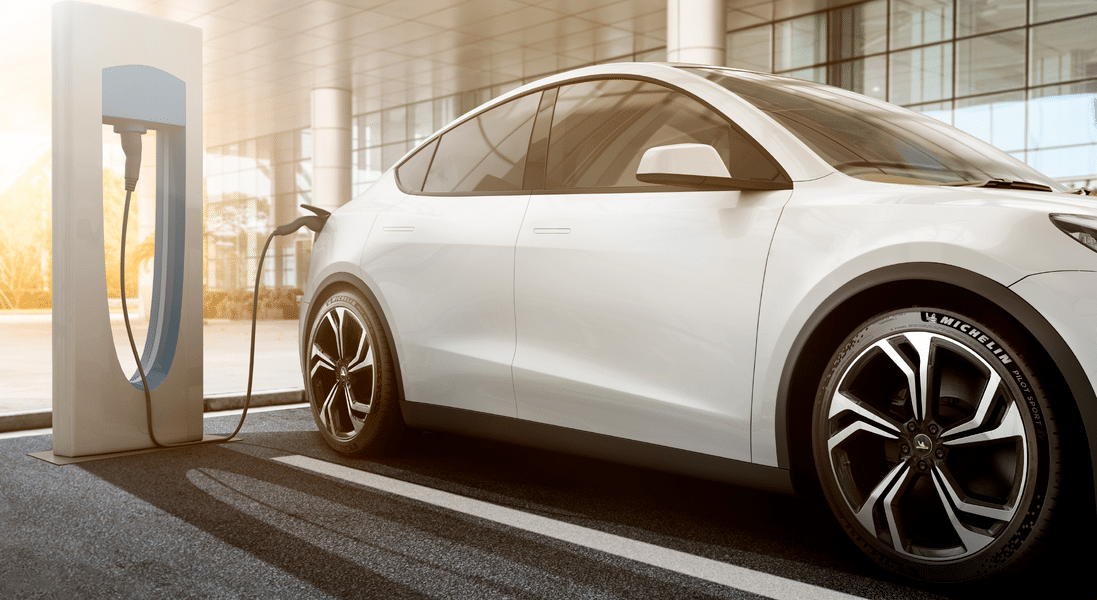
Start with your door jamb sticker. If it specifies XL or HL, any replacement must carry the same designation. From there, choose based on the priorities that matter most for your driving: range (prioritize low rolling resistance), noise reduction (look for acoustic foam or noise-optimized tread design), or tread longevity (prioritize a durable compound developed for EV use). No single tire maximizes all three equally; know which matters most before comparing options.View more -
Optimize your EV with tires rated for a higher load capacity
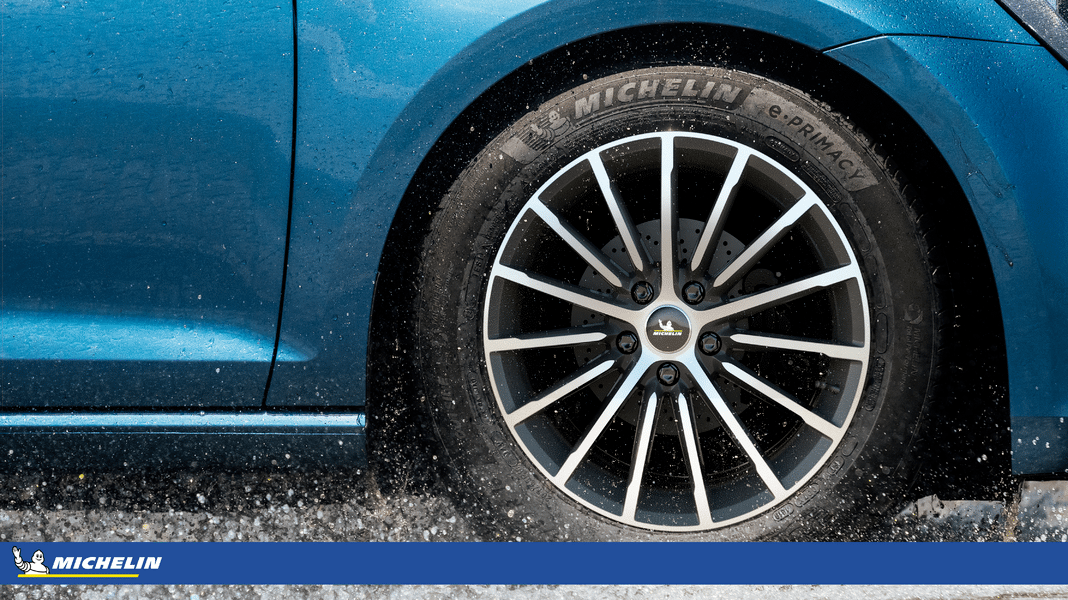
Some EVs require HL (High Load) tires because their battery weight pushes the vehicle beyond what XL tires can safely support at normal inflation pressures. HL tires carry more load at the same pressure through reinforced internal construction. If your vehicle's door jamb sticker or current sidewalls show HL markings, the designation on replacements must match, not just the size. A standard load tire in the correct size does not solve a load capacity requirement.View more -
EV in Various Weather Conditions
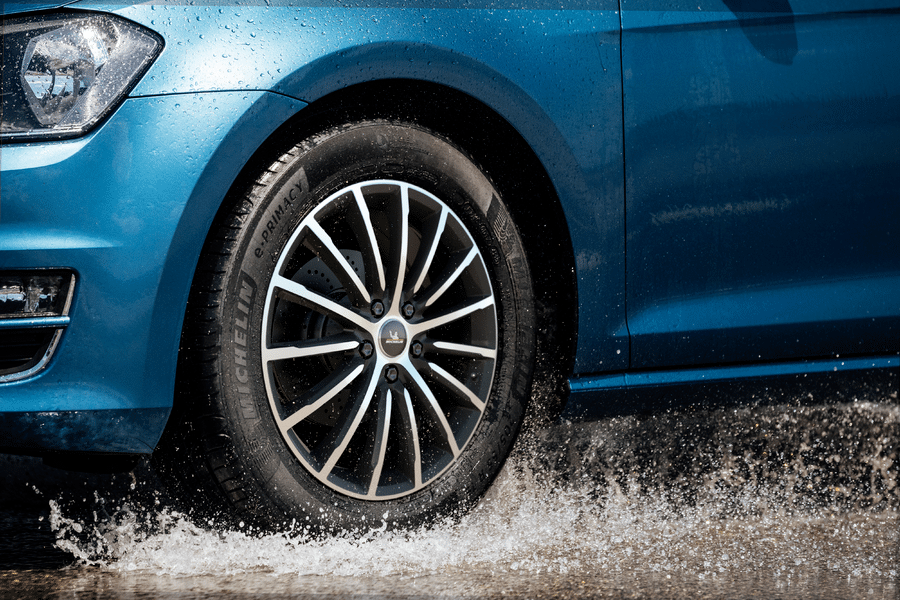
Cold weather reduces your EV's battery capacity and your tire pressure at the same time: two compounding effects that both shorten range and reduce safety margin. Check pressure more frequently in winter and expect shorter range from the battery. Hot weather raises tire pressure; always check cold and never deflate based on a post-drive reading. Rain matters more on a heavier EV because greater vehicle weight extends braking distances, which makes adequate tread depth more critical than on a lighter combustion car.View more