- This hub helps you identify what different types of damage actually look like, what each one means for the tire's safety, and whether the right response is continued monitoring, professional inspection, or immediate replacement.
-

Car Handling Problems
If your car has started steering differently, pulling, vibrating, or responding less precisely than before, check the tires first. A pressure difference between the left and right front tires causes pulling. Significant uneven tread wear changes grip and steering response. Internal damage from a hard impact alters how the tire contacts the road. Start with a pressure check using a gauge; if the problem persists, have the tires and alignment inspected by a professional.View more -

Tire Flat Spotting
If your car vibrates on cold mornings but settles down after a few minutes of driving, your tires are temporarily flat-spotting from sitting overnight. This is normal, particularly in cold weather, and does not indicate a problem with the tires. If the vibration does not resolve with driving, or appeared after a hard braking event that locked the wheels, the flat spot may be more significant and warrants a professional inspection.View more -

Wear Problems
Wear concentrated in the center of the tread means the tire has been chronically overinflated. Wear on both outer edges means chronic underinflation. Wear on one edge only points to an alignment problem. Cupping or scalloping across the tread surface suggests a balance or suspension issue. Each pattern identifies a specific, fixable cause, and addressing the cause before replacing the tire prevents the same pattern from destroying the replacement.View more -

Handling Problems
Describe your handling symptom to Michelin's Inspector Tool and it narrows the likely cause systematically. Speed-specific vibration points to imbalance. A consistent pull after pressure has been equalized points to alignment. A pull that occurs only during braking points to the braking system. The tool asks the diagnostic questions that distinguish between tire issues and mechanical ones, so you can book the right service appointment rather than a general inspection.View more -

Sidewall Problems
Use Michelin's Sidewall Inspector to identify what you are looking at before deciding whether to drive the vehicle. An indentation where cords overlap inside the tire is a normal manufacturing feature and completely harmless. A protrusion or bubble indicates an internal structural failure and means the tire must be replaced immediately. The tool provides a clear, specific recommendation based on your description, including when to pull over without driving further.View more -

Tread Problems
The Tread Inspector module helps you interpret what you see on your tread surface. Center wear confirms chronic overinflation. Edge wear on both sides confirms chronic underinflation. One-sided wear confirms an alignment problem. If you find a nail, the tool will tell you what not to do: do not pull it out yourself. Drive carefully to a professional, have the tire removed from the wheel, and have a proper internal inspection and patch-and-plug repair performed.View more -

Flat and Damage Problems
The Tire Doctor will see you now. If you notice a problem with one of your tires, we can diagnose it here. Which of the following best describes the problem?View more -

What to do with a flat tire?
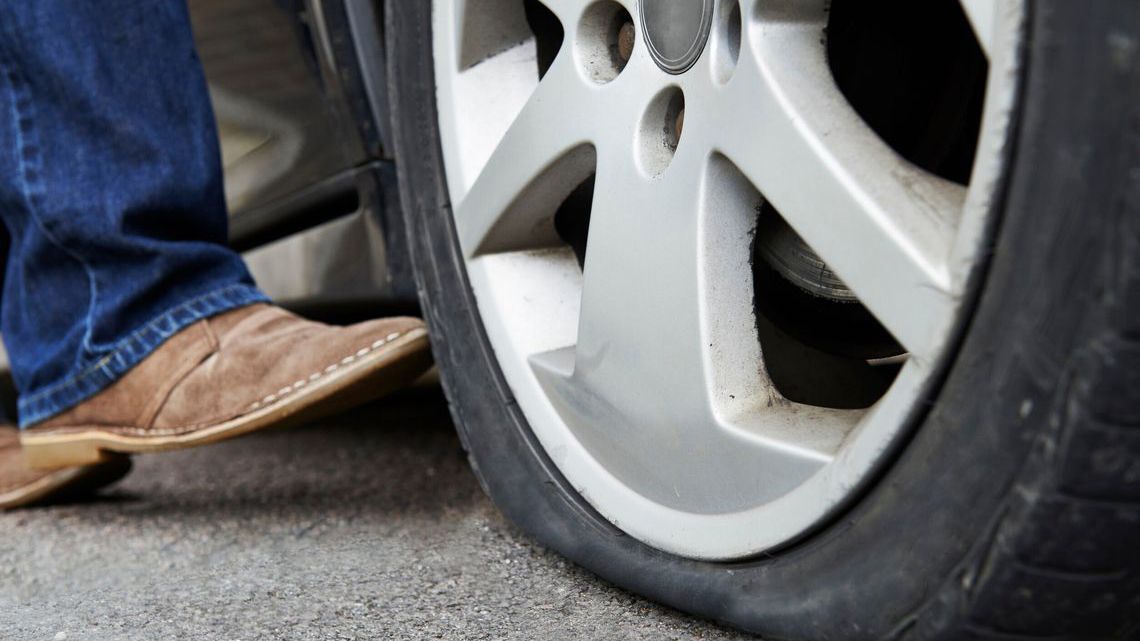
If you have a flat tire, it may be for a number of reasons. Often, inflation pressure loss is a consequence of a tire puncture or tire sidewall damage, but it could also be a leaking valve, valve cap or even the wheel. So what should you do when your tire goes flat? Let's get to the heart of the matter.View more
Related topics
FAQ
Read our Frequently Asked Questions.
Most tire damage develops from one of four sources: insufficient inflation pressure (the most common), physical impacts (potholes, curbs, road debris), age-related rubber degradation, or normal wear past the point where the tire should have been replaced. In each case, the damage often starts as something manageable and progresses to a safety issue if left unaddressed. Regular inspection catches most problems before they reach that point.
Yes. Internal damage — broken cords, belt separation, or carcass damage from an impact — is often invisible from the outside. A tire that looks normal after hitting a pothole may have structural damage that will eventually fail. This is why Michelin recommends having tires professionally inspected after any significant impact, which requires removing the tire from the wheel to examine the inside.
Signs worth acting on immediately:
A visible bulge or bubble on the sidewall
Vibration at speed that wasn't there before
The vehicle pulling consistently to one side
A persistent loss of pressure despite no visible puncture
Unusual road noise, particularly a rhythmic thumping
TPMS warning light activating
Hard acceleration causes rapid tread wear on driven wheels. Hard braking can cause flat spots or accelerated wear on braking surfaces. Hitting potholes or curbs at speed causes impact damage. Driving with incorrect inflation consistently — either too low or too high — causes characteristic wear patterns that shorten tire life. None of these individual events necessarily destroys a tire immediately, but they accumulate and compound.
Take the vehicle to a trained tire professional for inspection. Don't postpone it, and don't assume the symptom will resolve on its own. A vibration, a pull, unusual wear, or pressure loss all indicate something has changed in the tire-vehicle system that needs to be identified. The correct cause can only be determined by a professional inspection — some issues that feel similar (pulling, vibration) have different root causes that require different solutions.
Michelin's Tire Inspector Tool on michelinman.com allows drivers to describe what they're seeing or experiencing — unusual wear, a handling change, sidewall appearance — and receive guidance on what the symptom indicates and what to do next. It covers tread wear patterns, handling behavior, sidewall conditions, and more. It's a starting point for understanding what might be wrong, not a substitute for a physical inspection by a professional.