Bike tire pressure guide
Michelin's pressure guide accounts for all three relevant variables and provides separate front and rear recommendations. This hub links to the full guide and to valve type information for every cycling setup.

Read our Frequently Asked Questions.
Tire pressure is the variable the rider controls most directly, and it affects multiple aspects of performance simultaneously. At the right pressure, the tire provides the intended grip, rolling resistance, and puncture protection. Too high, and the tire becomes harsh and skittery on rough surfaces, reducing grip and comfort. Too low, and the rolling resistance increases, the risk of pinch flats rises (for tubed setups), and handling becomes imprecise. The correct pressure depends on the rider's weight, the tire size, and the surface being ridden.
A heavier rider needs higher pressure to maintain the same tire deflection as a lighter rider. At the same inflation, more weight compresses the tire further — if the tire compresses too much, the rim can hit the ground through the tire (a pinch flat risk in a tubed setup) or the bead can unseat. Michelin's tire pressure guide provides recommended pressures as a function of both rider weight and tire width, which is why there's no single universal pressure recommendation.
Not necessarily. Many riders run the rear tire at slightly higher pressure than the front, because more of the rider's weight is typically over the rear wheel. Some road cyclists also prefer slightly lower front pressure to improve steering feel and front wheel grip in corners. Michelin's pressure guide provides separate front and rear recommendations. The difference is usually modest but can meaningfully affect handling and wear distribution.
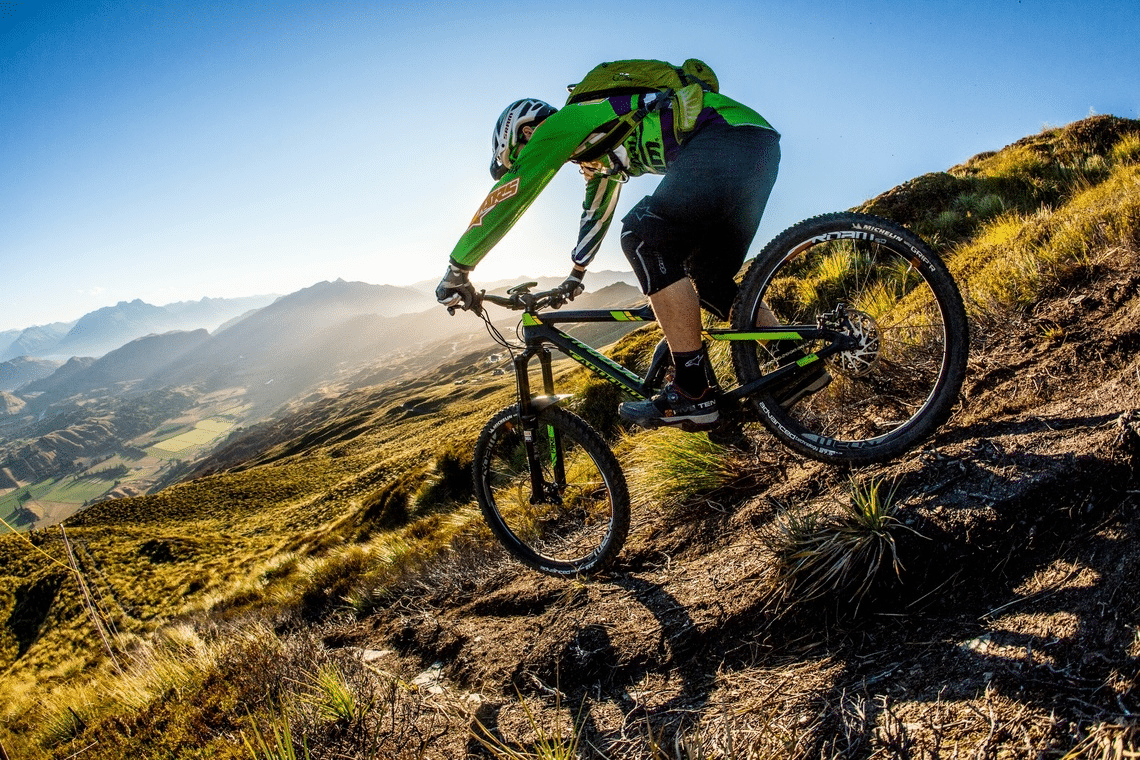
Surface roughness and traction requirements are direct factors. On smooth tarmac, higher pressures minimize rolling resistance efficiently. On rough pavement, cobbles, gravel, or trail surfaces, reducing pressure allows the tire to absorb irregularities, improving comfort, grip, and actual rolling efficiency on those surfaces — the more compliant tire loses less energy bouncing over bumps. Michelin's pressure guide provides recommendations for road, gravel/cyclocross, and mountain bike use cases as distinct categories.
Yes — this is one of the main practical benefits of tubeless for off-road and gravel riding. In a tubed setup, running too low risks a pinch flat if the tire is compressed hard against an obstacle. Tubeless eliminates this risk, allowing pressures that would be dangerous in a tubed setup. Lower pressures on trail, gravel, and rough surfaces provide better grip and comfort. Michelin's pressure guide accounts for whether the setup is tubed or tubeless in its recommendations.
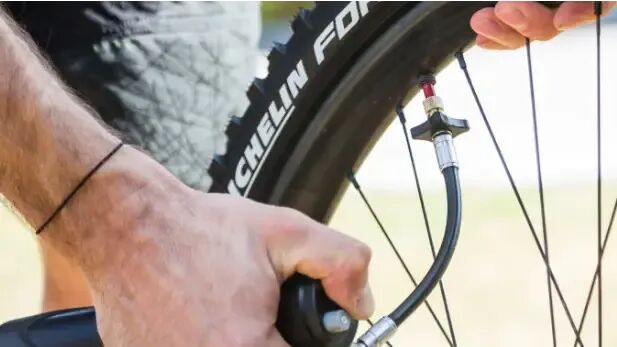
Before every ride. Unlike car tires, bicycle tires have a much smaller air volume and lose pressure more noticeably with small changes. Road tires at high pressure can lose enough pressure overnight to affect performance. Mountain bike and gravel tires at lower pressures are more forgiving of minor pressure changes, but still benefit from a check before riding. Checking only takes a few seconds with a pump gauge and ensures the tire is performing as intended from the first pedal stroke.