Find Dealers

Related topics

FAQ

Read our Frequently Asked Questions.

A bicycle tire consists of: the tread (the outer rubber layer that contacts the road, providing grip and wear resistance), the casing (the fabric structure beneath the tread that gives the tire its shape and contains the air pressure), the bead (the edge that locks the tire onto the rim — either steel wire or foldable aramid fiber), and the sidewall (the section between the tread and bead that must flex with every rotation). The quality and construction of each component determines the tire's performance, durability, and weight.

TPI stands for threads per inch and refers to how densely the casing fabric is woven. A higher TPI casing uses finer, more tightly packed threads — creating a lighter, more supple casing that conforms better to road surfaces, reducing rolling resistance and improving ride feel. A lower TPI casing uses thicker, more widely spaced threads — creating a more robust and durable casing that resists punctures and cuts better but is heavier and less supple. Racing tires favor high TPI for performance; training and commuter tires often use lower TPI for durability.

A clincher (tube-type) tire uses a separate inner tube and a hooked bead that locks onto the rim — the most common setup. A tubeless ready tire uses the same hooked rim but is designed to seal against it with sealant and without a tube. A tubular tire has no separate tube — the tube is sewn inside the tire casing and the whole assembly is glued to a dedicated rim. Each setup has different performance characteristics, maintenance requirements, and rim compatibility.

Application and budget primarily. Wire bead tires are heavier due to the steel wire, are typically less expensive, and cannot be folded for storage. They're found on everyday commuter and casual-use tires. Foldable bead tires use an aramid fiber (invented and refined by Michelin), which is lighter and allows the tire to be folded for compact storage or carrying as a spare. Performance and race-oriented tires are almost exclusively foldable bead. The bead doesn't affect how the tire rides — it affects weight, cost, and portability.

The compound determines grip level, rolling resistance, and durability. Softer compounds deform more under load, increasing the contact area with the road and providing more grip — but wearing faster. Harder compounds are more durable but offer less grip. Many performance tires use dual or triple compound designs: a softer compound on the side tread for grip in cornering, a harder compound in the center for wear resistance and rolling efficiency. Michelin's Gum-X compound optimizes for both grip and rolling speed; Magi-X compounds prioritize maximum grip.

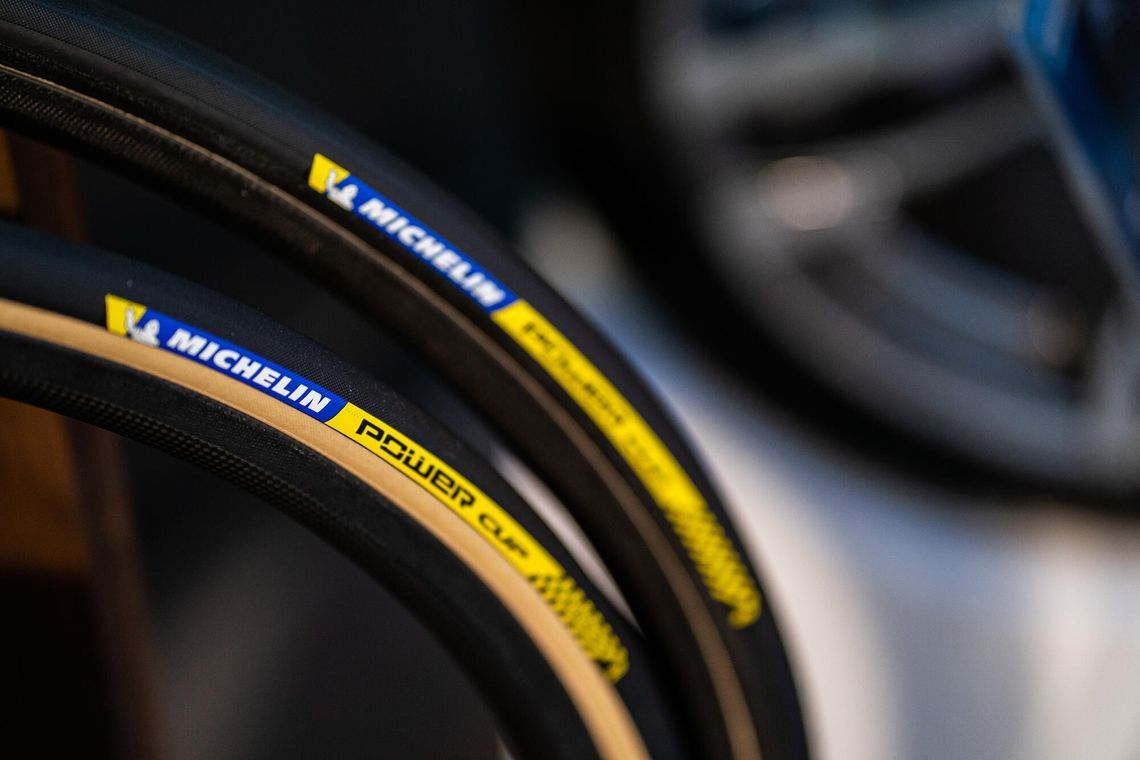
The sidewall is the section of the tire between the tread and the bead that flexes with every rotation. It absorbs road vibration and provides comfort. Gum Wall (GW) sidewalls have a rubber coat for protection against cuts. Skin Wall (SW) sidewalls allow the fabric of the casing to be seen through a thin, transparent rubber layer — they're lighter and more supple but less protected against sidewall cuts. For rough terrain and gravel riding, more sidewall protection is beneficial. For smooth road racing, a lighter skin wall provides a performance advantage.