

Find tire dealers near you in seconds
Search among our dealers to find where your tire is available
FAQ
Read our Frequently Asked Questions.
The Tread tool helps drivers interpret what they see on the tread surface — identifying wear patterns (which indicate inflation or alignment problems), embedded objects, damage from road hazards, and whether the tread has reached or is approaching the legal wear limit. It also guides the user on what the built-in treadwear indicators look like and what to do when the tread has reached them.
The treadwear indicator bars sit at 2/32 inch depth. When the tread surface is flush with these bars, the tire has reached the legal minimum and must be replaced. The Tread tool will indicate the same: a tire at or below the wear indicators needs immediate replacement. Do not continue using a tire that has reached the wear bars — wet-road braking performance at this depth is significantly compromised.
Different wear patterns across the tread width indicate either an inflation problem or an alignment issue. The tool will ask whether the wear is centered (overinflation pattern) or on the edges (underinflation pattern), or whether it's one-sided (alignment). Based on the answer, it points toward the appropriate corrective action — adjusting inflation, booking an alignment check, or both.
The tool will advise not to remove the nail yourself — pulling it out can cause rapid air loss. If the tire is holding pressure, drive carefully to a tire professional for inspection. A nail in the tread that is not fully through the tire may not have caused a puncture; one that has penetrated fully requires a proper repair assessment. A patch-and-plug repair is the correct method for eligible tread punctures, done by a professional with the tire off the wheel.
Yes. Cupping — an uneven, undulating surface across the tread — is a specific wear pattern the tool recognizes. It typically indicates wheel imbalance or worn shock absorbers and will direct the user to have these checked. The cupped tread cannot be reversed, but correcting the underlying cause prevents further development on replacement tires.
A tread depth gauge tells you exactly how much tread remains — it's the most precise tool for that single measurement. The Tread Inspector tool is broader: it helps interpret what you see on the tread surface, identifies abnormal wear patterns, and connects those patterns to underlying causes. Use the gauge to measure depth; use the Inspector tool when you see something on the tread that doesn't look right and want guidance on what it means.
Related articles
-
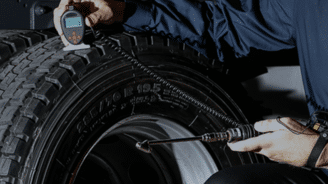
Wear Problems
Wear concentrated in the center of the tread means the tire has been chronically overinflated. Wear on both outer edges means chronic underinflation. Wear on one edge only points to an alignment problem. Cupping or scalloping across the tread surface suggests a balance or suspension issue. Each pattern identifies a specific, fixable cause, and addressing the cause before replacing the tire prevents the same pattern from destroying the replacement.View more -
Handling Problems
Describe your handling symptom to Michelin's Inspector Tool and it narrows the likely cause systematically. Speed-specific vibration points to imbalance. A consistent pull after pressure has been equalized points to alignment. A pull that occurs only during braking points to the braking system. The tool asks the diagnostic questions that distinguish between tire issues and mechanical ones, so you can book the right service appointment rather than a general inspection.View more -
Sidewall Problems
Use Michelin's Sidewall Inspector to identify what you are looking at before deciding whether to drive the vehicle. An indentation where cords overlap inside the tire is a normal manufacturing feature and completely harmless. A protrusion or bubble indicates an internal structural failure and means the tire must be replaced immediately. The tool provides a clear, specific recommendation based on your description, including when to pull over without driving further.View more -
Flat and Damage Problems
The Tire Doctor will see you now. If you notice a problem with one of your tires, we can diagnose it here. Which of the following best describes the problem?View more