Why is it important to break in new tires?
A tire is a composite. In other words, it is a combination of different materials, some being vulcanized rubber compound, other Nylon or aramid fabrics. When you take it out of its package, it has never yet been inflated, it has never yet stretched to take on its operational shape. It therefore needs to 'work' to reach its final shape.
If it's a Tubeless Ready tire, breaking it in will help it adapt to the sealant you're going to use, as each one is different. It will also depend on the local temperatures.
Breaking in new tires is an important step, regardless their type, if you want to get the most out of them later on. Once broken in, the tires will give you a better riding experience.
How long should you break in new tires?
Breaking in new tires is more a question of kilometers driven than duration. A break-in is considered sufficient when you've driven around 50 km. If you have an odometer, simply refer to this threshold. This distance necessarily implies that the tire will have been sufficiently stressed to be used to its full potential.
-
But if you don't have such an instrument, don't worry: after a while, changes will be visible to the naked eye on the tire as it begins to be accommodated.
In particular, you can see that the tire has become more homogenous than when it was first unpacked. The tread has become matte. Other areas of the tire, in particular the sidewall, are done later since they do not touch the ground directly. It's a gradual process.
When all the different constitutive parts of the tire have been working, it means that the tire is sufficiently broken in and that you can get the most out of it.
How do you break in a new tire?
Inflate it to the right pressure
- Mount and inflate the tire to the recommended pressure, not the maximum.
- The tire begins to adjust even before the first ride.
- Let it sit for 24 hours at riding pressure to allow the carcass to stretch and stabilize.
Precautions to take when riding a new tire for the first time
For your first ride, choose a flat, preferably dry road and start by making a few short braking manoeuvres to give the tire a chance to work. During this initial preparation, be careful not to brake too hard at first, as this could make the tire perform less well later on.
Don't take big curves straight away at high speed: start to angle in slowly. The idea is to gradually reach the limits of your tire.
Let the white waxes disappear
On some road tires, small white waxes are visible when the tire is unpacked. This is a chemical agent in the tire used to protect it from natural elements.
Do not remove them by rubbing with sandpaper. These waxes will gradually penetrate the tire's tread compound and disappear from the surface. This happens progressively during the break-in period. That's why it's important to run in your tires on dry roads at first. On wet roads, these waxes could cause the tire to slip when braking.
Breaking in Tubeless Ready Tires
When fitting a Tubeless Ready tire, it's important to distribute the liquid by moving the tire and riding on it a little. This is what allows the sealant to fill in the micro-porosities in order to ensure a good seal. (See our article on how to use tire sealant)
It's important to do this breaking-in as soon as possible after fitting so as not to miss this sealing stage. As indicated above, do a short gentle run in on a dry road, a few short braking manoeuvres and a few short bends, that's enough.
As with other types of tire, the breaking-in of a Tubeless Ready tire is complete once the first 50 kilometres have been covered.
Breaking in Two New Tires (Front & Rear)
If you buy and fit new tires at the front and rear, the same precautions apply: a few gentle bends and braking, followed by a breaking-in period of 31 miles or until signs of homogenisation appear on the tread and sidewalls.
Do Stored Tires Need to Be Broken in Again?
There may be times when you need to store your tires for a shorter or longer period. For example, if you go on holiday, or if you only use your bike on holiday. If your tires have been stored correctly (to find out how, read our article on storing tires) and have already been broken in, there's no need to break them in again when you mount them on your bike.
FAQ
Read our Frequently Asked Questions.
New tires have a release agent on the surface from the manufacturing mold — a lubricant used to separate the tire from the mold after curing. This release agent slightly reduces grip until it wears away through contact with the road surface. New tires also need to conform fully to the rim and reach their designed shape under pressure. Michelin recommends a gradual approach that allows the tire to reach its final geometry and adapt to conditions before being pushed hard.
Avoid: emergency braking that locks the wheel, very aggressive cornering at high lean angles, and riding on extremely slippery surfaces. The reduced initial grip from the release agent is most relevant when the tire is asked to deliver maximum traction — in hard cornering or braking. During the break-in period, ride more conservatively than you would on well-worn tires, gradually building confidence as the surface grip improves over the first rides.
There's no fixed distance — it depends on riding conditions, speed, and how quickly the release agent wears from the surface. Michelin's guidance is a gradual process, not a specific mileage. Most riders notice that new road tires feel more confident after the first few rides. For the first ride on new tires, treating them with more caution than normal is prudent. By the third or fourth ride in normal conditions, the tire's grip should be representative of its designed performance.
Tubular tires have a specific requirement before first use. Because solvents are applied during manufacturing, Michelin recommends inflating a new tubular tire to near operating pressure and leaving it for 24 hours before use. This allows the solvents to evaporate fully from the casing. After this initial inflation, the tubular can be fitted and ridden, but the normal gradual break-in still applies — the first rides should be conservative until the outer surface has worn away the release agent.
No reliable method significantly accelerates the break-in. The surface release agent wears away through contact with the road surface during normal riding — there's no substitute for accumulating some miles. Attempting to aggressively scrub the tires by cornering hard immediately would be counterproductive and risky since the grip isn't there yet to support that kind of riding. The break-in period is short; the conservative approach for a few rides is a minor adjustment with a clear safety benefit.
Yes — the same principle applies. New MTB tires have surface release agent that reduces grip initially. For trail and enduro riding where aggressive cornering and braking are standard, the first ride on new tires should be treated with some caution. The knobby tread on MTB tires also needs a few rides to begin conforming and flexing correctly for the specific terrain. Experienced riders often note that new MTB tires feel subtly different for the first few rides before they fully 'settle in.'
Related articles
-
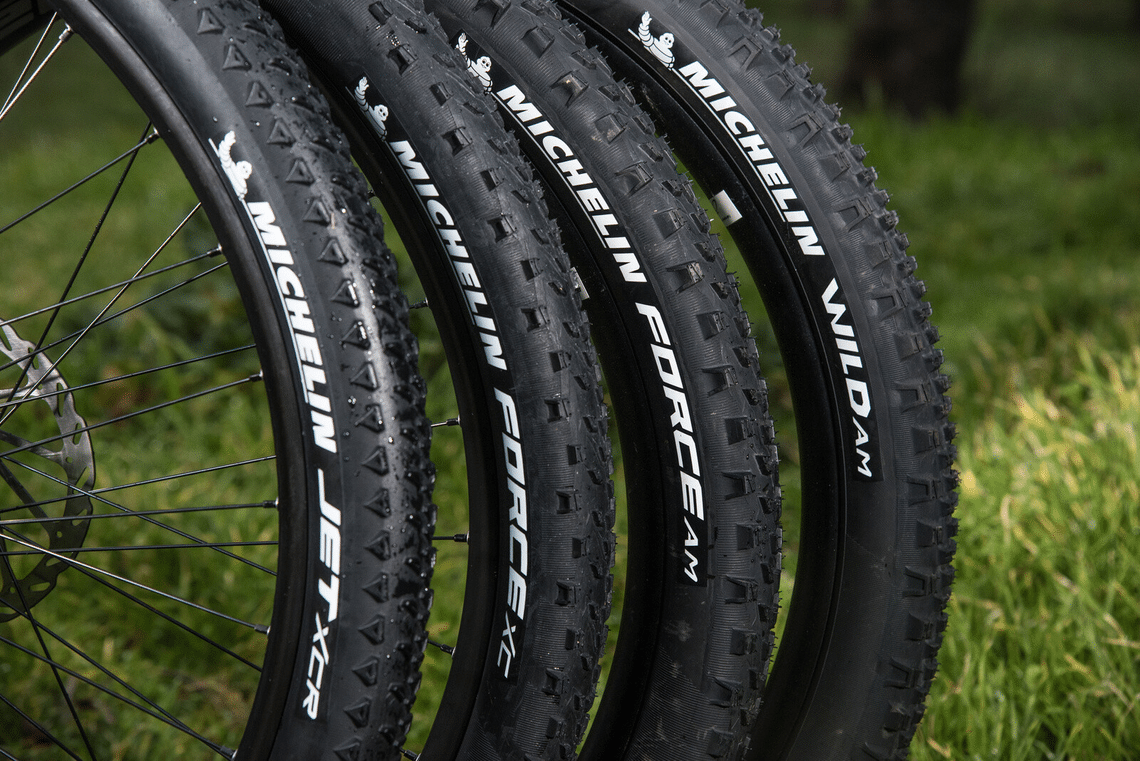
How to store bike tires properly
Storing your tires (mounted or dismounted) may sometimes be necessary. What special precautions should you take for bike tire storage to preserve them as much as possible? Should tires be stored differently depending on whether they are tubeless, tubed or tubular? You'll find out all you need to know after reading our experts' recommendations in this article.Learn more -

What should I do if my back bike wheel wobbles?
You're riding your bike and you feel a bump at the rear with each turn of the wheel, a lateral or vertical shake, which is not only unpleasant but can also, in some cases, destabilise the bike and even lead to a fall. It is therefore important to deal with the problem as quickly as possible to enjoy a better cycling experience. So what should you do if your back bike wheel wobbles? Find the answers in our article.Learn more -
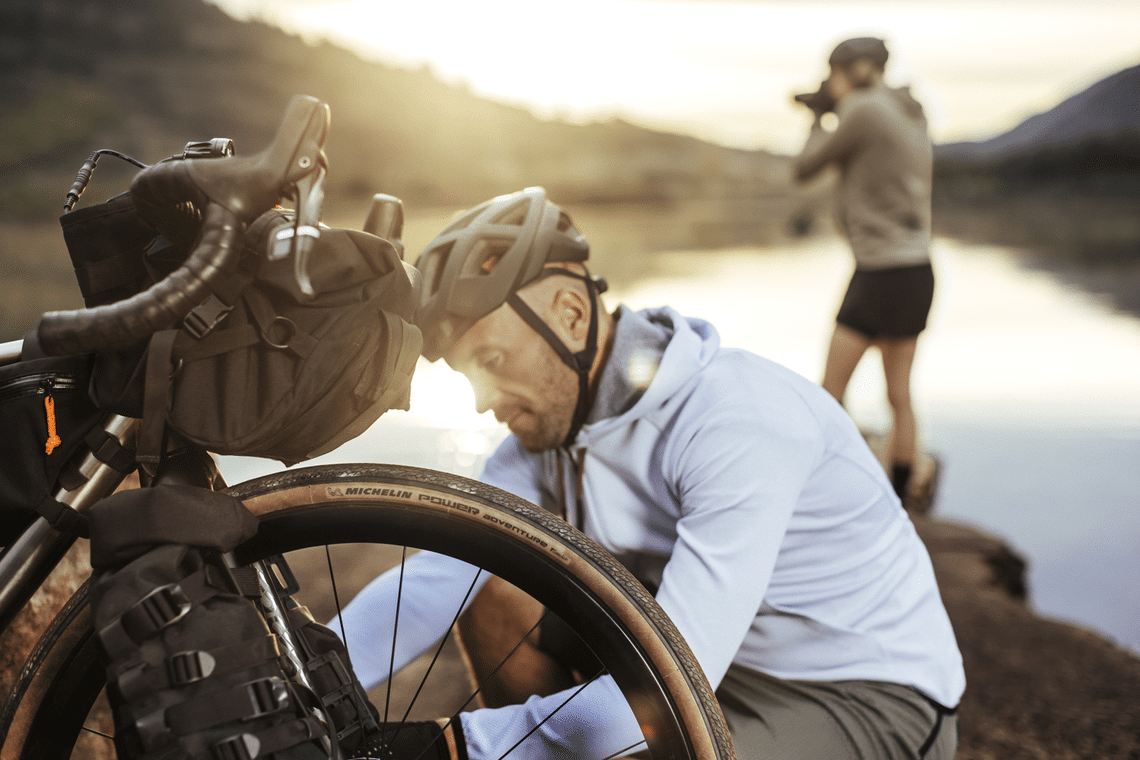
How to use bike tire sealant ?
Tire sealant is a game-changer for cyclists, offering automatic puncture repair and improving the performance of tubeless-ready tires. Whether you're riding on the road, gravel, or mountain trails, knowing how to apply and maintain tire sealant can help prevent flats and extend the life of your tires. In this guide, we’ll cover why you need tire sealant, how to apply it, and best practices for maintenance.Learn more -
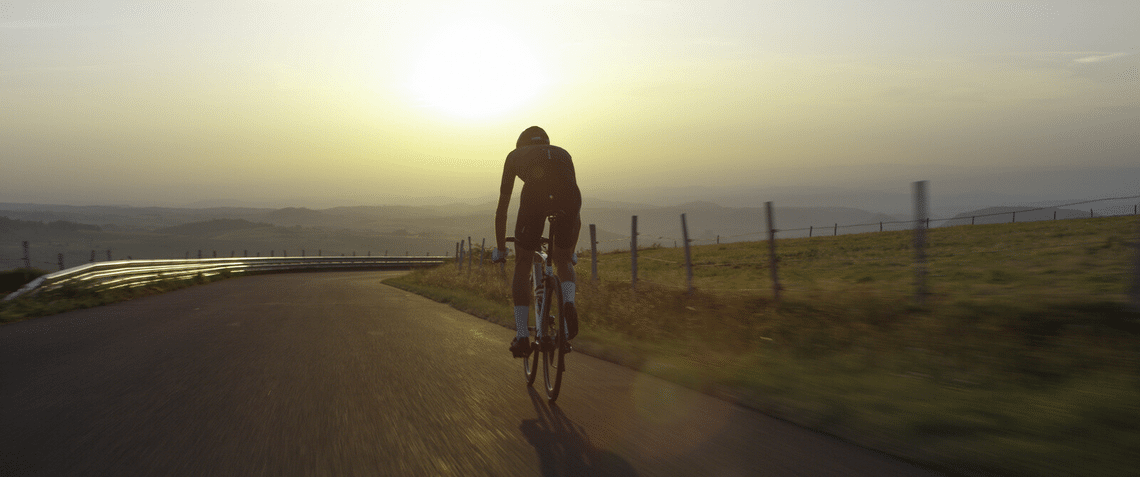
How to improve bike puncture resistance
Three types of punctures affect bicycle tires differently and require different prevention strategies. Perforation punctures from glass, nails, and thorns are reduced by tighter casing construction and thicker tread rubber. Pinch flats from low pressure combined with a hard impact are eliminated entirely by switching to a tubeless setup. Rim-side punctures from damaged rim tape are prevented by replacing the rim tape every time you replace the tire. Each type has a specific and practical prevention.Learn more