Benefits of maintaining your motorcycle tires
Maintaining tire performance
Your tires are essential for your safety. You need to maintain them so that they continue to offer the same performance.
Maximising tire life
Avoid unnecessary costs linked to replacing your tires prematurely, good tire maintenance allows you to maximize tire life right to the last mile.
Motorcycle tire pressure is key to tire longevity and safety
To maintain optimal performance until the end of a tire’s life, motorcycle tire pressure is key. That’s why it’s important to check tire pressure regularly and to adjust if necessary. Riding with incorrect pressure can lead to increased wear, which can compromise on performance and therefore your safety, while also reducing tire life.
Motorcycle tire pressure is also important
We recommend that you check your tire pressure once a month and before every long journey, ideally when the tires are cold (before riding or having ridden less than 2 miles). If you have to check tire pressure when the tires are hot, you should add 0.3 bar to the pressure recommended by the manufacturer. For example, if the recommended pressure when cold is 2.5 bar, you should set hot tires to 2.8 bar. If the tires don’t have enough pressure, set them to 2.8 bar. If, on the other hand, your tires are above 2.8 bar, you should not take any out. In either scenarios, we recommend you quickly re-check your cold pressures.
At the same time, check that the tires still have their valve caps. If a valve cap is missing, you should replace it immediately as it’s important for keeping the tire airtight.
What’s the right motorcycle tire pressure?
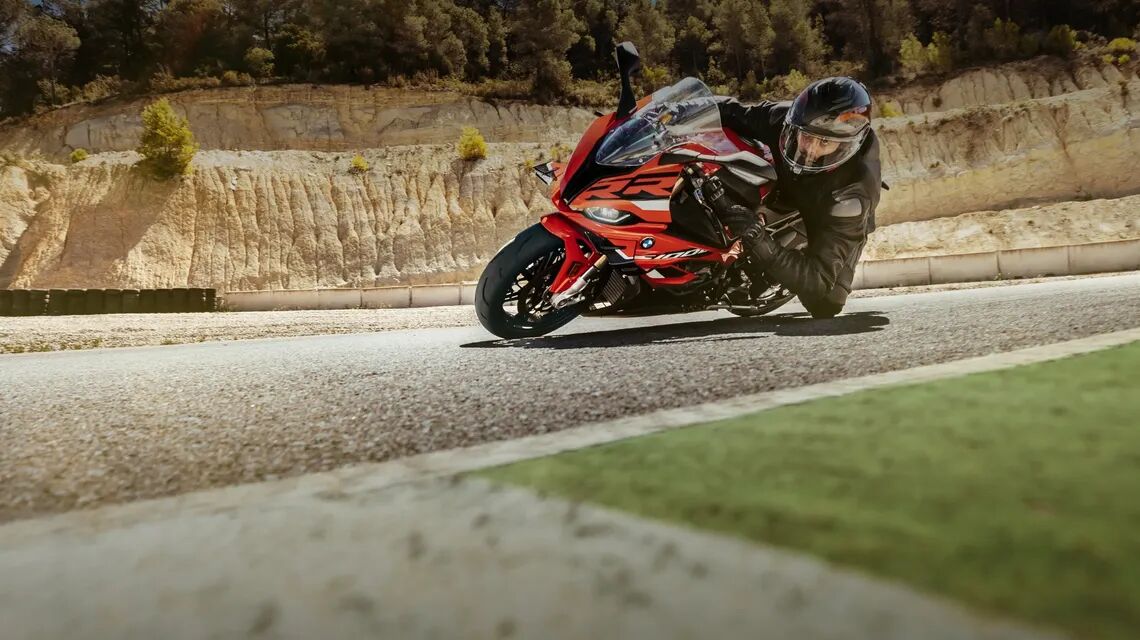
The guidelines to follow are those recommended by the manufacturer (which can be found in your motorcycle's user manual), although there are some exceptions for motorcycle tire pressure:
For Trail use, when you might be riding off-road as much as on it, you may need to make motorcycle tire pressure adjustments depending on the surface: you may want to lower tire pressure for better grip during all-terrain rides, but it's vital that your tires are reset to the approved pressure when you get back on the road.
For track use with road legal tires, you can choose between two different pressures. Remember, if you're travelling to your motorcycle track day experience via road, make sure to readjust to the manufacturer-recommended tire pressure before you set off again.
When using only on the track, the tire manufacturer, independently of the motorcycle manufacturer, is the one who recommends the tire pressure to use for optimal performance.
For more information, see our motorcycle tire pressure guide.
Checking tires
Checking general tire condition
While adjusting your motorcycle tire pressure, take the opportunity to check their general condition, making sure specifically:
that they aren’t damaged (bulges, tears, etc.),
that they haven’t been punctured by a nail or screw.
If you find one or more of these anomalies, we recommend that you visit a professional. For more information, read our article "Is my tire repairable?"
Checking wear
Wear is inevitable for any tire. By setting tires to the recommended pressure, you will maximise tire life: regular, normal wear will allow you to ride without compromising tire performance until they reach the wear threshold, when they need to be replaced.
When checking tires, make sure:
that there is no abnormal or irregular wear on the tires,
that the wear indicators have not reached the limit.
If there is any abnormal or irregular wear, seek professional assistance to get a qualified opinion on the condition of your tires.
If there is severe wear (wear indicators have reached their limit for road and/or track legal tires, or performance is reduced for other uses), you’ll need to replace your tire.
Note that a uniform front/rear fitting is recommended, which would mean replacing both tires. If replacing just one tire, we advise that you choose one from the same range. In any scenario, whether replacing one or two tires, always respect sizes as well as the load and speed ratings approved by the manufacturer.
Checking balance weights
Wheel balancing is done when tires are fitted. When a professional fits your motorcycle with one or two tires, they may have to place weights on your wheels to ensure vibration-free riding.
Inspecting tires is also the time to check that the balance weights are still in place. If they are not, contact a professional so that they can rebalance them.
Cleaning tires
You can clean your tires when you wash your motorcycle.
We advise against ever using solvent-based products (gasoline, acetone, etc.) or tire polish. A simple wash with soap and water is the best option for cleaning your tires without damaging them.
If you’re using a pressure washer, do not get too close to the tires.
Storing your motorcycle for a long period of time
You may not need to use your motorcycle for a relatively long time, such as over winter. If this is the case, your tires will remain stationary all that time while supporting the weight of your motorcycle. These few precautions will help maximise tire life.
If your motorcycle has a centre stand, use it to keep your back tire off the ground.
As a general rule, we recommend setting your tires to the right pressure before storing them for a long period of time. Since tires naturally lose air over time, inflating them before storing them for winter (to the recommended pressure, or even a bit higher) helps prevent the tires from deforming under the weight of the bike.
If possible, regularly moving your motorcycle can act as an extra precaution to preserve your tires. This helps prevent it always being the same part of the tire that’s touching the ground.