Check your tire pressure
It is essential to check your tire pressure every two weeks when the tires are cold (i.e. a tire that has not run for at least two hours or has run for less than 2 miles at a reduced speed). Ensure that you make adjustments if you take the pressure after riding, i.e. with "hot" tires. In this instance, refer to the manufacturer's recommendations.
Never deflate a hot tire
Don't forget to replace the valve caps after your checks are complete
Tires filled with nitrogen must still be checked regularly
Stick to the tire pressures recommended by the manufacturer
These recommendations are applicable for tires used on the road. There are additional recommendations for use on the racetrack and more generally for any race.
FAQ
Read our Frequently Asked Questions.
Before every ride. On a motorcycle, even a small deviation from the correct pressure noticeably affects handling, stability, and grip. Michelin recommends at minimum checking every two weeks and before any long journey, but checking before each ride is the safest habit. Motorcycle tires have smaller air volume than car tires, which means a given amount of pressure loss represents a larger percentage change and has a more immediate effect on performance.
Check cold — before riding, or at least after the motorcycle has been stationary for several hours. Riding warms the air inside the tire and raises the pressure, which gives a falsely high reading. Use a reliable gauge; gas station gauges are often inaccurate. Compare the reading to the manufacturer's recommended cold pressure, which is in the owner's manual or on the motorcycle's information plate — not the maximum pressure on the tire sidewall. Adjust as needed and replace the valve cap firmly.
When tires are hot, the air inside has expanded with heat and the pressure reads higher than the cold pressure. This is normal and expected — it's not overinflation. If you deflate the tire to match the recommended cold pressure while it's hot, the tire will be underinflated once it cools. Check and adjust pressure only when cold. A tire deflated from a hot reading will be below specification for the next ride.
The owner's manual specifies a higher pressure for loaded conditions. The additional weight compresses the tire and requires more air pressure to maintain the correct profile and operating characteristics. Inflate to the loaded specification before any ride where you'll be carrying a passenger or significant luggage. Return to the standard pressure for solo riding — the loaded pressure is higher than needed for the solo condition and affects handling and comfort.
Yes — air contracts in cold temperatures, which causes tire pressure to drop. A tire correctly inflated in summer may be noticeably low in winter even without any leak. Check pressure before every ride in cold weather and adjust to the recommended pressure at that temperature. Don't release air in the summer thinking the winter pressure will be correct — check and set for current conditions each time.
Check the valve stem on each wheel. The valve type should match the rim specification, and the valve cap should be in good condition — it's a secondary seal that helps maintain pressure integrity. Valve caps on motorcycles are exposed to more vibration, road debris, and contamination than car valves. Check caps during every pressure inspection and replace any that show cracking, corrosion, or damage. Replace the valve stem itself when fitting new tires.
Related articles
-
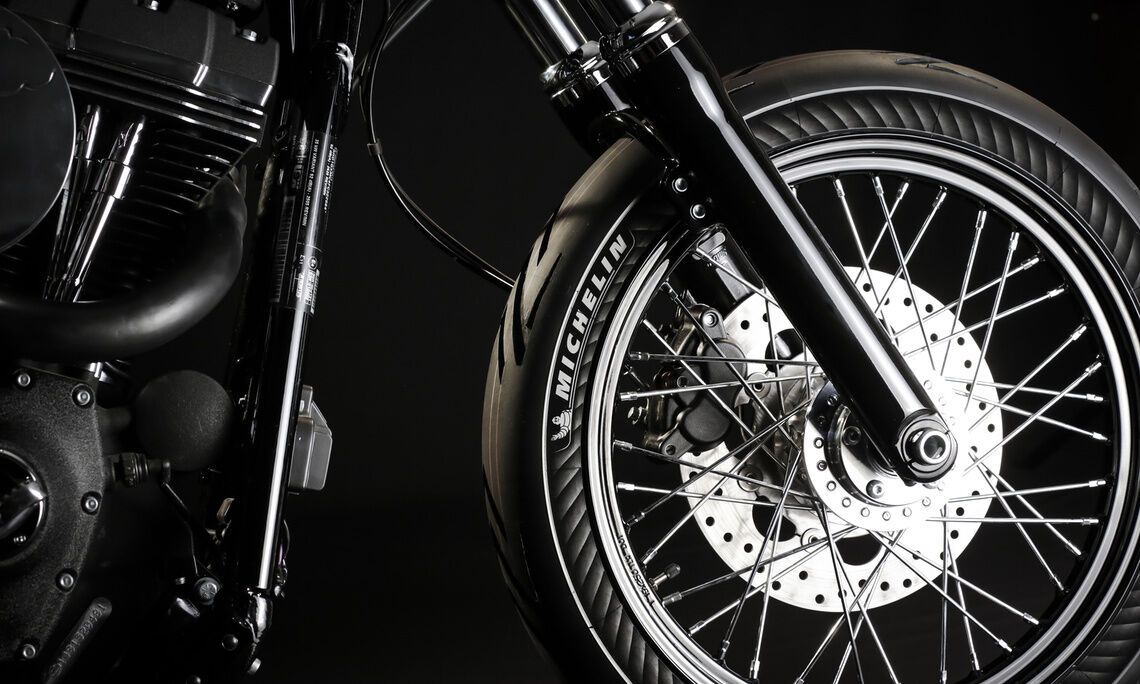
Tire wear and tear
The rear tire wears fastest in the center from straight-line riding. As that center flattens, the transition into corners becomes noticeably less smooth: a change in feel that signals significant wear even if depth still looks adequate in the center groove. Check tread depth at multiple points across the full width of both tires, not just in the center, and use wear indicators and a depth gauge together to get an accurate picture.View more -
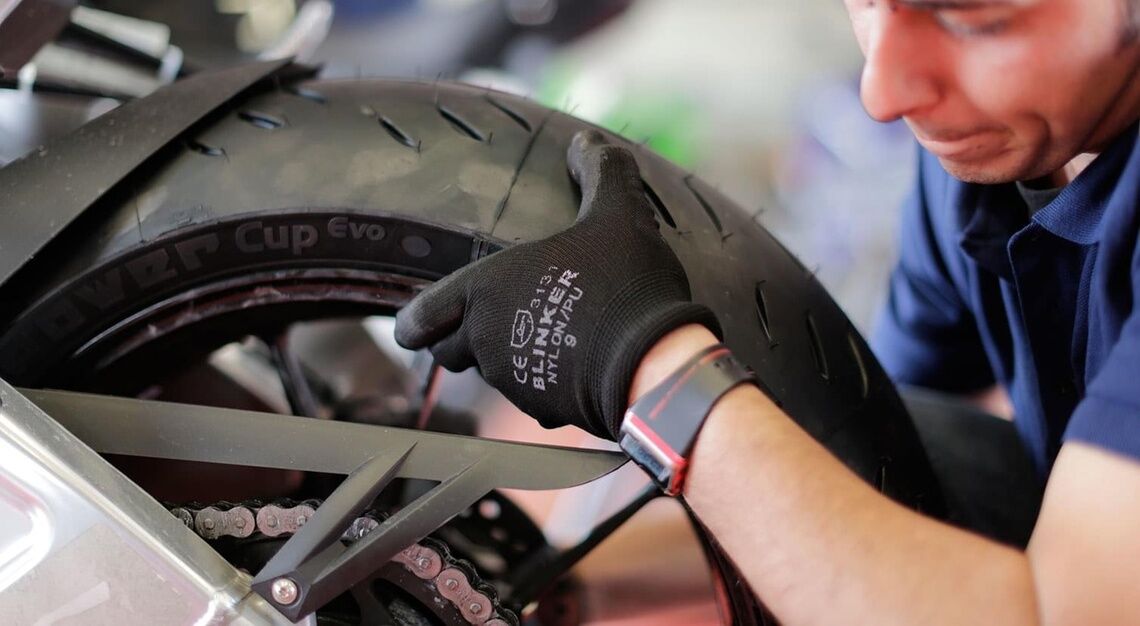
When should I change my motorcycle tires?
Replace your motorcycle tires when tread reaches the wear indicator, when any structural damage is found (sidewall bulge, cord exposure, cuts through the casing), or when 10 years have passed from the manufacture date on the DOT code, regardless of remaining tread depth. After 5 years of use, Michelin recommends annual professional inspection even if tread looks fine: rubber degrades from ozone, heat, and UV exposure in ways not visible from the outside.View more -
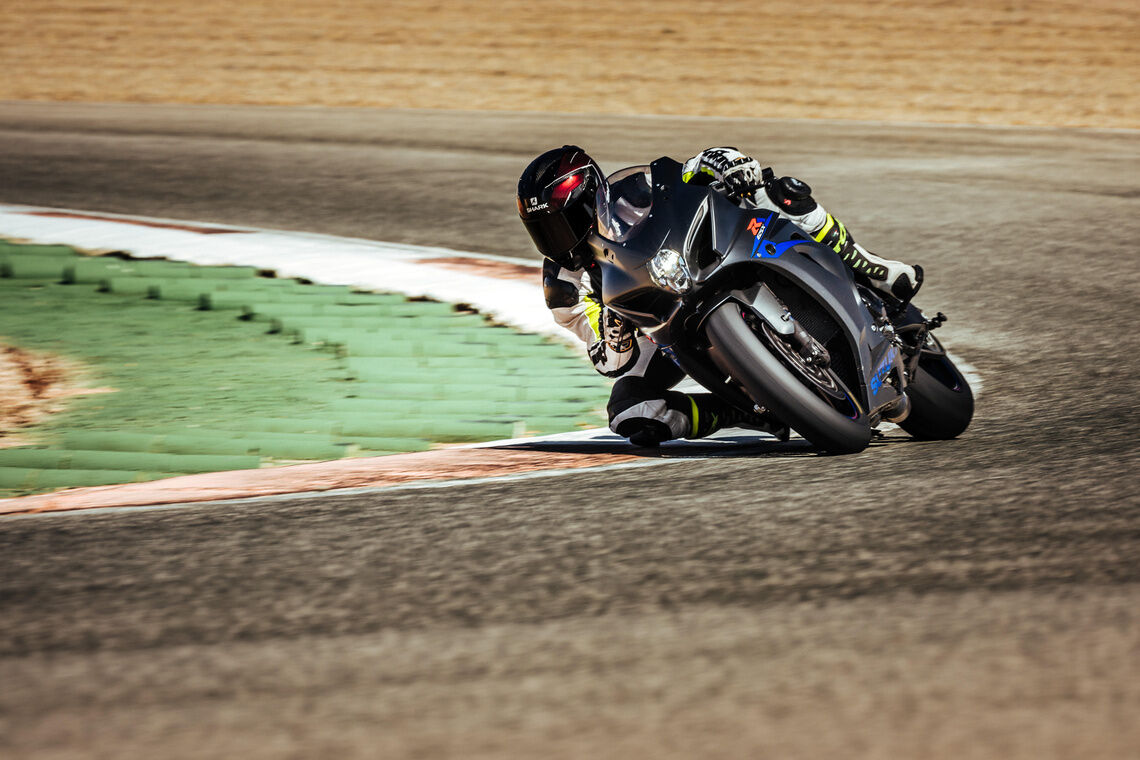
Track Tires Recommended Pressure
Start a track session at the manufacturer's recommended cold road pressure. As the tires warm through the first laps, pressure rises naturally: do not release air mid-session based on a hot reading. Allow a deliberate warm-up period for the first two to three laps, keeping lean angles moderate and braking forces gentle until the tires reach their operating temperature. Only then are the tires delivering the grip they were designed for.View more -

Off-Road
Correct inflation is essential for the safety and longevity of your tires. A tire gradually loses air over time. It is therefore essential to check its 'cold' pressure before each ride. If the pressure is checked when out on a ride (or soon after), be aware that the air in the tire is 'hot' - In fact, when riding, the pressure increases, so you should never deflate a tire that has just been ridden on.
If the pressure (when tested cold) is lower than the recommended 'cold' pressure, it is essential to replace the missing air. After checking, do not forget to replace the valve cap which is a core part of the seal (along with the valve itself). It is recommended to change the valve assembly and cap each time you remove/replace the tire, as it is key to ensuring the integrity of the whole assembly.View more