Why do some tires wear out faster than others?
A tire's final mileage may depend on various factors:
Some of these are within the motorcyclist’s control: tire pressure, load, vehicle speed, riding style (braking and accelerating).
Others are not and would mean changing the kind of riding you're doing:
Road use: road curviness, surface type
Off-road use: Kind of terrain (sand, gravel, mud, etc.), ambient temperature
A single factor on its own may have only a small impact on a tire's mileage; however, if many factors come together there will be much more wear and tear.
Most of a tire's grip on the road comes from the treads. As they wear down, they lose their ability to drain away water. It is therefore important to ride more slowly on wet surfaces.
Remember to check your tires regularly for wear.
How to check tire wear?
You should always check for wear at several points on the tire.
Checks can be carried out with a depth gauge or using the tread wear indicators molded into the tread (with a symbol visible from the side where present). If the legal or technical limit has been reached, the tire should be disposed of and replaced.
When and how to check your tires?
Tires should be checked regularly to pick up any unusual wear and potential damage.
Follow the steps below in order:
Tread: Look for any foreign objects, cuts, localized damage or unusual wear
Sides: Look for impact damage (pavement, potholes, etc.), cuts, cracks or unusual deformities
Area around the rim/bead chafer: Look for marks made by scrapes or damage to the rim.
All fissures, cuts and visible deformations in the tire tread, the sides, or the area where the tire meets the wheel should be examined in detail (internally/externally) by a tire professional. The same applies to any deterioration of the rim.
Under no circumstances should you re-mount tires that show damage such as a deformed or visible bead, rubber or layers becoming unstuck, damage by oily or corrosive substances, marbling or abrasions to the inner rubber as a result of riding with insufficient tire pressure.
During each vehicle inspection, check that the valve dustcaps are in a satisfactory state. If in doubt, replace them.
FAQ
Read our Frequently Asked Questions.
On the rear tire, normal wear shows as a flattening in the center — the tread wears down fastest in the zone that contacts the road during straight-line riding. The edge of the tread wears more gradually because it contacts the road mainly during cornering lean angles. On the front tire, wear is typically more even across the center. The wear indicators in the tread grooves show when the minimum depth has been reached.
Unusual wear patterns usually indicate an underlying cause:
Severe or rapid center wear — chronic overinflation or very aggressive straight-line acceleration
Edge wear with unworn center — chronic underinflation
Wear on one edge — possible rim/wheel alignment issue, or consistent unidirectional riding style
Cupping or scalloping — balance issue, worn suspension components, or incorrect pressure
Flat spots — wheel lock from hard braking
As tread depth decreases, water channeling capacity reduces — less depth means less ability to displace water from the contact patch. On dry roads, moderate wear has less immediate effect on grip. On wet roads, the grip reduction becomes significant once tread reaches a level where grooves can no longer evacuate water effectively. Inspect tread at several points across the width — center wear and edge wear can be very different on a motorcycle tire.
Inspect for: cuts or punctures in the tread, sidewall cuts or bulges, delamination (any lifting or separation of the tread from the carcass), damage from oily substances or chemicals, and cracks in the sidewall from age. Any fissure, cut, or visible deformation in the tread, sidewall, or bead area should be examined by a professional before the tire is used again. Never remount a tire that shows signs of bead damage or rubber-layer separation.
Yes. Cupping — a wavy or scalloped wear pattern around the circumference of the tire — is often associated with worn suspension components, particularly dampers (shock absorbers). A damper that no longer controls the wheel's rebound properly allows the tire to bounce and skip, which creates localized wear. Unusual wear that isn't explained by inflation or riding style warrants a suspension inspection alongside the tire assessment.
Yes, if tread depth is still above the wear indicator and there is no other damage. The wear indicator marks the legal and functional minimum, not an arbitrary threshold. Michelin designs motorcycle tires to maintain their performance characteristics right up to the wear limit. However, for wet-weather riding, some reduction in grip occurs before the indicator is reached — riders in rainy climates may choose to replace before the absolute minimum for additional margin.
Related articles
-
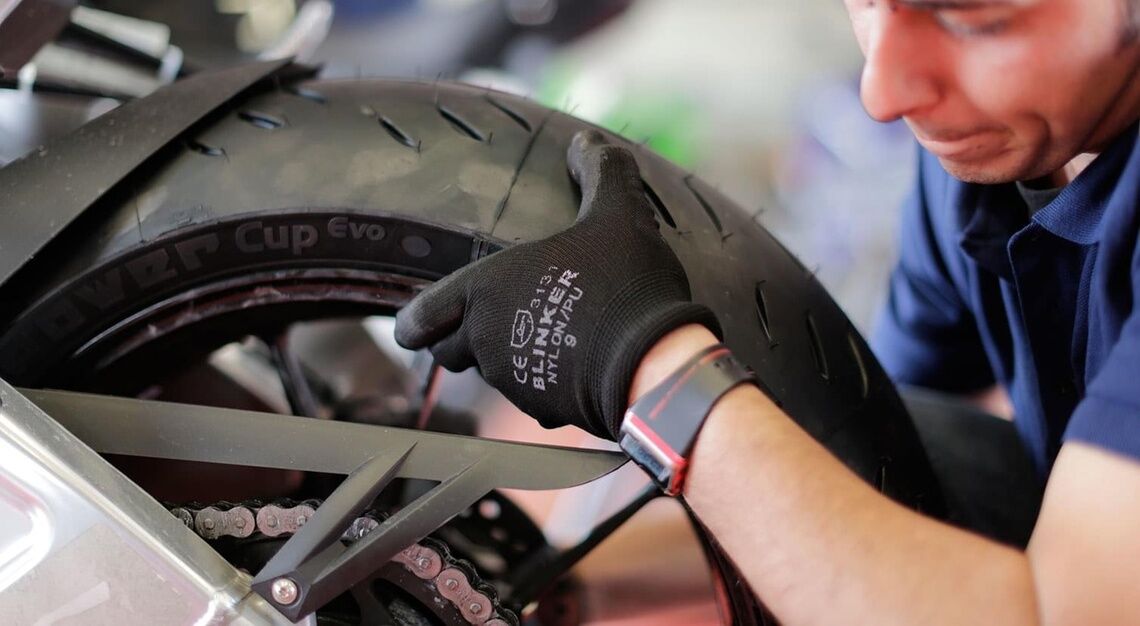
When should I change my motorcycle tires?
Replace your motorcycle tires when tread reaches the wear indicator, when any structural damage is found (sidewall bulge, cord exposure, cuts through the casing), or when 10 years have passed from the manufacture date on the DOT code, regardless of remaining tread depth. After 5 years of use, Michelin recommends annual professional inspection even if tread looks fine: rubber degrades from ozone, heat, and UV exposure in ways not visible from the outside.View more -
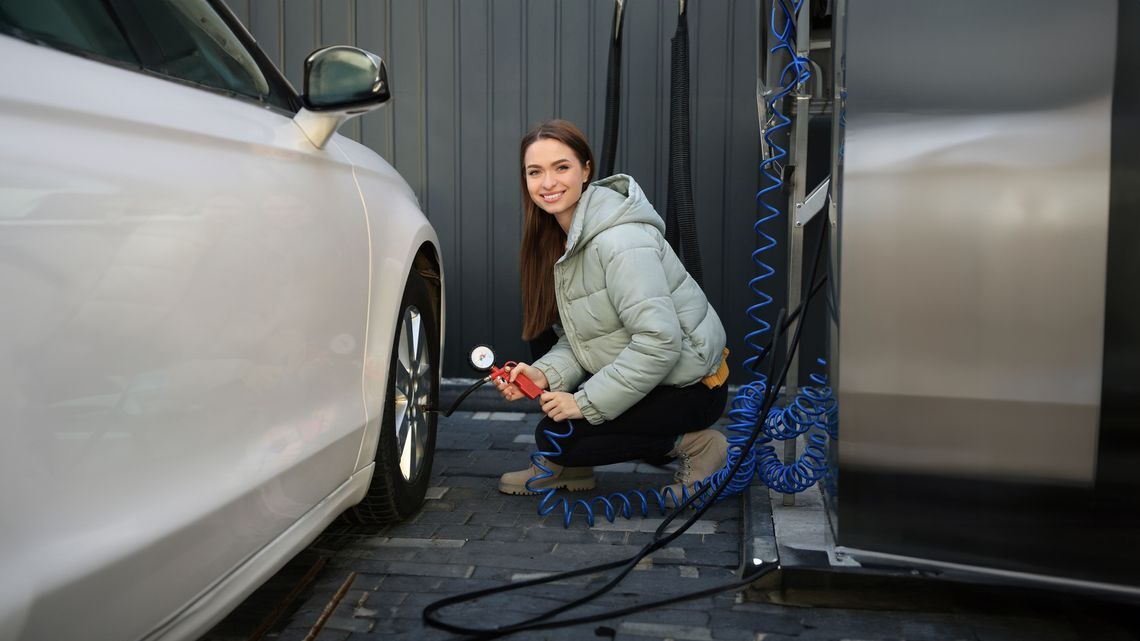
How to Check Your Tire Pressure
Check pressure before every ride, with the tires cold (not ridden in the last few hours). Use the cold pressure from your owner's manual or the vehicle information plate, not the maximum on the tire sidewall. Never bleed air from a hot tire to reach the cold pressure target: when the tire cools, it will be underinflated. Replace the valve cap securely after every check as it forms a secondary seal on the valve assembly.View more -
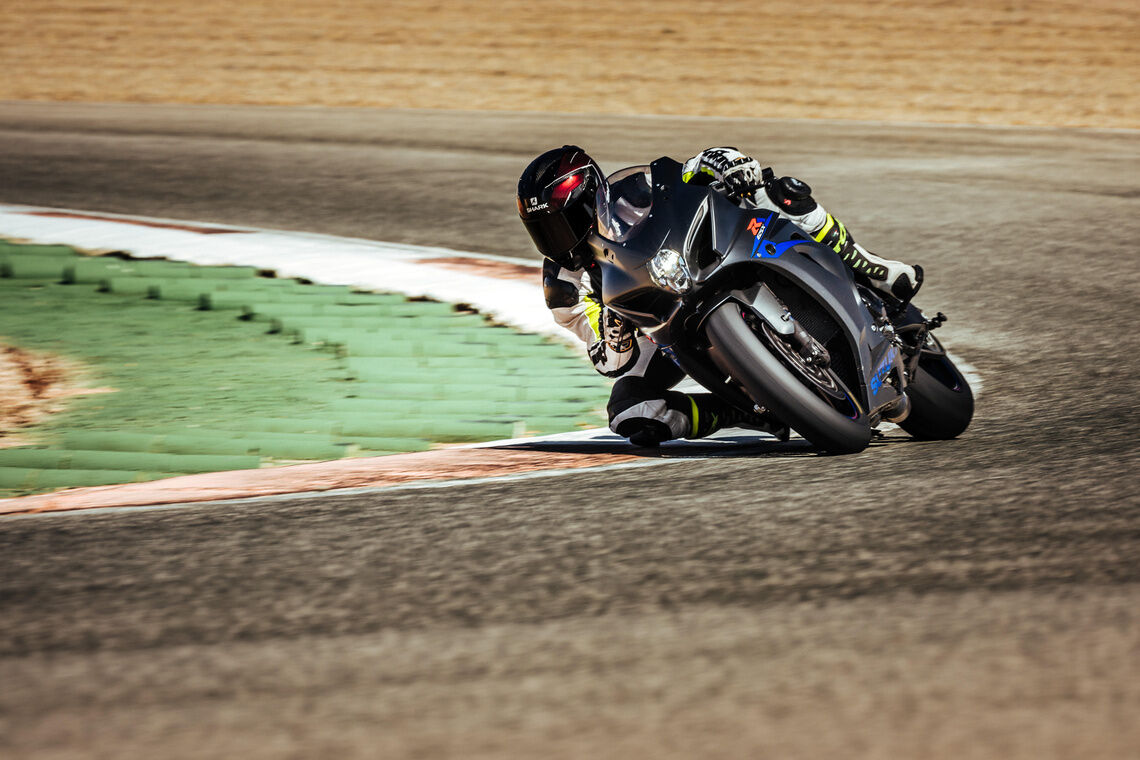
Track Tires Recommended Pressure
Start a track session at the manufacturer's recommended cold road pressure. As the tires warm through the first laps, pressure rises naturally: do not release air mid-session based on a hot reading. Allow a deliberate warm-up period for the first two to three laps, keeping lean angles moderate and braking forces gentle until the tires reach their operating temperature. Only then are the tires delivering the grip they were designed for.View more -

Off-Road
Correct inflation is essential for the safety and longevity of your tires. A tire gradually loses air over time. It is therefore essential to check its 'cold' pressure before each ride. If the pressure is checked when out on a ride (or soon after), be aware that the air in the tire is 'hot' - In fact, when riding, the pressure increases, so you should never deflate a tire that has just been ridden on.
If the pressure (when tested cold) is lower than the recommended 'cold' pressure, it is essential to replace the missing air. After checking, do not forget to replace the valve cap which is a core part of the seal (along with the valve itself). It is recommended to change the valve assembly and cap each time you remove/replace the tire, as it is key to ensuring the integrity of the whole assembly.View more