Choosing the right equipment
During your journey you're likely to experience a range of weather conditions. You should avoid choosing an outfit for only hot weather or only cold weather.
Choosing the useful, eliminating the useless
Extra weight is truly your motorcycle's enemy. The more it is weighed down, the less comfortable your bike will be and the less well it will handle.
Loading your bike
Whatever your final load, take care to ensure it doesn't interfere with your motorcycle's basic features, its balance, and its weight distribution.
Preparing and adjusting the bike
Fine tuning your motorcycle allows you to ride more confidently, avoid muscle pain, and increase your comfort so you don't get tired as easily.
Riding with a passenger
Adventures can be even better when shared with a partner. It's also completely possible for passengers to ride enduro-style, standing up like the driver.
Riding in a group
Riding in a group has to be one of the true joys of motorcycling. You need to have a good understanding of the basic rules to make sure everyone in the group stays safe.
Making a u-turn on a narrow track
This is definitely a dangerous situation. You don't want to fall off a cliff! Under pressure, riders might let go of the bike or accelerate suddenly.
Crossing a ford
For adventurous riders, a ford can be a very tempting prospect. You can already see yourself slicing through the water.
FAQ
Read our Frequently Asked Questions.
A pre-ride check that leaves you confident the motorcycle is in good condition — tires, chain or belt, brakes, lights, and fluid levels. Route planning that includes fuel stops (calculate range conservatively), rest stops every hour or two, and awareness of forecast weather. Appropriate clothing for the conditions, including layers for temperature changes with altitude or time of day. Starting with tires already at the correct pressure for the expected load.
Directly. A tire at correct pressure and with adequate tread provides the feedback, stability, and responsiveness that make riding enjoyable. An underinflated tire feels vague and heavy, making the bike less responsive to lean and steer. An overinflated tire transmits every road irregularity harshly and reduces grip. New tires feel different from worn ones — the contact patch changes shape as the tread wears, which changes the feel of cornering. Matching tire type and condition to the riding you're doing is part of getting the most from every ride.
Dress in layers that can be adjusted at stops, covering all exposed skin. Cold affects concentration and reaction time as much as physical comfort. Increase following distance and reduce lean angles in cold conditions — cold tires take longer to reach operating temperature and grip is reduced until they do. If you're not using the motorcycle in winter, prepare it properly for storage rather than pushing through conditions that compromise both comfort and safety.
More directly than a car driver. On a motorcycle, fatigue affects balance, reaction time, grip strength (important for brake and throttle control), and the ability to track a straight line — all of which are more immediately consequential on two wheels. Plan regular breaks into longer rides. Stop before fatigue forces you to — recognizing the early signs of tiredness is much easier than managing a ride when already significantly fatigued.
Touring-specific motorcycle tires balance tread life, wet-weather grip, and ride comfort over the long distances and mixed surfaces a touring rider encounters. They typically have a more symmetrical tread profile than sport tires and a compound optimized for durability rather than peak cornering grip. Choosing a tire matched to the primary use — rather than a sport tire on a touring bike or vice versa — provides a better experience and better value over time.
Cold tires have less grip than warm ones — the compound doesn't reach its optimal operating flexibility until the tire has been ridden for a few minutes at moderate loads. At the very start of a ride, particularly in cold weather, the tires are at their lowest grip level. The first few minutes should involve gentle, progressive inputs — no hard acceleration, no hard braking, no aggressive lean angles. As the tires warm through normal riding, their grip improves and more demanding inputs become safe.
Related articles
-
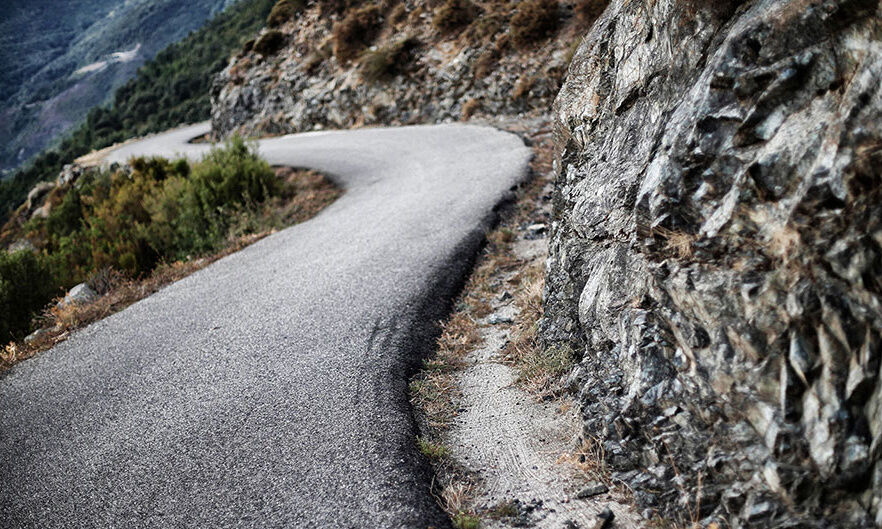
Safe riding with our motorcycle tires
Apply front and rear brakes progressively together, not just one alone. The front brake provides most of the stopping force, but applying it abruptly and alone can cause instability. Always match front and rear tires from the same product line: they are designed as a system. If a motorcycle tire shows a sidewall bulge, any cut exposing cord beneath the rubber, or cracking that opens when you flex the rubber, it must be replaced before that motorcycle is ridden again.View more -
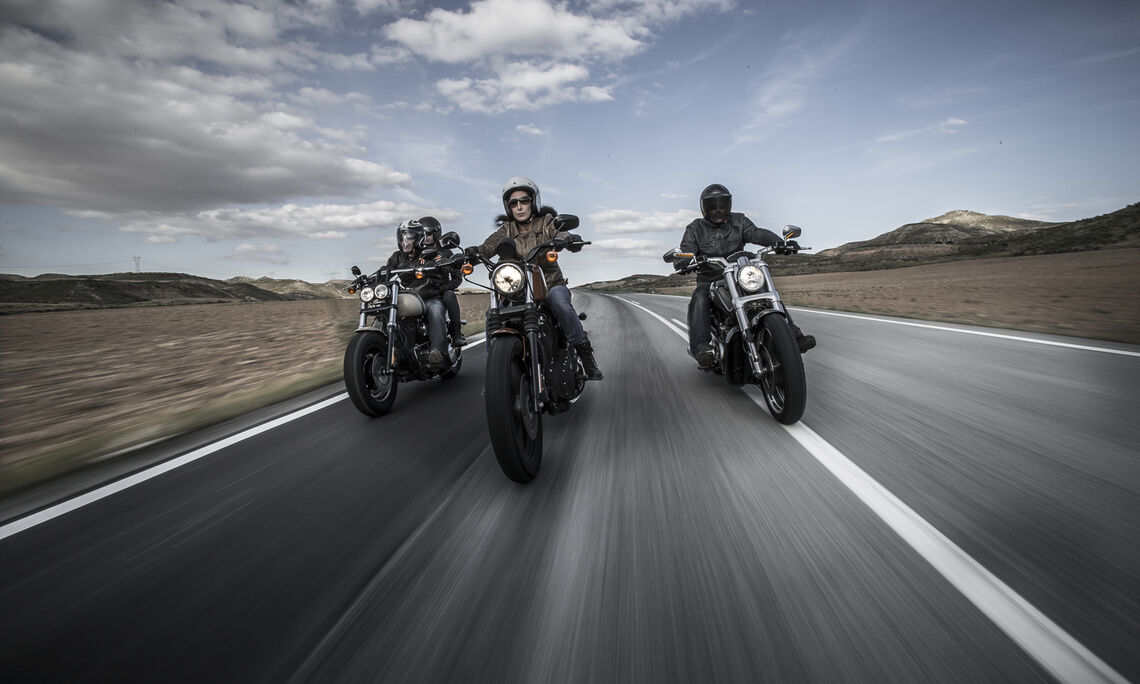
Improving road safety for everyone
Michelin is keen to step up to the plate in a bid to save more and more lives.View more -
Recognize tire handling difficulties
Handlebar vibration at specific speeds is usually wheel imbalance: go to a professional. A wobble (side-to-side oscillation of the handlebars) is often linked to high wear or incorrect pressure: loosen your grip slightly and reduce speed smoothly without braking hard, then have the motorcycle inspected. Weave at high speed requires smooth deceleration only: no sharp braking or acceleration. Any new or worsening handling sensation warrants a professional assessment before the next ride.View more