

Find tire dealers near you in seconds
Search among our dealers to find where your tire is available
FAQ
Read our Frequently Asked Questions.
FAQs
The handling module covers vibration (when it occurs and where it's felt), pulling to one side, unusual noise related to driving behavior, and steering feel changes. By walking through specific questions about the symptom — does it appear at all speeds or specific speeds, is it in the steering wheel or through the floor, does it change when braking — it helps narrow down whether the cause is tire-related, alignment-related, or a suspension and brake issue.
Speed-specific vibration — appearing or worsening at a particular speed range and diminishing above and below it — is a classic indicator of wheel imbalance. The imbalance creates a resonant frequency at a specific rotation speed. The Tire Inspector Handling tool would typically indicate wheel imbalance as the likely cause and recommend having the wheels balanced. If balancing doesn't resolve it, the next step is inspecting for tire damage.
Visual inspection reveals what you can see on the surface — sidewall condition, tread depth, embedded objects. Handling diagnosis reveals problems that don't always show externally — internal structural damage, imbalance, alignment drift, or mechanical issues in the steering and suspension. The two approaches are complementary: a complete assessment uses both, which is why the Tire Inspector has separate tools for visual inspection and handling behavior.
Yes — that's exactly what it's for. Many drivers aren't sure whether a pull or vibration is a tire problem or something deeper in the vehicle. The handling tool asks questions that help distinguish between the two and direct you toward the most likely cause. It's more useful when the symptom can be described precisely — what speed it occurs at, whether it changes when braking, whether it's felt through the wheel or seat.
It will ask clarifying questions — does it pull constantly or only during braking, is the pull consistent or does it vary? It then points toward the most likely causes: constant pull typically indicates alignment or a tire issue (pressure or wear difference); pull only during braking typically indicates a brake issue. The recommendation will be to check tire pressure first, then seek professional alignment or brake inspection depending on the pattern.
Check your tire pressure first. A significant portion of handling problems that seem complex are resolved by correcting inflation pressure. If the symptom persists after inflating to the correct spec, then the handling tool is the right next step to narrow down the remaining causes. Starting with pressure eliminates the most common variable before going deeper into diagnosis.
Related articles
-
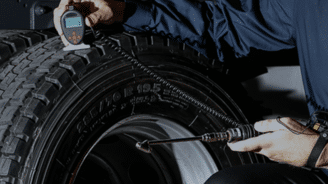
Wear Problems
Wear concentrated in the center of the tread means the tire has been chronically overinflated. Wear on both outer edges means chronic underinflation. Wear on one edge only points to an alignment problem. Cupping or scalloping across the tread surface suggests a balance or suspension issue. Each pattern identifies a specific, fixable cause, and addressing the cause before replacing the tire prevents the same pattern from destroying the replacement.View more -
Sidewall Problems
Use Michelin's Sidewall Inspector to identify what you are looking at before deciding whether to drive the vehicle. An indentation where cords overlap inside the tire is a normal manufacturing feature and completely harmless. A protrusion or bubble indicates an internal structural failure and means the tire must be replaced immediately. The tool provides a clear, specific recommendation based on your description, including when to pull over without driving further.View more -
Tread Problems
The Tread Inspector module helps you interpret what you see on your tread surface. Center wear confirms chronic overinflation. Edge wear on both sides confirms chronic underinflation. One-sided wear confirms an alignment problem. If you find a nail, the tool will tell you what not to do: do not pull it out yourself. Drive carefully to a professional, have the tire removed from the wheel, and have a proper internal inspection and patch-and-plug repair performed.View more -
Flat and Damage Problems
The Tire Doctor will see you now. If you notice a problem with one of your tires, we can diagnose it here. Which of the following best describes the problem?View more