What types of tires are affected?
We are mainly talking here about very high performance tires, in other words those used in extreme conditions like competition. Because of their ability to perform on the track at high temperatures, these tires are particularly sensitive to cold and require special precautions, which we will explain below.
Motorcycle tires designed for uses other than racing (road, off-road, commuting, etc.) are not designed in the same way and do not rise in temperature as much. They are therefore not as affected by the cold and do not require the same precautions.
Why are competition tires affected by cold temperatures?
High performance tires will take longer to reach the optimum temperature than conventional road tires (which is why tire warmers are often used to get the tires to the right temperature before the start of the race), but they can withstand greater stresses and higher temperatures.
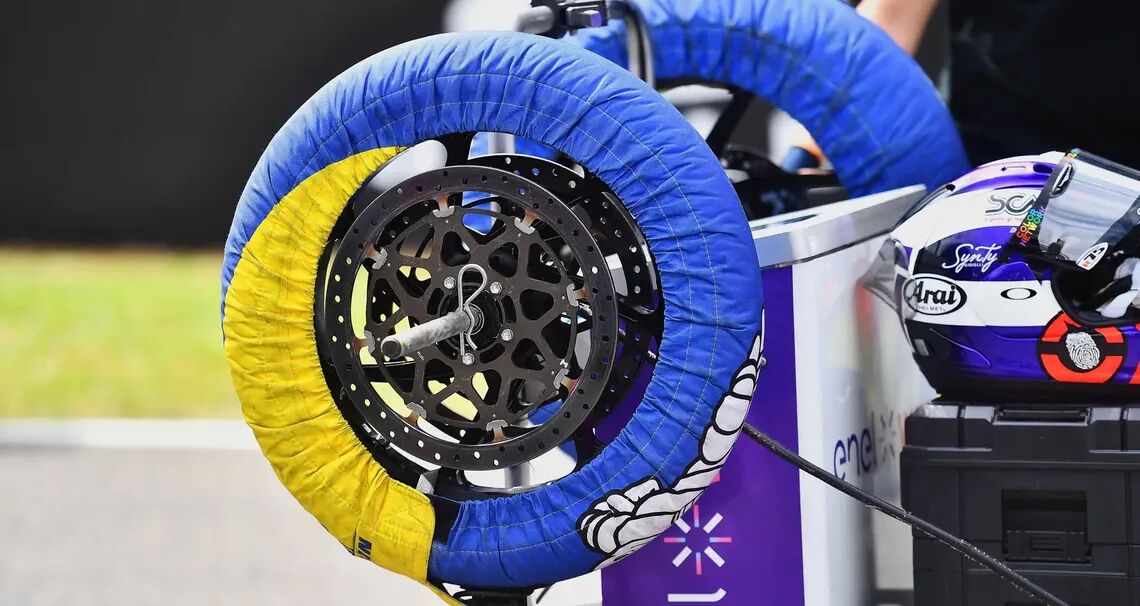
Tire warmers are used to get the tires to the right temperature before the start of the race
The more you constrain the tire in its use, the more temperature-related risks will occur.
For track tires, the very high temperatures encountered (related to the very high levels of grip) require a specific blend of tire compounds to withstand them.
Thanks to a specific blend of compounds, good tire performance is maintained even at temperatures of up to 302°F.
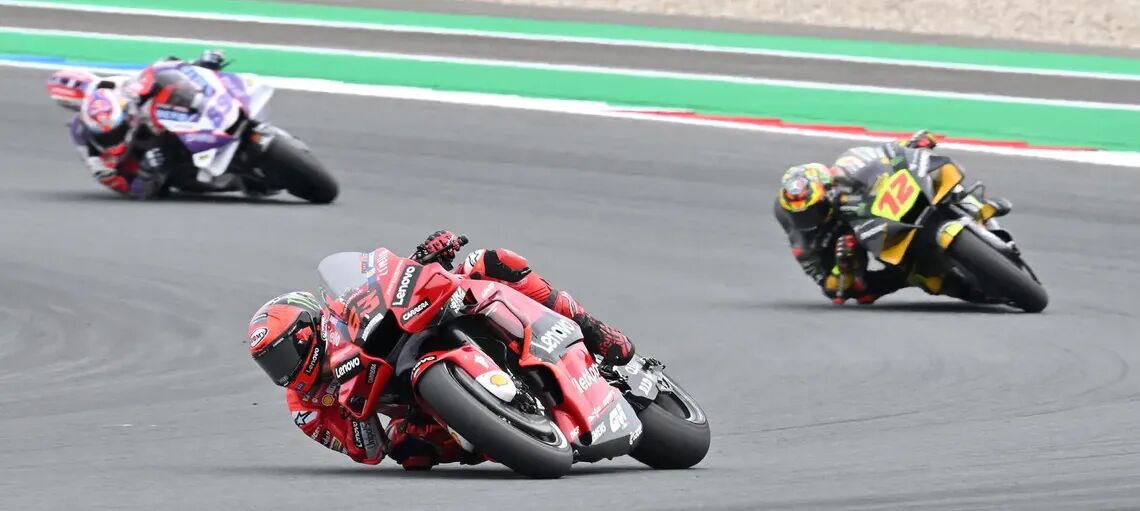
Thanks to a specific blend of compounds, good tire performance is maintained even at temperatures of up to 302°F.
The downside is that they must not be exposed to cold temperatures because handling these tires when cold may result in the tread or other rubber area breaking as if it were glass.
Therefore, care must be taken to store the tires in appropriate conditions to avoid low temperatures. If this occurs, the tires should not be handled at all.
The breaking point
Every tire manufacturer faces this problem: when temperatures reach certain extremes, tires inevitably lose their performance and risk irreversible damage.
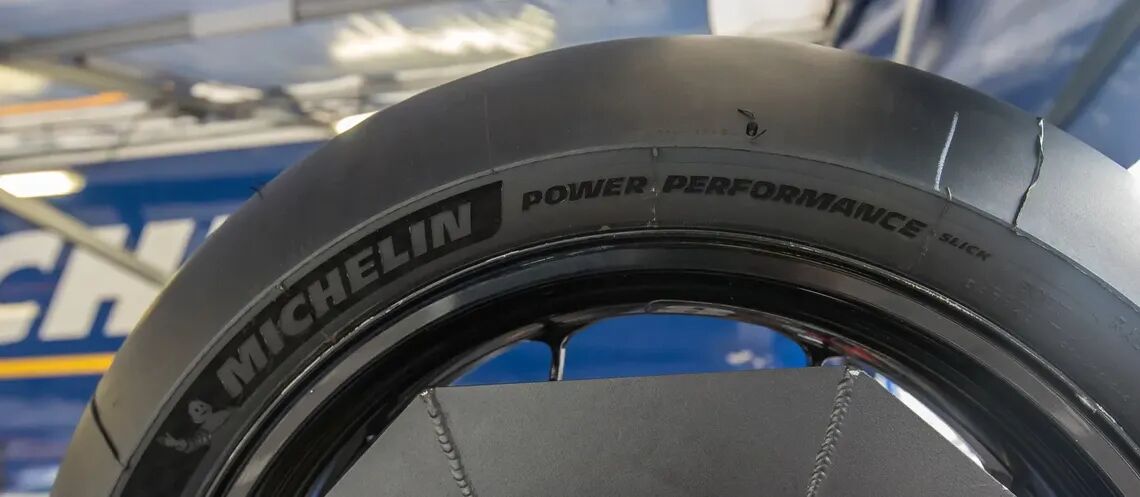
There is a low-temperature threshold at which rubber loses elasticity and becomes brittle, called the glass transition point.
Rubber breakdown in the cold can sometimes appear inside the tire and remain invisible. It can manifest as a tiny crack or many larger cracks around the tire.
The impact of temperature on performance
We have seen it, a tire that has been subjected to low temperatures loses grip performance.
But there is also a high temperature threshold from which the rubber becomes pasty/viscous. It is called the reversion point. If the temperature of the tire exceeds this threshold, the tire will also have reduced performance.
However, the vast majority of our tires operate within these thermal limits without impediment.
Different temperature thresholds for different ranges
As shown in the table below, our different ranges of track tires have different tolerance levels.
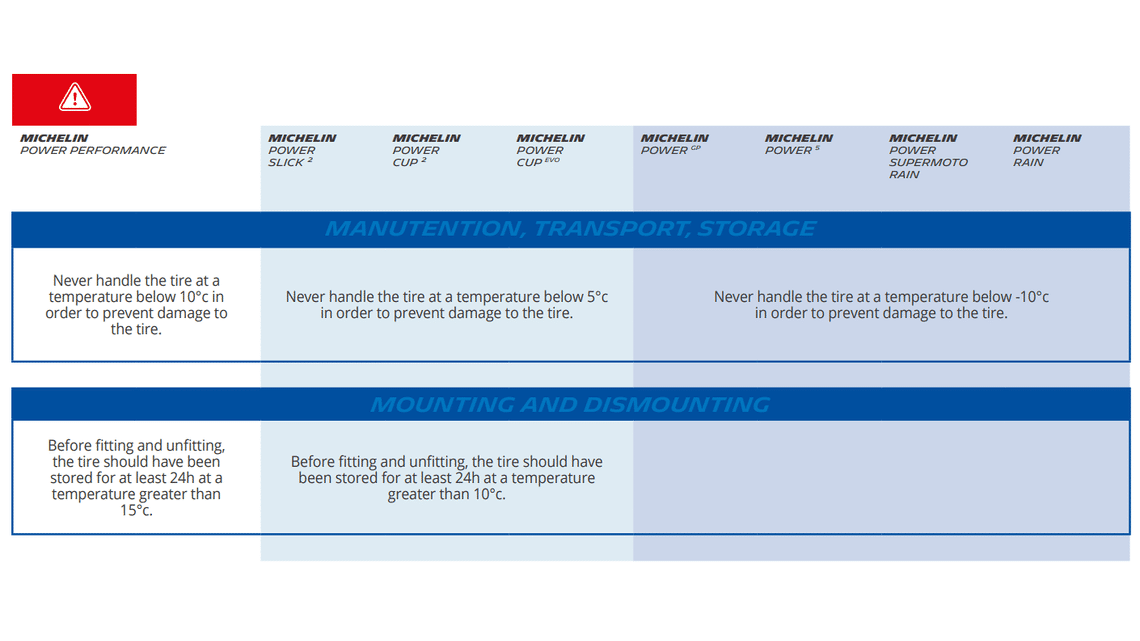
To avoid damage, the Michelin Power Performance range must not be handled below 50°F in transport and storage.
This threshold is reduced to 41°F for these ranges:
MICHELIN Power Slick 2
And to 14°F for these ranges:
MICHELIN Power GP
For mounting or dismounting, it is advisable to store a Michelin Power Performance tire for at least 24 hours in a place with a temperature above or equal to 59°F.
For the Michelin Power Slick², Michelin Power Cup², and Michelin Power Cup EVO ranges, the ambient temperature must be greater than or equal to 59°F for more than 24 hours before a mounting or dismounting operation.
How do you know the temperature of your tires?
To check the temperature of a tire, all you need to do is use a conventional thermometer. If the tire has been stored for several hours in a room, it can be assumed that the temperature of the tire is equivalent to the ambient temperature.
Excellent performance on track
Follow these simple precautions and you will enjoy excellent performance and unparalleled pleasure when riding your motorcycle on the track!
FAQ
Read our Frequently Asked Questions.
Stop and inspect for:
Any sudden change in handling — pulling, vibration, instability
A noise from the tire that wasn't present before
Visible damage after impact with a pothole, kerb, or road debris
A loss of pressure noticed during riding
Any visible bulge, deformation, or cut that wasn't there before
It depends on the damage location and type. Punctures in the tread area — a nail or screw confined to the central tread — may be repairable using a proper plug-and-patch method by a trained technician. Sidewall punctures cannot be safely repaired. Any puncture on a motorcycle tire requires the tire to be removed from the wheel for internal inspection before repair is attempted — internal damage from running even briefly with reduced pressure may make the tire unrepairable. Never ride on a visibly flat motorcycle tire even to reach a shop.
A motorcycle has two tires, not four. If a front tire punctures while riding, the sudden loss of pressure affects steering directly. A rear puncture causes immediate instability in the rear end. In both cases, the rider must manage the motorcycle's balance and bring it to a safe stop using very limited grip from the affected tire. This is why recognizing the early signs of pressure loss — changed handling feel, a slightly heavy steering response — and acting immediately is more critical on a motorcycle.
After any significant impact, inspect: the tread surface for cuts or embedded objects, the sidewall for bulges or cuts, and the rim for any visible deformation. Internal damage — broken cords in the carcass — may not be visible from the outside. If the impact was severe or the motorcycle behaved differently after hitting it, have the tire professionally inspected, which requires removing it from the wheel. Don't assume the tire is fine because it's holding air.
Petroleum-based products — fuel, oils, solvents, and some chain lubricants — can degrade rubber compounds when sustained contact occurs. Visible signs include softening, swelling, or discoloration of the rubber. Any tire that has been soaked in oil or fuel should not be used — the damage may not reverse and the structural integrity cannot be confirmed. Use only water and non-petroleum-based cleaners for tire cleaning. Avoid chain lubricant overspray on the tire — excessive chain lube on the rear tire reduces grip significantly.
Tire breakdown refers to structural degradation from exposure to excessive heat — particularly relevant for racing and track tires that may reach temperatures far beyond road tire operating ranges. If a tire is stored, handled, or used in conditions that expose it to temperatures beyond its design limits, the internal structure can degrade in ways not visible from the outside. For road riders, the main practical implication is that a tire that has been run flat — even briefly — may have sustained heat damage beyond safe use, and should be replaced rather than checked and reinflated.