- Tubeless: No tube is used, when mounted on a tubeless rim; abbreviated "TL"
- Rear: Direction of rotation for rear tire, indicated by an arrow on the tire sidewall
- Michelin: Tire manufacturer
- 73 Load index: For example, 73 corresponds to a load of 805 pounds (365kg) per tire
- Radial
- Pilot Power 3: The tire's model name
- 190: Nominal section width of the tire, expressed in millimeters
- 55: Aspect ratio, the sidewall height as a proportion of the tire width
- R: Radial construction
- 17: Bead-seat diameter of the wheel, expressed in inches (1 inch = 2.54 cm)
FAQ
Read our Frequently Asked Questions.
Motorcycle tire size codes follow a similar format to car tires but may look slightly different. A typical code like 120/70 ZR17 reads: 120 is the section width in millimeters; 70 is the aspect ratio (sidewall height as a percentage of width); Z indicates the speed rating category (very high speed); R indicates radial construction; 17 is the rim diameter in inches. The service description following the size (e.g. 58W) gives load index and a specific speed rating letter.
R indicates radial construction, where ply cords run at 90° to the direction of travel. B indicates bias-belted, a construction between pure bias and radial. No construction letter typically indicates a standard bias (diagonal) tire. The construction type must match what the motorcycle manufacturer specifies — mixing radial and bias tires on the same motorcycle is generally not recommended and can affect handling stability.
The speed rating is a letter (H, V, W, Z, or a combination) indicating the maximum sustained speed the tire is designed to handle. The rating must meet or exceed the motorcycle manufacturer's specification. For performance motorcycles capable of very high speeds, the rating becomes particularly important — a tire rated below the vehicle's capability limits the safe operating envelope. The tire specification in the owner's manual is the reference.
Look for the DOT code — a sequence of letters and numbers ending in a four-digit date code. The first two digits of that code are the week of manufacture; the last two are the year. A tire marked 1824 was produced in the 18th week of 2024. Michelin recommends replacing motorcycle tires after ten years from the manufacture date regardless of tread condition, and having them professionally inspected annually after five years of use.
The load index is a number that corresponds to the maximum weight the tire can support when properly inflated. It must meet or exceed the load specification for your motorcycle. Tires for solo riding, two-up touring, and adventure riding with luggage all involve different loads, and the tire's load index must be appropriate for the maximum expected load including rider, passenger, and any luggage.
Some motorcycle manufacturers specify tires developed specifically for their models — these tires carry a manufacturer approval marking on the sidewall. For high-performance motorcycles, original equipment tires are often engineered to precise specifications for handling and feedback on that specific model. Replacing OE-approved tires with non-approved alternatives of the same size may change the handling characteristics the manufacturer tuned into the motorcycle.
Related articles
-
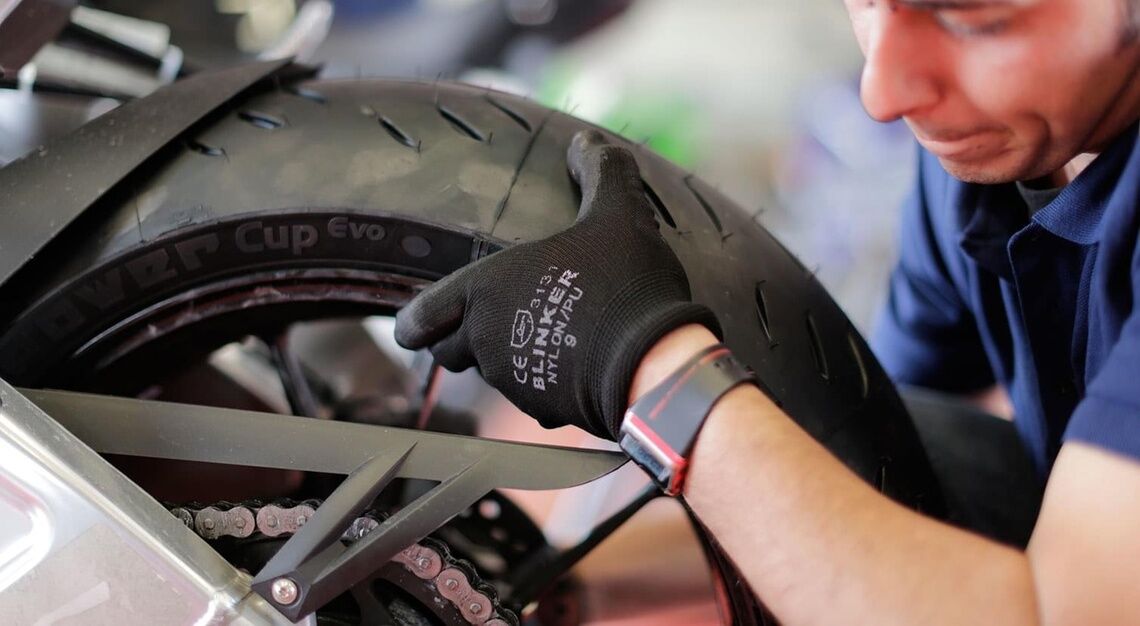
Tire speed index and load index
The speed rating on your replacement tire must meet or exceed the maximum speed your motorcycle can reach. Fitting a tire with a lower speed rating than specified means operating it beyond its design limits. The load index must cover the combined weight of the motorcycle, rider, passenger, and any luggage at the maximum loaded condition. Both specifications are in your owner's manual; confirm both before selecting any replacement tire.View more -
The right tires for the right usage
A commuter tire is built for durability and wet-weather grip in stop-start conditions. A touring tire prioritizes long tread life and stable highway behavior. A sport tire prioritizes cornering grip and feedback, at the cost of faster wear. An adventure tire balances tarmac and off-road performance across mixed terrain. Fitting a sport tire on a touring bike or a touring tire on a sport bike delivers a worse experience in both performance and value than the correctly matched option.View more -
Radial or bias tires?
In a radial tire, the crown and sidewall behave as distinct zones: the crown stays rigid for grip and stability at speed, while the sidewall remains flexible for comfort and feedback. In a bias tire, the structure is uniform throughout, making it well-suited for cruisers, classic bikes, and applications where load durability matters more than high-speed performance. Never mix radial and bias construction on the same motorcycle: the difference in mechanical behavior creates unpredictable handling in cornering.View more