What is bicycle rolling resistance?
In simple terms, bicycle rolling resistance is what prevents you from riding fast. There are several factors that produce this: gravity, mass and aerodynamics.
1 - Mass and gravity
Your bike and all its components have mass. You, the cyclist, have mass, as does your load (backpack, water bottle...). When you get on your bike, all of these elements form an overall mass that the earth's gravity pulls to the ground, making it more difficult to move forward.
Take the example of an eraser: the harder you press it down on the table, the harder it is to make it slide. When you're on your bike, it's a similar story. The greater your overall mass, the harder you're drawn to the ground, the harder it is to move forward and the more effort you need to make in order to ride.
Depending on the gradient of the terrain, the forces either increase or decrease. If you're pedalling uphill, the force of gravity pulls you down harder, in the opposite direction to where you're going. Bicycle rolling resistance increases and you need more energy to counterbalance this force and reach the top of the hill.
Conversely, it becomes easier to drive downhill because you're going in the same direction as gravity. Bicycle rolling resistance is reduced and the energy you need to get to the bottom of the hill is minimal or non-existent.
2 - Aerodynamics
Another factor in bicycle rolling resistance is aerodynamics, which is closely linked to speed. If you're driving down the motorway in a car and you stick your hand out of the window, it will feel a strong resistance from the air coming against it. If you turn your hand so that it is parallel to the ground, its position will be more aerodynamic and will therefore reduce this resistance.
On a bike, it's much the same thing. In terms of aerodynamics, the position of the cyclist, his bike and any baggage constitute resistance to forward movement.
The role of tires in rolling resistance
As you can see, the higher the rolling resistance, the more energy you need to expend while pedalling to overcome it. And in this context, your tires, which are the only two elements in contact with the ground, can in some cases reduce bicycle rolling resistance so that you can make less effort, and therefore use less energy.
Bike tire rolling resistance
As we drive, a zone of the tire enters what is known as the contact area, then leaves it for the rest of the lap and re-enters it again on the next cycle. Each time it passes, this area of the tire is deformed, which implies energy consumption.
An optimised tire is one that is designed using carcass, rubber, tread and tire shape technologies that will reduce energy consumption when driving.
Michelin's expertise helps us to refine these designs to create tires that dissipate as little energy as possible so that the effort applied to the wheel is exploited to the maximum. This is what we call rolling efficiency.
Impact of Tires Optimized for Rolling Efficiency
It's important to know that, depending on the use, a tire will have a greater or lesser impact on bicycle rolling resistance.
On the road, if you're going uphill, tire optimisation isn't very noticeable, but it is more noticeable during a relaunch phase. This is because the tire helps to optimise your performance. A non-optimised tire, on the other hand, can penalise relaunching, particularly in competition.
It's a bit different in mountain biking or road racing when you're travelling at speeds of over 20 km/h, since aerodynamics contribute over 60% of the energy consumed by the forward motion, which reduces the impact of a tire, no matter how optimised.
Which Michelin Tires Should You Choose?
For road cycling: The Michelin Power Time Trial tire provides low rolling resistance in the Tubetype category.
For MTB & Cross-Country: The Michelin Jet XC2 Racing Line offers high performance.
For added grip: The Michelin Force tire range offers better traction with a 2-Watt loss in efficiency.
For extreme conditions: The Michelin Wild XC tire provides the best grip but sacrifices rolling efficiency by 4 Watts.
How Can You Optimize Tire Performance?
Depending on how you use your bike, tire pressure will play a decisive role in tire performance and therefore bicycle rolling resistance. And the good news is that tire pressure is something you can control.
Pressure for Road Use
For road use, optimizing tire pressure enhances your performance. If your tires are not properly inflated, bicycle rolling resistance will increase. Therefore, it's crucial to regularly check and adjust your tire pressure.
Remember, it's not about inflating as much as possible, but inflating to the recommended pressure. Never inflate beyond the maximum pressure marked on the sidewall. Over-inflation could lead to rapid air loss which could potentially lead to accidents.
Pressure for Mountain Biking
If you're riding a mountain bike, the pressure you need to adjust will depend on the terrain. On gravel paths with dust or on sand and other soft ground, it is better to ride at low pressure. In this type of surface, high pressure would otherwise mean a drop in performance. Over-inflated tires tend to penetrate the ground and make it harder to move forward.
Pressure for Gravel Riding
For gravel use, you will have to choose a pressure which enables you to reach the versatility you wish. A high pressure will give good results in terms of rolling resistance on smooth surfaces, but could come at the expense of off-road grip. A low pressure will enhance off-road grip, but with potential downsides in terms of pinch protection and rolling resistance on smooth surfaces. Over- or under-inflation could lead to rapid air loss.
For more information about pressure, check out our tire pressure guide.
FAQ
Read our Frequently Asked Questions.
Rolling resistance is the energy the tire consumes as it deforms with each rotation — caused by the hysteresis of the rubber (the energy lost when rubber flexes and recovers). It's one of the three main forces a cyclist must overcome (alongside air resistance and gravity on climbs). A tire with lower rolling resistance requires less effort to maintain a given speed. For cyclists, particularly on flatter terrain and at moderate speeds, rolling resistance is a meaningful contributor to total energy cost.
The rubber compound is the primary factor — harder, more elastic compounds lose less energy to hysteresis and roll more efficiently. Casing construction (TPI) also matters — a higher TPI casing flexes more easily, conforming to the road rather than bouncing, which reduces energy loss. Tire pressure plays a role — at higher pressures on smooth roads, less tire deformation means less rolling resistance, but this relationship reverses on rough surfaces where a lower pressure tire that deforms around bumps actually rolls more efficiently than a hard tire that bounces over them.
Not on real road surfaces. On perfectly smooth surfaces, narrower tires at higher pressure do have lower rolling resistance. But on real roads — which have texture, imperfections, and small irregularities — a wider tire can be run at a lower pressure and actually rolls more efficiently by deforming to the surface rather than bouncing over it. This insight has partly driven the shift toward wider road tires in the past decade: a 28mm or 30mm tire at appropriate pressure may roll as efficiently or better than a narrow tire on typical road surfaces while also being more comfortable.
On smooth surfaces, higher pressure reduces tire deformation and reduces rolling resistance. On rough surfaces, the relationship inverts — a tire with more pressure bounces over irregularities rather than absorbing them, losing energy to vibration and impact. The optimal pressure for minimum rolling resistance on rough roads is lower than on smooth ones. This is one reason why Michelin's pressure guide varies recommendations by surface type — road, gravel, and mountain bike surfaces all have different optimal pressure ranges for rolling efficiency.
A tubeless setup removes the friction between the inner tube and the tire's inner surface — that contact creates a small but measurable energy loss as the tube deforms slightly with each rotation. Removing the tube eliminates this friction, reducing rolling resistance. Combined with the ability to run at lower pressures (which can reduce rolling resistance on real road surfaces), tubeless setups typically offer lower rolling resistance than comparable tube-type setups. This is one of the performance benefits that has driven tubeless adoption beyond mountain biking into road and gravel cycling.
It depends on speed and terrain. At low to moderate cycling speeds on flat terrain, rolling resistance is a significant contributor to the energy cost of riding. As speed increases, aerodynamic drag becomes dominant — at faster road race speeds, reducing aerodynamic resistance is more valuable than minimizing rolling resistance by a wide margin. On climbs, weight becomes the dominant factor. Rolling resistance is most relevant for slower riding, rough-surface riding, and situations where aerodynamics are minimized — such as low-speed gravel riding or urban commuting.
Related articles
-
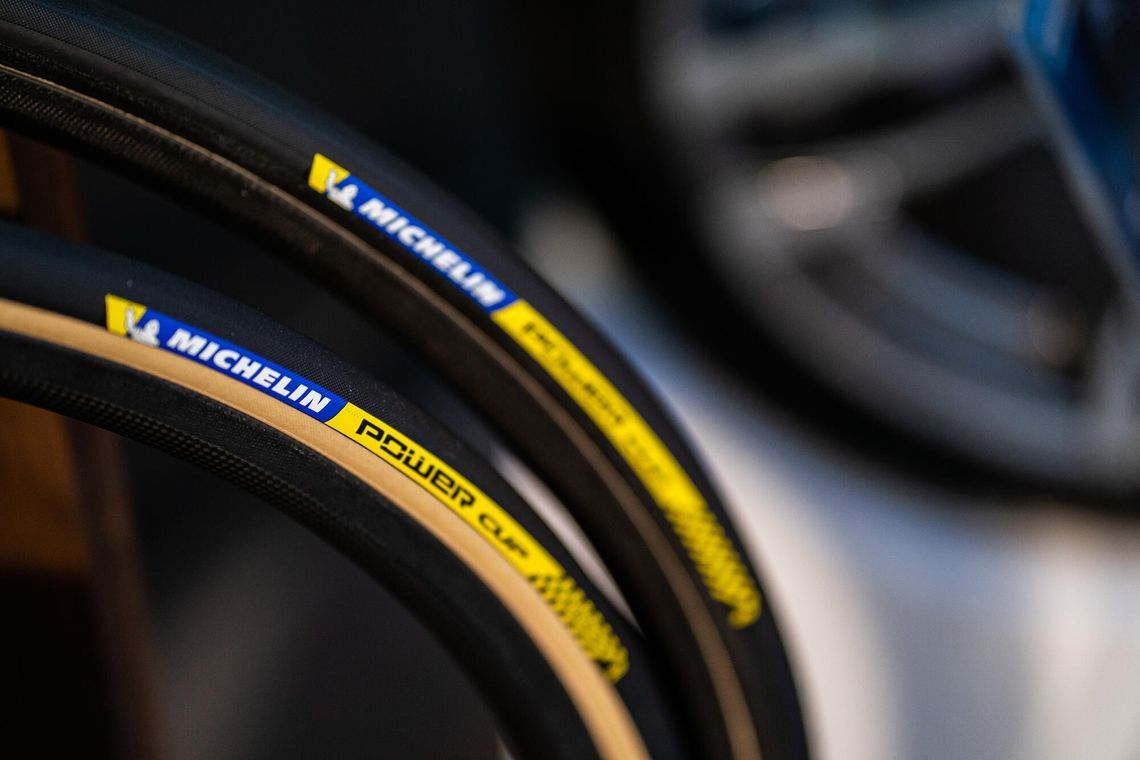
Bike Tire Sizes explained: our complete guide
Bicycle tire sizes are expressed in three different systems: ETRTO (e.g. 25-622, the most precise format), metric (e.g. 700x25C), and imperial (e.g. 29x2.0). The ETRTO bead seat diameter (the second number) must match exactly between tire and rim. A 700c road tire and a 29-inch mountain bike tire share the same 622mm bead seat diameter but very different widths and clearances. Michelin's size chart at michelinman.com converts between all three systems.Learn more -
Technical glossary
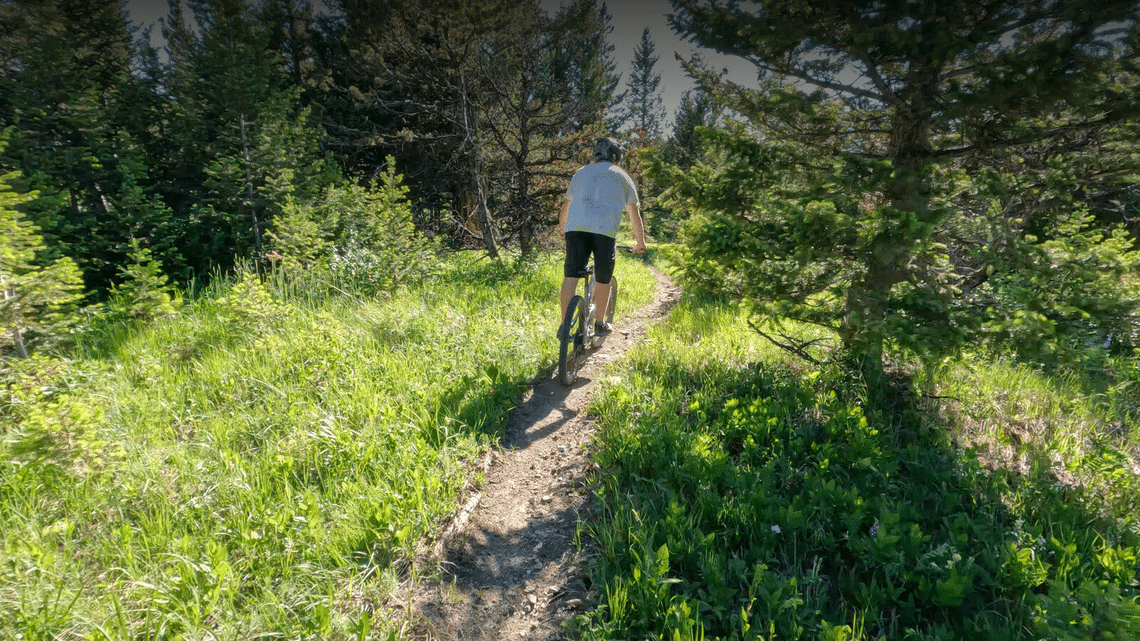
This glossary defines the specific terms used in Michelin's bicycle tire specifications. ETRTO: the standardized European size format expressed as width-bead seat diameter in mm. TPI: threads per inch in the casing (higher means lighter and more supple). TLR (Tubeless Ready): requires sealant to seal the casing and become airtight. Flexible bead (FB): aramid fiber, can be folded for storage. Wire bead (WB): steel, cannot be folded. Gum-X: Michelin compound optimizing grip and rolling speed. Magi-X: Michelin compound prioritizing maximum grip.Learn more