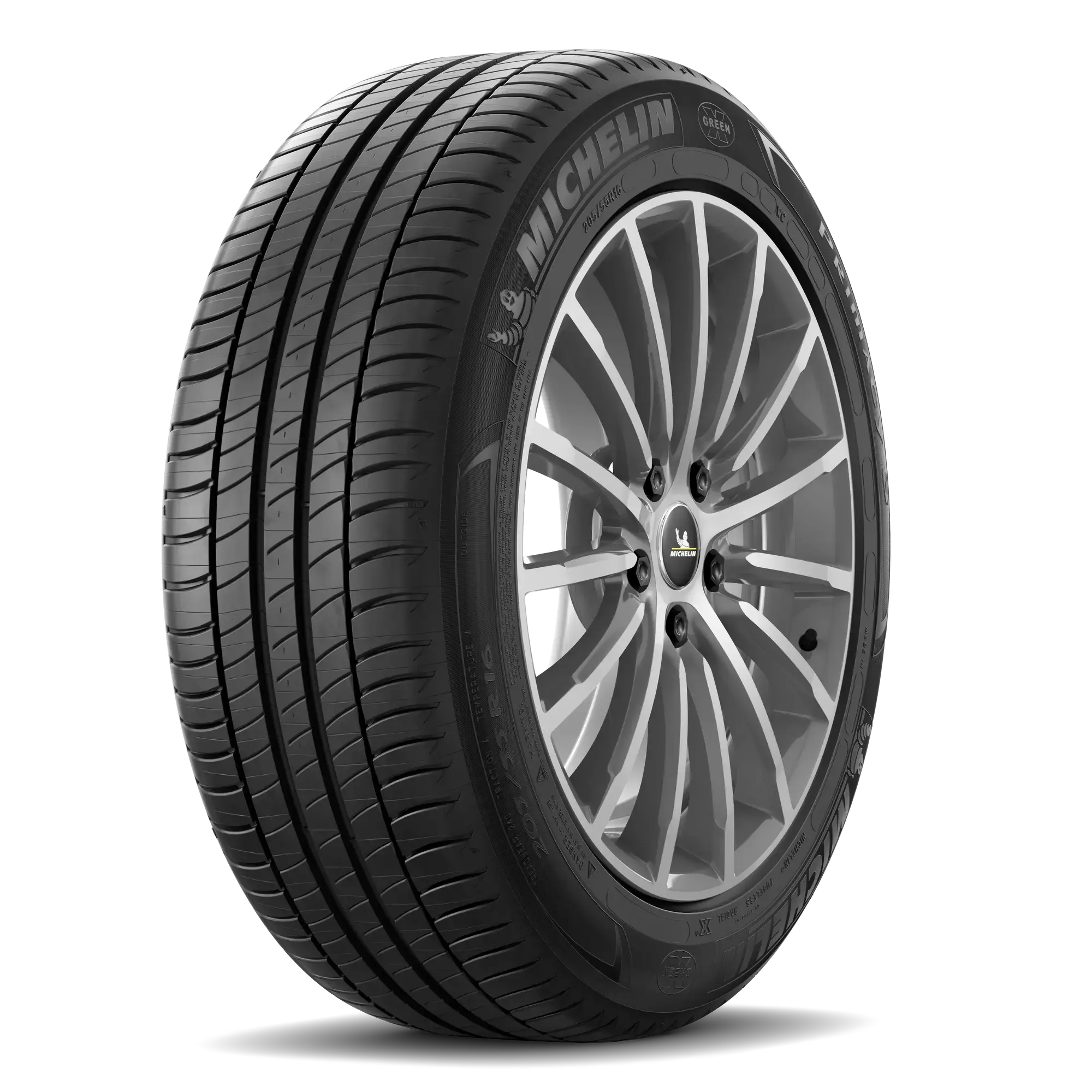
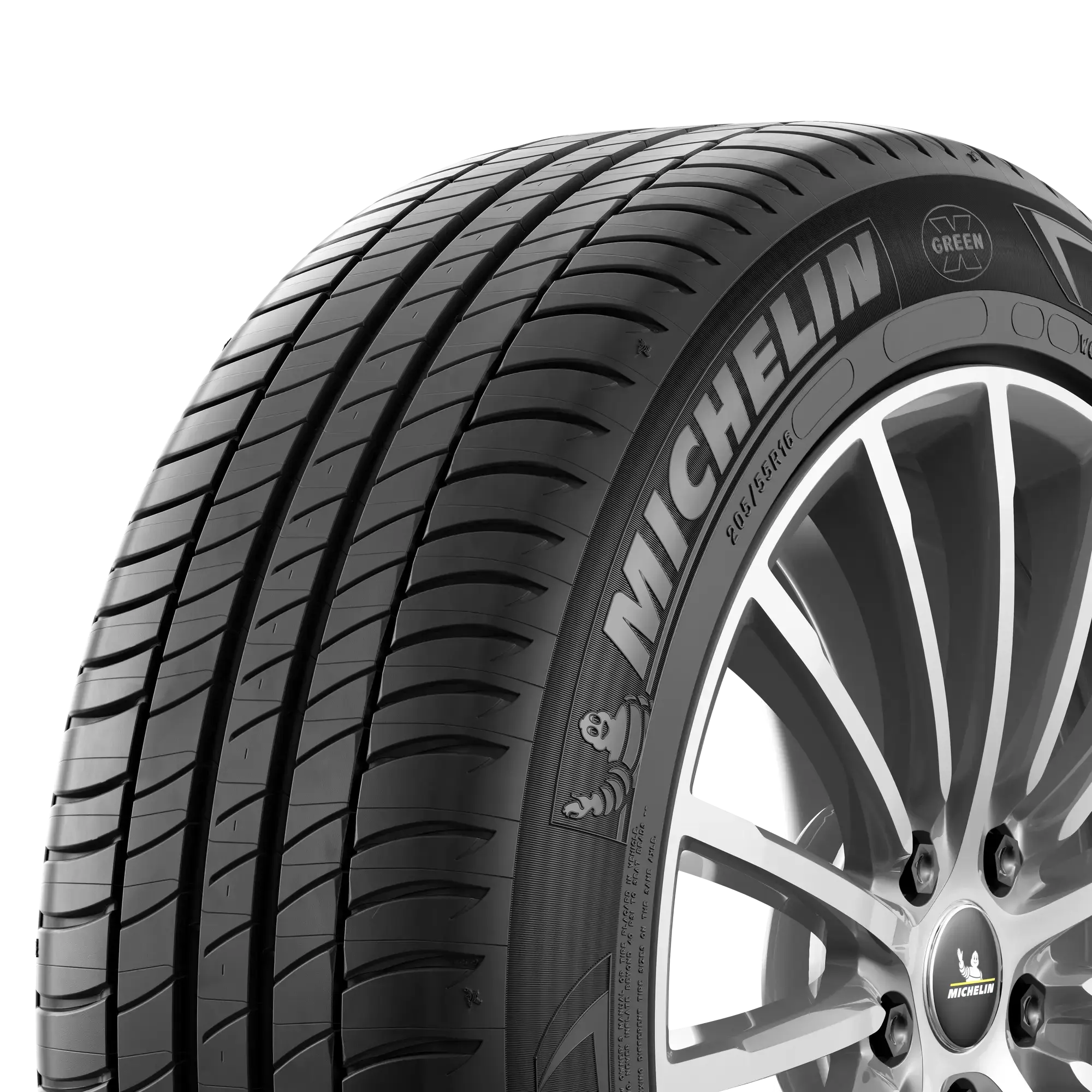
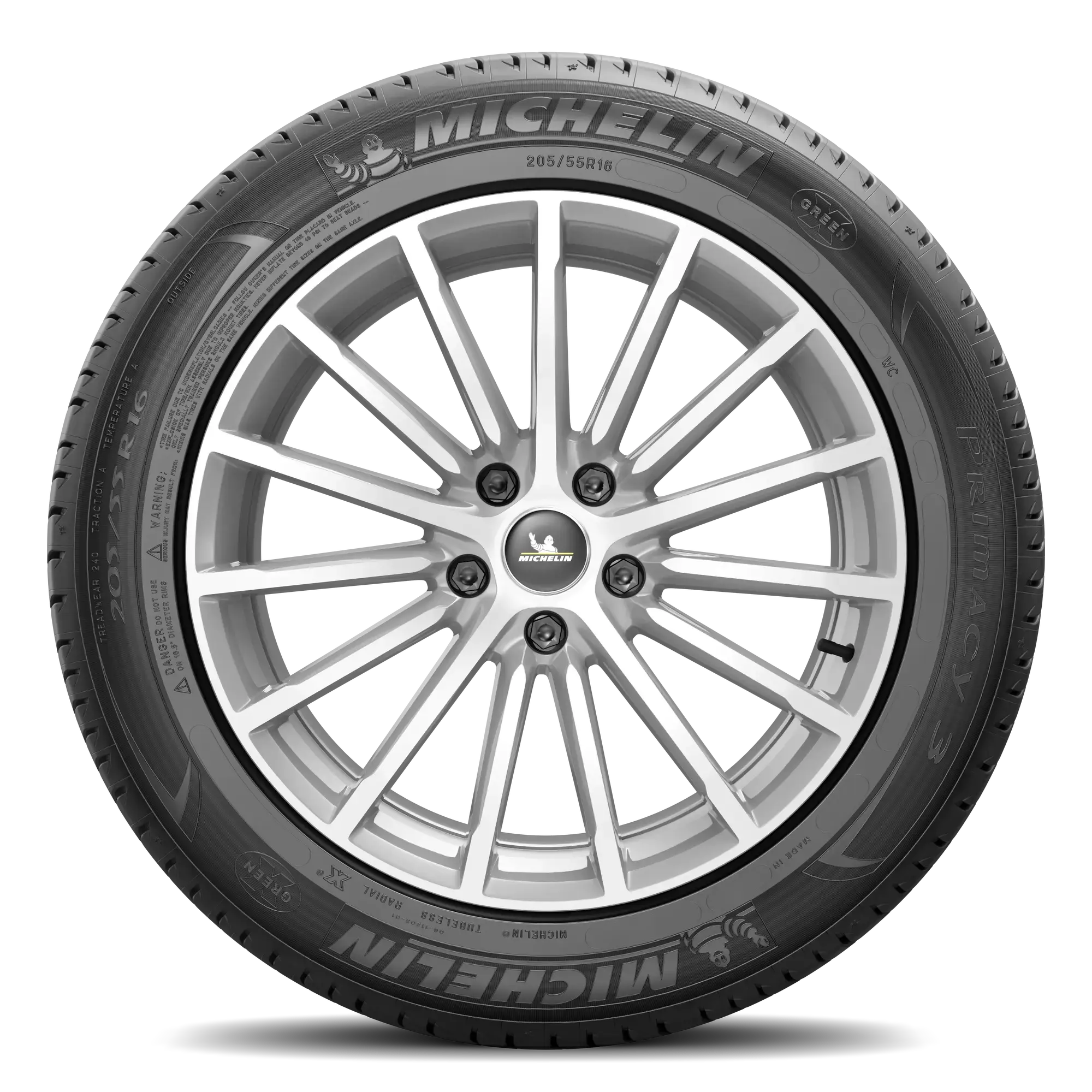
MICHELIN Primacy 3

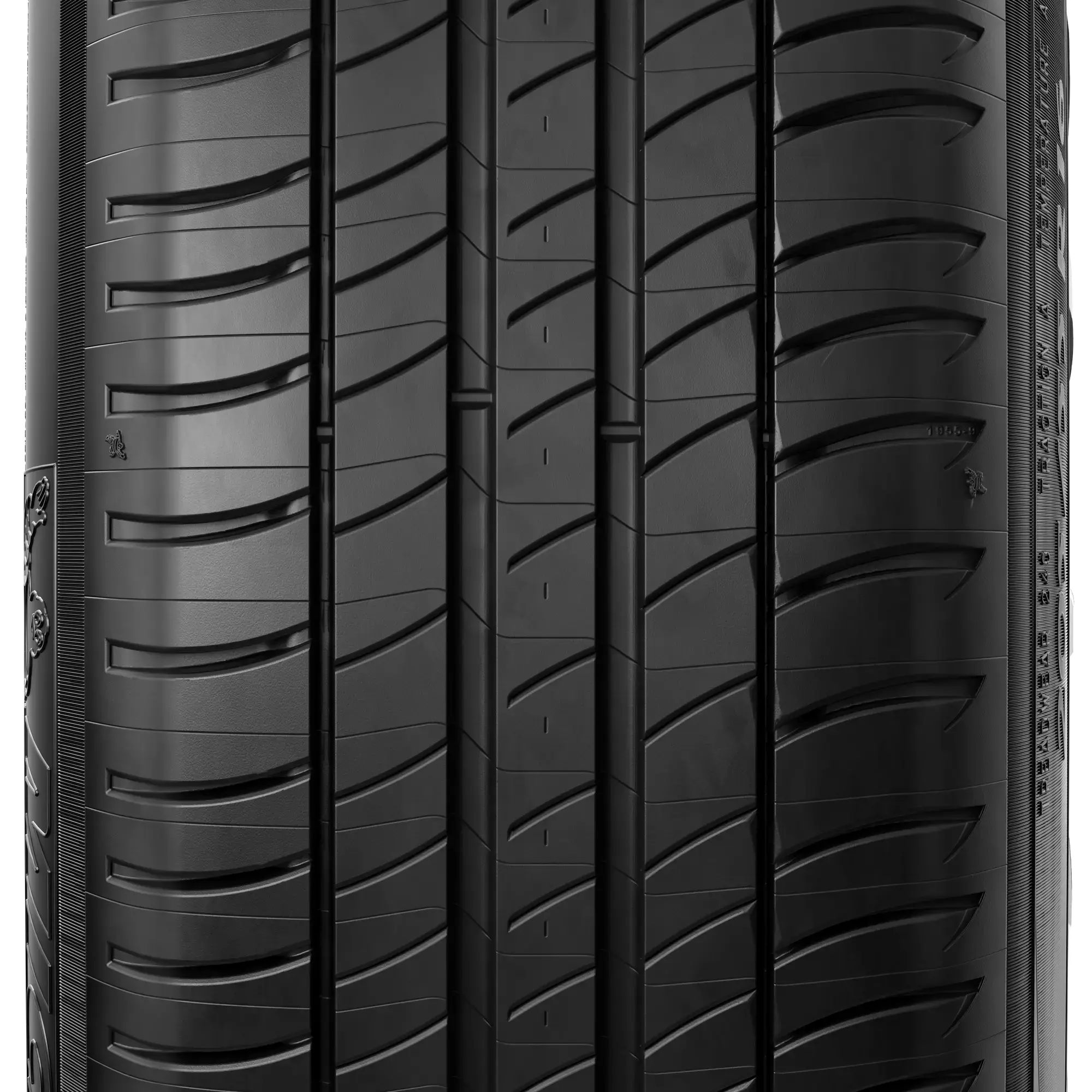
MICHELIN

Key benefits for MICHELIN Primacy 3 tire
Excellent performance on wet roads ensures safe driving on rainy days in summer.(1)
Auto-blocking sipe technology, along with a patented rubber tread compound, combine to produce excellent performance on wet roads(1). The MICHELIN Primacy 3 summer tire gives you and your passengers safe and comfortable driving on daily commutes or long road trips. Premium wet performance from a premium tire.
MICHELIN Primacy 3 Warranties
We've got your back. A promise of this magnitude can only come from Michelin.
We want you to be 100% satisfied with your Michelin replacement passenger or light truck tires so they are backed by the Michelin Promise Plan™.
The Michelin Promise Plan™ includes the following benefits: 60-Day Satisfaction Guarantee, Roadside Assistance, Manufacturer's Limited Warranty & Treadwear Warranty.
Discover more 
Primacy 3 TIRE REVIEW
There are 409 reviews for the Primacy 3

Rating Snapshot
When asked, 90% of reviewers recommend this tire
For any matter regarding customer service (in-store experience, after-sales service, delivery, etc.) please contact our Consumer Care team
Review Summary
Customers overwhelmingly praise these tires for exceptional smoothness, quiet rides, and outstanding traction in wet and dry conditions. Many report impressive durability, with some exceeding 60,000 miles while retaining substantial tread, justifying the upfront investment through long-term value. Strong brand loyalty is evident, with reviewers stating they will repurchase and recommend. A small number mention minor concerns like tire noise at freeway speeds or occasional wear issues, but these remain rare outliers in an overwhelmingly positive landscape.
AI-generated from the text of customer reviews
1-5 on 409 reviews

Posted on May 27, 2026
Collected by Bazaarvoice
New owner
I purchased my car 2025 with 13miles and 1 of the sensors was not right on the wheel but the dealer ade me by a new tire to find out that it was the sensor your service people shoved and broke then sprayed to seal the leak and I was almost put in an accident not to mention stranded on interstate until family could come for me. All could have been avoided had they owned up to the fact that there was a defect with sensor.
Design
Safety
Performance
Vehicle Make: Nissan 2025 Sentra
Purchase date: 03/12/26
Linda, we’re very sorry to hear about your experience. A member of our Consumer Care team will be reaching out to you shortly. If you prefer, you can also contact us directly at 866-866-6605 (Mon–Fri 8 AM–7 PM EST, Sat 9 AM–1 PM EST).
Michelin US
June 4, 2026
Posted on February 6, 2026 by hamselb
Collected by Bazaarvoice
I recommend them
Michelin rubbers: firm grip, durability and comfort in rain or dry, safe and reliable on every long or short journey already. Excellent option
Posted on: influenster.com
Posted on January 5, 2026 by mase4comp
Collected by Bazaarvoice
Excellent tires.
Probably the best tires I have ever had on a car. Just a luxurious smooth ride with no tire noise. Handling is great. Very pricey, but I doubt I would look at an alternative considering the performance I have got out of them.
Design
Safety
Performance
Vehicle Make: BMW 540i
Purchase date: 11/15/24

Posted on December 5, 2025 by Anonymous
Collected by DriverReviews
Good enough for an EV
Buy Again
Tire Performance
Value For Money
Vehicle Make: Kia Niro
Purchase date: 07/08/25
Approx. miles driven: 4000
Posted on: DriverReviews
Posted on December 3, 2025 by Anonymous
Collected by DriverReviews
Excellent drive and n wet and dry
Buy Again
Tire Performance
Value For Money
Vehicle Make: MINI Cooper
Purchase date: 05/10/25
Approx. miles driven: 4000
Posted on: DriverReviews
Legal Mentions
1 - wet braking performance - MICHELIN Primacy 3 is rated "A" or "B" on the Wet Grip Item of the European labelling scale.2 - high longevity - MICHELIN Primacy 3 tire was awarded with the best note in longevity in the comparative test done by ADAC on dimension 205/55 R16 91V, published in February 2015 and February 2018.3 - MICHELIN Primacy 4 better longevity than predecessors - Test conducted by DEKRA TEST CENTER, on Michelin's request, June-July 2017, on dimension 225/45 R17 94W on VW Golf 7 comparing MICHELIN PRIMACY 4 tire versus MICHELIN Primacy 3 tire. MICHELIN Primacy 4 tire is 20% better than MICHELIN Primacy 3 tire.4 - wet braking performance Primacy 4 - MICHELIN Primacy 4 is rated "A" or "B" on the Wet Grip Item of the European labelling scale.5 - long-lasting performance Primacy 4 - New and Worn (worn means worn on machine (buffed) to the depth of Tread Wear Indicator according to European regulation for Tread wear indicator ECE R30r03f), on 205/55 R16 91V MICHELIN PRIMACY 4, is above the R117 European regulation wet grip threshold. Last km being understood as until the minimum legal tread depth (1.6 mm). Please refer to the minimum legal tread depth in your country.6 - MICHELIN Primacy 4 fuel efficiency - Rolling Resistance test conducted by TÜV SÜV Product Service, on Michelin's request, June-July 2017, on dimension 225/45 R17 94W. MICHELIN Primacy 4 generates 11% rolling resistance less than MICHELIN Primacy 3 tire.7 - awarded by ADAC - MICHELIN Primacy 3 has been awarded as "Good" by ADAC in 2015 and 2018 in 205/55 R16.
V-Speed Rated Sizes:
W-Speed Rated Sizes:
Y-Speed Rated Sizes:
OE [Vehicle Manufacturer] Sidewall Marking: * = BMW, MO = Mercedes-Benz, MO S1 = Mercedes-Benz Low Emission, AO = Audi, AOE = Audi Extended, A0 S1 = Audi Low Emission
OE Code [Original Equipment Key]: L = Lexus, MB = Mercedes-Benz, AU = Audi, BM = BMW, SU = Subaru
ZP = Zero Pressure Run-Flat Technology
ZP SR = Zero Pressure Short Range Run-Flat Technology
>> The sizes shown are average design values for tires measured on specified measuring rim widths. Some tires may vary from this value by +/-3% of the section height (affecting overall diameter), and +/-4% of the section width.
>> Section width varies approximately 0.2" (5mm) for every 0.5" change in rim width.
>> Tread patterns are often tuned to accomodate different tire widths. Tires for a particular dimension of a given tireline may vary in appearance from the tire shown in the photograph.
WARNING: Serious or fatal injury may result from tire failure due to underinflation or overloading. To ensure correct air pressure and vehicle load, refer to vehicle owner's manual or tire information placard on the vehicle. Serious injury or death may result from explosion of tire/rim assembly due to improper mounting. Only tire professionals should mount tires and they should never inflate beyond 40 psi to seat the beads. Before mixing types of tires in any configuration on any vehicle, be sure to check the vehicle owner's manual for its recommendations.
DANGER: Never mount a 16" diameter tire on a 16.5" rim.
DANGER: Never mount a 17" diameter tire on a 17.5" rim.
Inflation pressure increase must not exceed the maximum pressure branded on the tire sidewall. When a customer requests a replacement tire with a lower speed rating than the original equipment tire, you must clearly communicate to him or her that the handling of the vehicle may be different, and that its maximum speed capability is limited to that of the lowest speed-rated tire on the vehicle. Exceeding the lawful speed limit is neither recommended nor endorsed.
For high-speed driving, additional inflation pressure and possibly reduced tire loading and/or upsizing is required. In the absence of specific recommendations by the vehicle manufacturer, use the following guidelines based on those in the European Tyre and Rim Technical Organization Standards Manual.
For speeds over 160mph (100 mph), load and inflation must be adjusted according to the table below.
H-Speed Rated Sizes:
| Maximum Speed (mph) | 100 | 106 | 112 | 118 | 124 | 130 |
| Inflation Increase (psi) | 0.0 | 1.0 | 2.0 | 3.0 | 4.0 | 5.0 |
| Load Capacity (% of max.) | 100 | 100 | 100 | 100 | 100 | 100 |
| Maximum Speed (mph) | 100 | 106 | 112 | 118 | 124 | 130 | 136 | 143 | 149 |
| Inflation Increase (psi) | 0 | 1 | 2 | 3 | 4 | 5 | 5 | 5 | 5 |
| Load Capacity (% of max.) | 100 | 100 | 100 | 100 | 100 | 100 | 97 | 94 | 91 |
| Maximum Speed (mph) | 118 | 124 | 130 | 136 | 143 | 149 | 155 | 161 | 168 |
| Inflation Increase (psi) | 0 | 1.5 | 3.0 | 4.5 | 6.0 | 7.5 | 7.5 | 7.5 | 7.5 |
| Load Capacity (% of max.) | 100 | 100 | 100 | 100 | 100 | 100 | 95 | 90 | 85 |
| Maximum Speed (mph) | 118 | 124 | 130 | 136 | 143 | 149 | 155 | 161 | 168 | 174 | 180 | 186 |
| Inflation Increase (psi) | 0 | 0 | 0 | 0 | 1.5 | 3 | 4.5 | 6 | 7.5 | 7.5 | 7.5 | 7.5 |
| Load Capacity (% of max.) | 100 | 100 | 100 | 100 | 100 | 100 | 100 | 100 | 100 | 95 | 90 | 85 |