Why do new tires need to be broken in?
The manufacture of tires involves the use of moulds that give them the exact shape defined at the time of their design. When it comes to demoulding, it is necessary to use products that allow the tire to be removed. As these products tend to leave a thin film of a shiny appearance on the tire, it is important to take some precautions when riding until this film has completely gone.
What can happen if this break-in phase is not taken into account?
Some people have had this happen to them: after getting on their motorcycles with brand new tires from the dealer, they quickly picked up speed, turned at too wide an angle and ended up in a horizontal position on the road...
Regardless of the brand of tires you buy, care should be taken when they are new so that you can use them to their full potential once the break-in period is over.
What you should not do?
We will explain how to proceed to a smooth break-in in a moment. But let's start with an important recommendation: do not use abrasive products to rub the tire's surface in the hope of removing the film more quickly. Doing so could cause irreversible damage to your tire. Michelin's recommended break in is explained below.

How to break in new motorcycle tires?
Breaking in new motorcycle tires simply requires riding, but with the following precautions:
For road usage
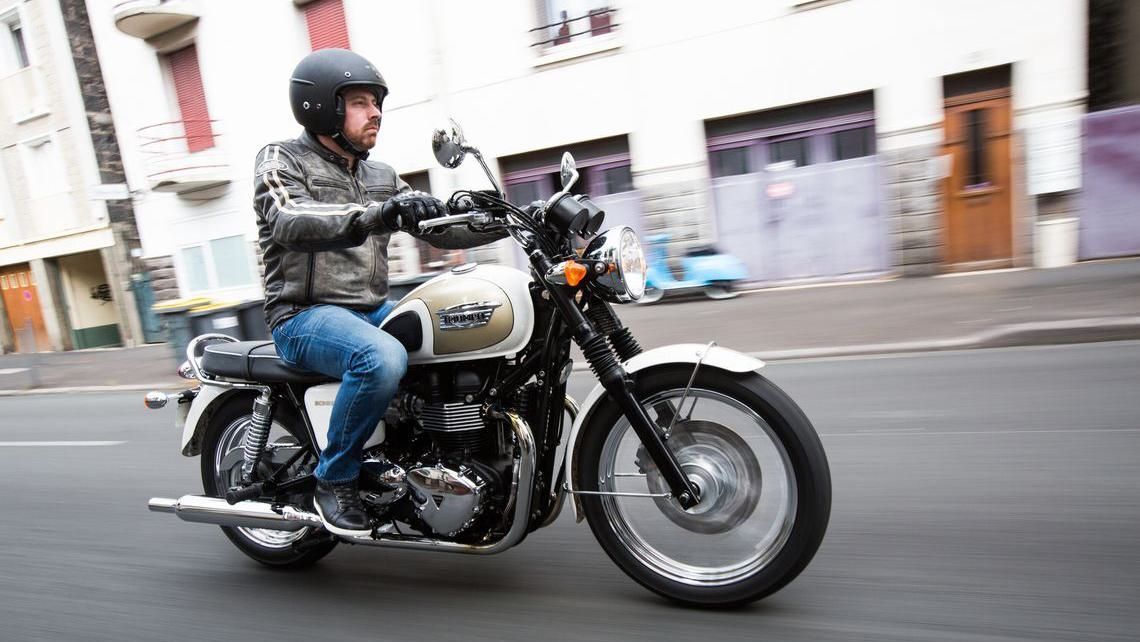
Start slowly and use gentle acceleration and braking, as well as low lean angles. Gradually increase the demands on the tires until you get used to their performance. We recommend at least 100 km for this process. This applies to all our motorcycle and scooter tires.
The ideal conditions would be to make a trip that covers at least this distance and to ride on all types of roads. Why? Because in daily use, for example for commuting, one tends to put more angle on one side than the other, especially on roundabouts which imply a direction of rotation that is always the same.
The break-in is still possible in this context, although it may take a little longer, until it is sufficiently applied to both angles.
For off-road usage
For some activities, the break-in time may be faster than on the road due to the more frictional surfaces involved (e.g. dirt for Cross Country). However, keep the target of 100km before you put any more strain on the performance of your new tires to ensure that the break-in is complete.
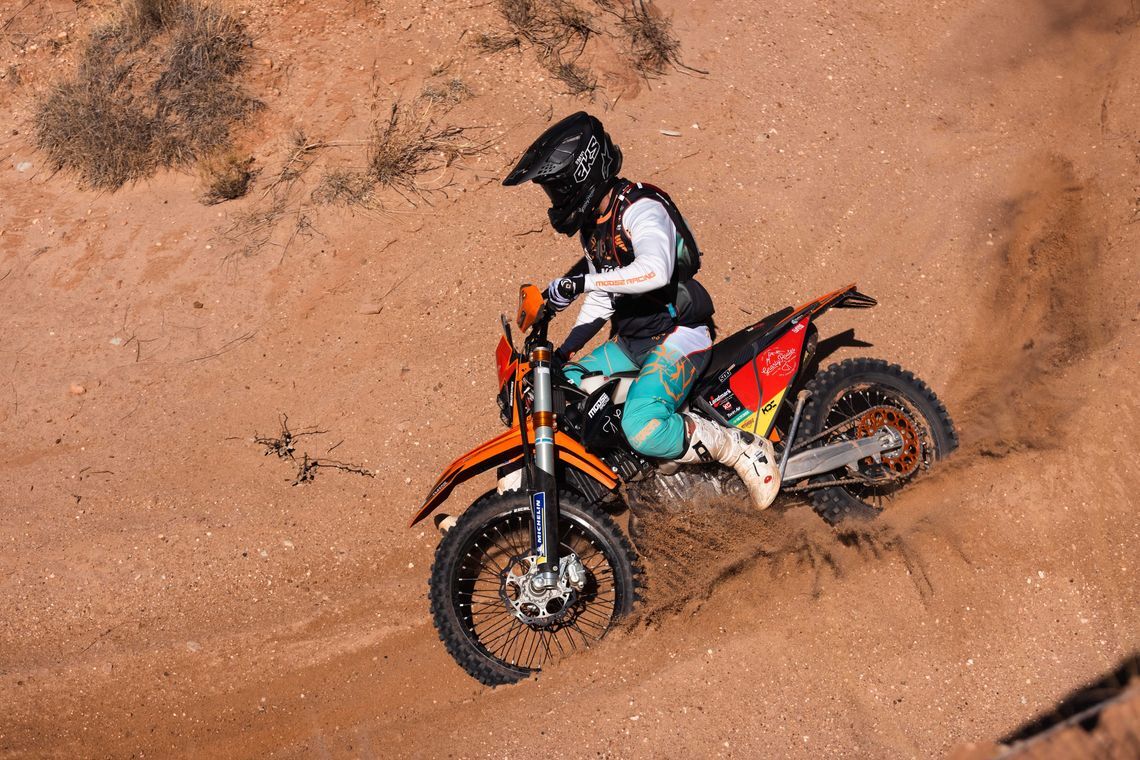
For track usage (NHS et road legal)
- With tire warmers: maintain the temperature with sufficient demand from the start.
- Without tire warmers: start slowly and use gentle acceleration and braking, as well as low lean angles. Gradually increase the demands on the tires until you get used to their performance.
For rain tires (NHS)
Avoid strong acceleration, braking and cornering. Then gradually increase the pace of the race to get used to the performance of your tires.
Temperature influences the break-in time
The break-in period can be shorter or longer depending on the ambient temperature. Driving in warm weather lets the tires reach their optimum grip level sooner. Break-ins can also be done in cold weather, but just be aware that it will take longer for the tires to be sufficiently broken in.
Keep the proper pressure.
Keeping your tires at the correct pressure (as recommended by your tire manufacturer) is important throughout their life. In the break-in phase, when the tires are still new, incorrect pressure could not only have a bad impact on short-term handling, but also on their long-term performance.
How do you break-in when you only change one tire?
It may happen that you do not need to change both tires at the same time. For example, if you have a flat tire that cannot be repaired and the other tire has a low level of wear, your dealer will probably advise you to change only one tire.
The break-in should be carried out with a new tire in the same way as if you had changed both tires. As long as the thin film is present on your new tire, the break-in process is not complete and the same precautions should be taken as explained above.
And after the 62 mi?
Once you have ridden over 60 miles, you should be able to push your vehicle more, but be careful not make any abrupt changes to your riding style. Be progressive until you gain complete confidence in the performance of your tires.
FAQ
Read our Frequently Asked Questions.
New motorcycle tires have a release agent on their surface from the manufacturing mold — a lubricant that makes removing the tire from the mold possible. This release agent reduces grip temporarily until it wears off through use. Additionally, the rubber compound needs to reach its operational flexibility and the tire needs to fully seat and conform to the rim. During the break-in period, the tire doesn't provide its full designed grip, particularly in cornering.
Michelin recommends a progressive warm-up approach rather than a fixed mileage. For the first several rides on new tires — particularly the first 100 miles or so — keep lean angles moderate, braking forces gentle, and acceleration smooth. This allows the release agent to wear away evenly and the tire to seat correctly on the rim. The exact distance varies by tire model and riding style, but the principle is progressive loading rather than immediately pushing hard.
Avoid: aggressive lean angles in corners, hard braking (particularly on the front), abrupt full-throttle acceleration, and riding on very slippery surfaces during the break-in period. The combination of full lean angle and reduced grip from the release agent is when the break-in risk is highest. Save demanding riding for after the first several hundred miles of progressive use.
Track tires typically have a more specific and deliberate warm-up process rather than a break-in in the road tire sense. For circuit use, a structured warm-up protocol — gentle first laps building progressively to full pace — is standard practice regardless of tire age. Road tires need break-in to remove release agents and allow the compound to settle. Track tires need thermal management as the primary preparation for each session.
Yes — more experienced riders can feel the difference in cornering confidence. A new tire may feel slightly slippery or uncertain in lean, particularly in the first few corners. Once the release agent has worn and the tire has warmed properly, the grip improves noticeably. This gradual improvement over the first rides is the break-in process working as expected. If the tire continues to feel slippery after several rides, have the installation and pressure checked.
Yes — particularly if you're fitting for a specific purpose such as a track day, a long tour, or regular off-road riding. A fitting technician can confirm the tire choice is appropriate for the planned use, ensure correct installation and pressure, and advise on any break-in considerations specific to the tire model. If you've recently purchased a high-performance tire and plan demanding riding, understanding any specific handling characteristics of that model is worth a few minutes of conversation.