Riding a motorcycle in the snow
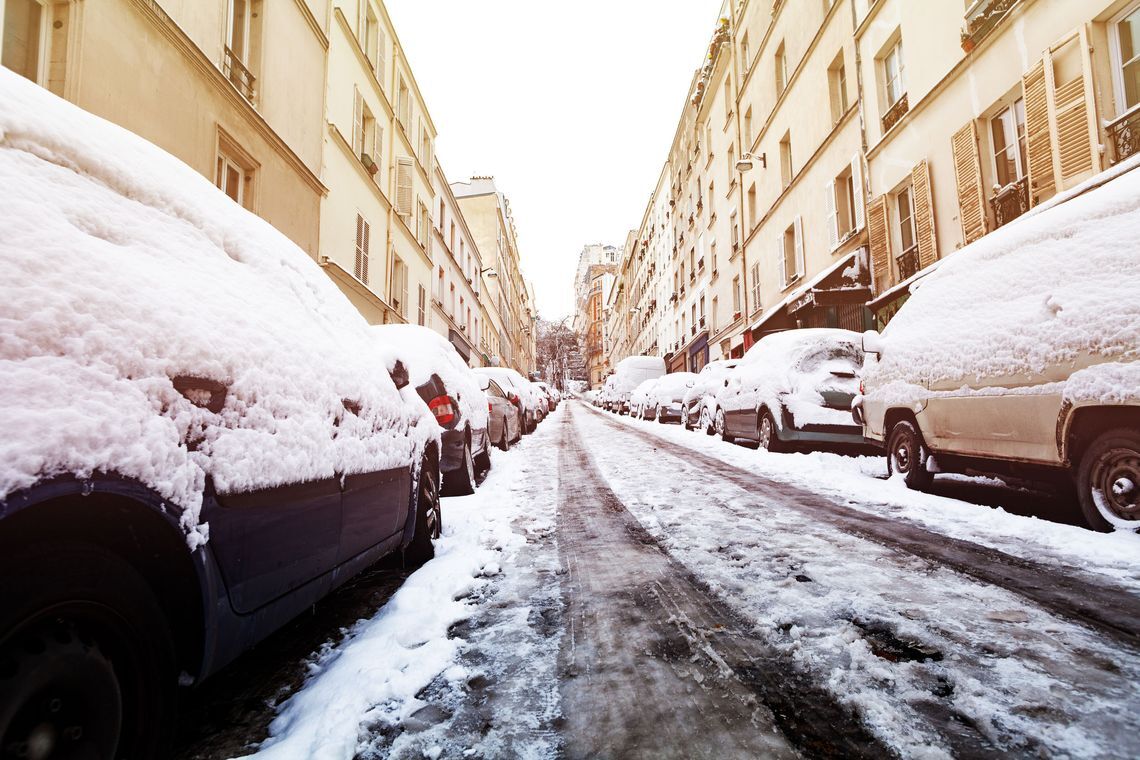
After a snowfall, the road becomes slippery. When the snow melts, it becomes water, which can then turn into ice when the temperature drops again overnight.
Since this is a typical scenario you may face, it's natural to ask yourself whether it's safe to ride your motorcycle in the snow or on ice and whether your tires will provide sufficient grip during your journey.
It's not just a question of grip
Of course, grip is essential. Grip conditions are much more precarious when the ground is wet and cold than when the weather is warm and dry. Fitting appropriate tires with good grip on snowy or icy roads can ensure a safe and smooth car ride. On a motorcycle, however, it's not just a question of grip. The other parameter that comes into play is balance. When you only have two wheels to rely on, you can lose this essential balance at any time on a snowy or icy road. Even more so if the grip, compromised by the cold, has diminished.
Tire temperature
It is essential to understand that every tire has an ideal operating temperature. This temperature is perfect because the tire will perform at its best. To reach this temperature, the tire must travel a certain number of miles, which varies according to the type of tire. However, in a winter context where the rubber stiffens with the cold and becomes less effective in terms of grip, it is difficult, if possible, to reach and maintain this ideal temperature.
In competition, tire warmers are used to warm up the tires before the start of the race so that they are already at their ideal temperature. Then, the tires' temperature does not drop because of the speed at which they are driven during the race.
But even if this equipment were available for use off the track, your tires, once heated, would quickly lose their temperature in the cold as they would usually be put under different driving and speed constraints than they typically are.
So, what about motorcycle snow tires?
At Michelin, we do not recommend riding your motorcycle in winter conditions and low temperatures. We are committed to producing high-quality tires that ensure optimal performance for your safety. As mentioned earlier, riding a motorcycle on snowy or icy roads presents significant safety risks that motorcycle snow tires cannot mitigate.
However, we do design and manufacture winter tires for four-wheeled vehicles to handle difficult winter driving conditions and low temperatures. Our extensive testing has validated their performance even in the most challenging winter conditions.

FAQ
Read our Frequently Asked Questions.
Riding on snow and ice on a motorcycle is significantly more dangerous than in a car. A motorcycle's two-wheel balance depends on dynamic stability — the same physics that keep it upright when moving become a serious liability on a slippery surface. Experienced riders in countries with appropriate equipment and roads designed for winter motorcycle use may ride carefully on compacted snow with suitable tires, but most road motorcycles and the majority of riders are not equipped or trained for snow riding.
Purpose-built studded tires for motorcycles do exist, primarily used in northern European countries where winter motorcycle riding is more common and roads are managed for it. These tires feature metal studs that bite into ice for traction — similar to studded car tires. They are not widely used in the US and are restricted or regulated in some jurisdictions. For most US riders, the practical answer to winter conditions is to stop riding and store the motorcycle until conditions improve.
Balance is the critical difference. A car is stable at rest on all four wheels even with minimal grip. A motorcycle must maintain dynamic balance through traction and inertia — if it slides sideways or the front wheel loses grip, there is no four-wheel platform to prevent a fall. The recovery options available to a car driver (steering corrections, counterbalancing mass) are not available in the same way on a motorcycle. This is why the safety margin for winter riding is much narrower.
Cold and wet are different from snow and ice. A modern motorcycle with appropriate all-season road tires can handle cold, wet conditions with the same adjustments that apply to a car: reduced speed, increased following distance, smooth inputs, and avoidance of painted lines, metal surfaces, and standing water. The tire's rubber compound becomes less effective below certain temperatures, so in very cold conditions — approaching freezing — grip is reduced even in dry conditions. Acknowledge these limits before committing to a journey.
Michelin recommends fitting winter tires when temperatures consistently approach 45°F — but this recommendation applies to cars, where winter tires exist as a practical option. For motorcycles, consistent temperatures approaching freezing (32°F) along with the possibility of ice is the practical threshold where the risks of riding outweigh the reward for most riders. Assess conditions route by route and day by day rather than applying a single seasonal cutoff.
Follow a proper winterization process: add fuel stabilizer to a full tank, change the oil before storage, clean and lubricate the chain, clean the motorcycle thoroughly, check tire condition, and inflate tires correctly (they'll lose some pressure over winter). Store on a paddock stand where possible to remove weight from the tires and prevent flat spotting. Cover with a breathable cover. Remove or connect to a trickle charger to maintain battery charge. These steps protect the motorcycle from the neglect damage that winter storage can cause.