How to check tire pressure
Low pressure can lead to tire damage. See the inflation difference:
Purchase a trusted tire pressure gauge.
Check your tires “cold”—before you’ve driven or at least three hours after you’ve driven.
Insert tire pressure gauge into the valve stem on your tire. (If you are using a digital tire gauge like the one pictured, the gauge should begin reading the air pressure immediately. Refer to your air pressure gauge owner's manual for correct usage instructions. If using a pencil-style tire gauge, the gauge will pop out and show a measured number. When you hear a hissing sound, that’s air escaping the tire. The escaping air shouldn’t affect pressure substantially, unless you hold down the air pressure gauge too long.)
Compare the measured psi to the psi found on the sticker inside the driver’s door of your vehicle or in the owner’s manual. DO NOT compare to the psi on your tire’s sidewall.
If your psi is above the number, let air out until it matches. If below, add air (or have a Michelin retailer help you) until it reaches the proper number.
Nitrogen versus compressed air


Find tire dealers near you in seconds
Search among our dealers to find where your tire is available
Related articles
-
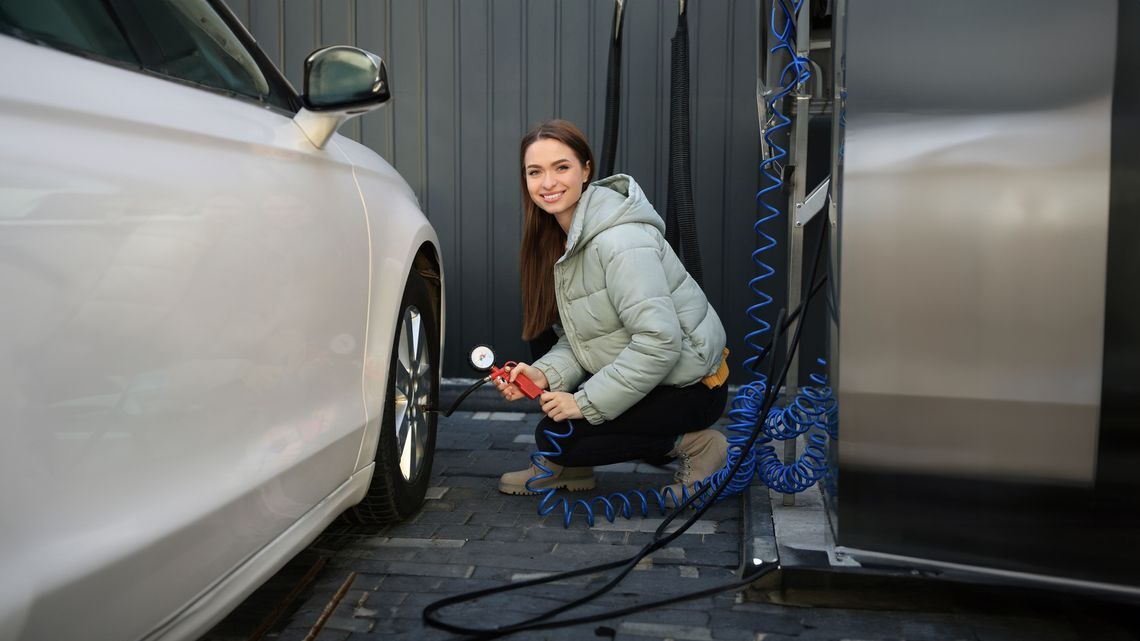
How to Properly Inflate Your Car Tires
Tire inflation is an important factor to ensure your safety and that of your passengers. If your tire pressure is incorrect, it can also impact your vehicle's operating costs through premature tire wear and higher-than-normal fuel consumption.
In this article, you will learn when you should check your tire pressure and how to inflate tires in 3 simple steps. You will see that tire inflation has to be done differently depending on whether your tires are cold or warm and that the spare wheel should also be checked regularly, although not as often as the other tires.
We will also address the question of the portable tire inflation compressor as an alternative to gas stations and help you decide if you should inflate tires with nitrogen.View more -
What tire pressure for my car?
Having the correct recommended tire pressure in your vehicle’s tires not only optimizes the performance but also increases your personal safety and those of other road users when driving.
On the other hand, incorrect tire pressure will reduce the grip of your tires and increase your braking distances. It can also damage your tires, reduce their life span and increase your fuel consumption. Let's take a look at how to avoid these risks and what tire pressure is needed for your vehicle.View more