MICHELIN Energy™ Saver All-Season
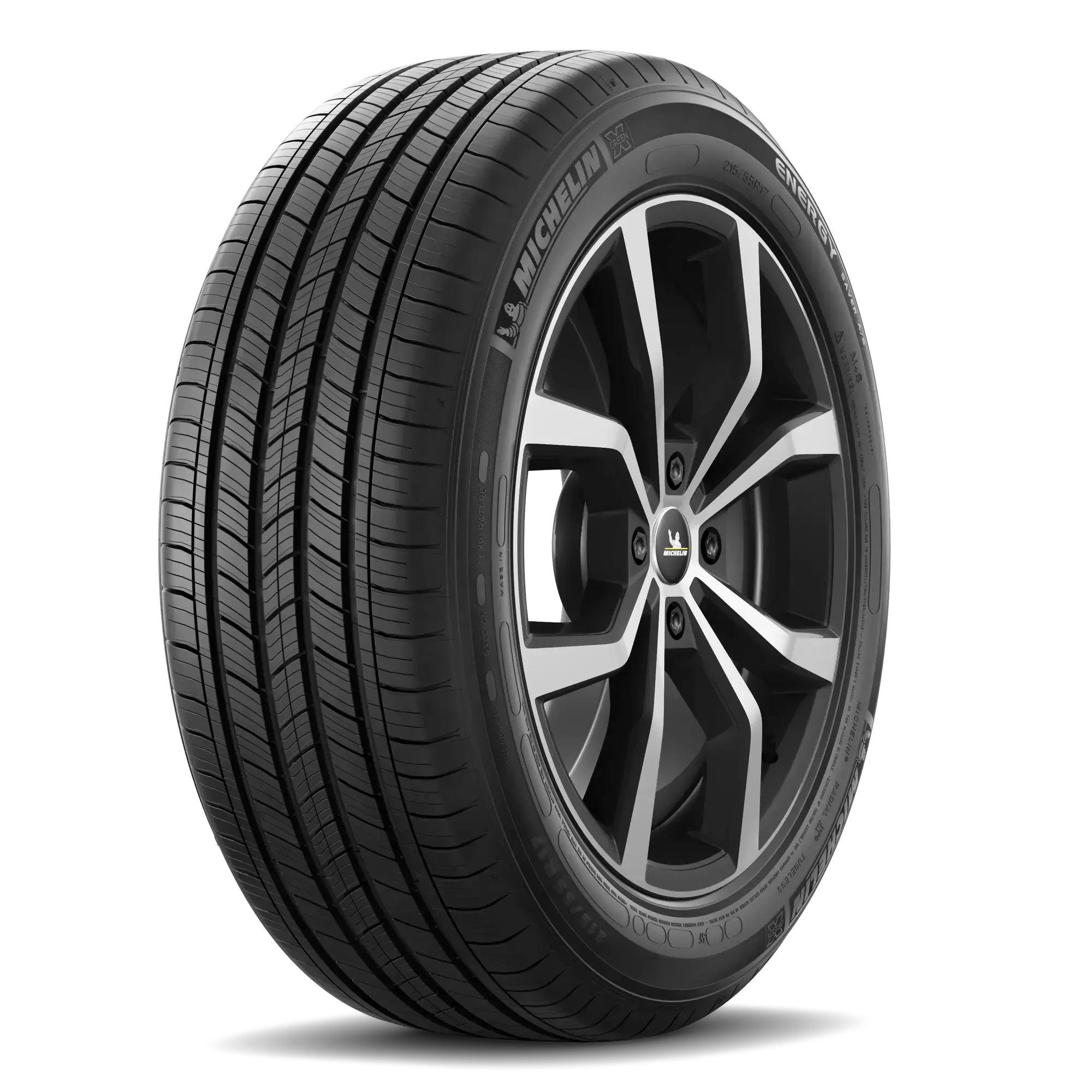
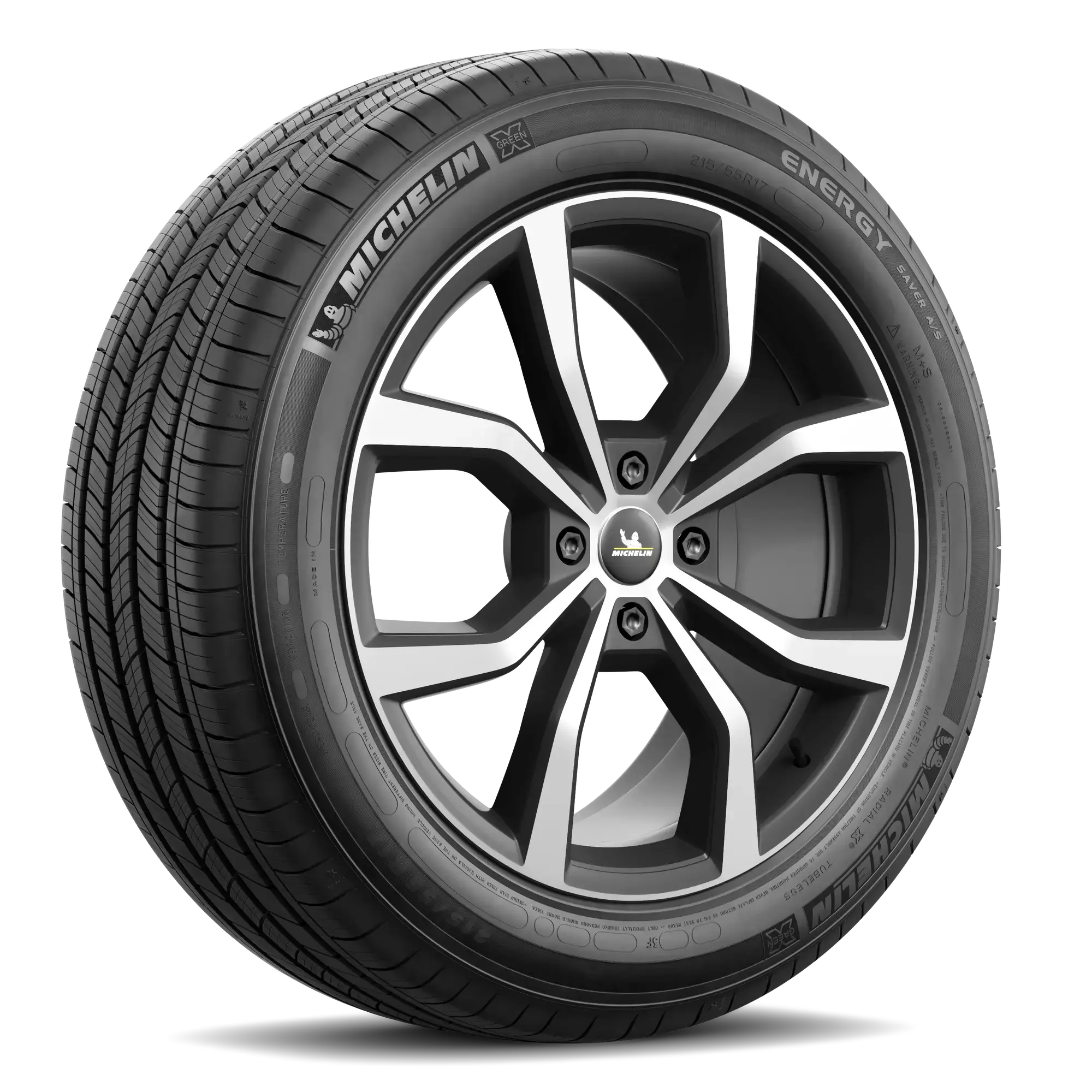
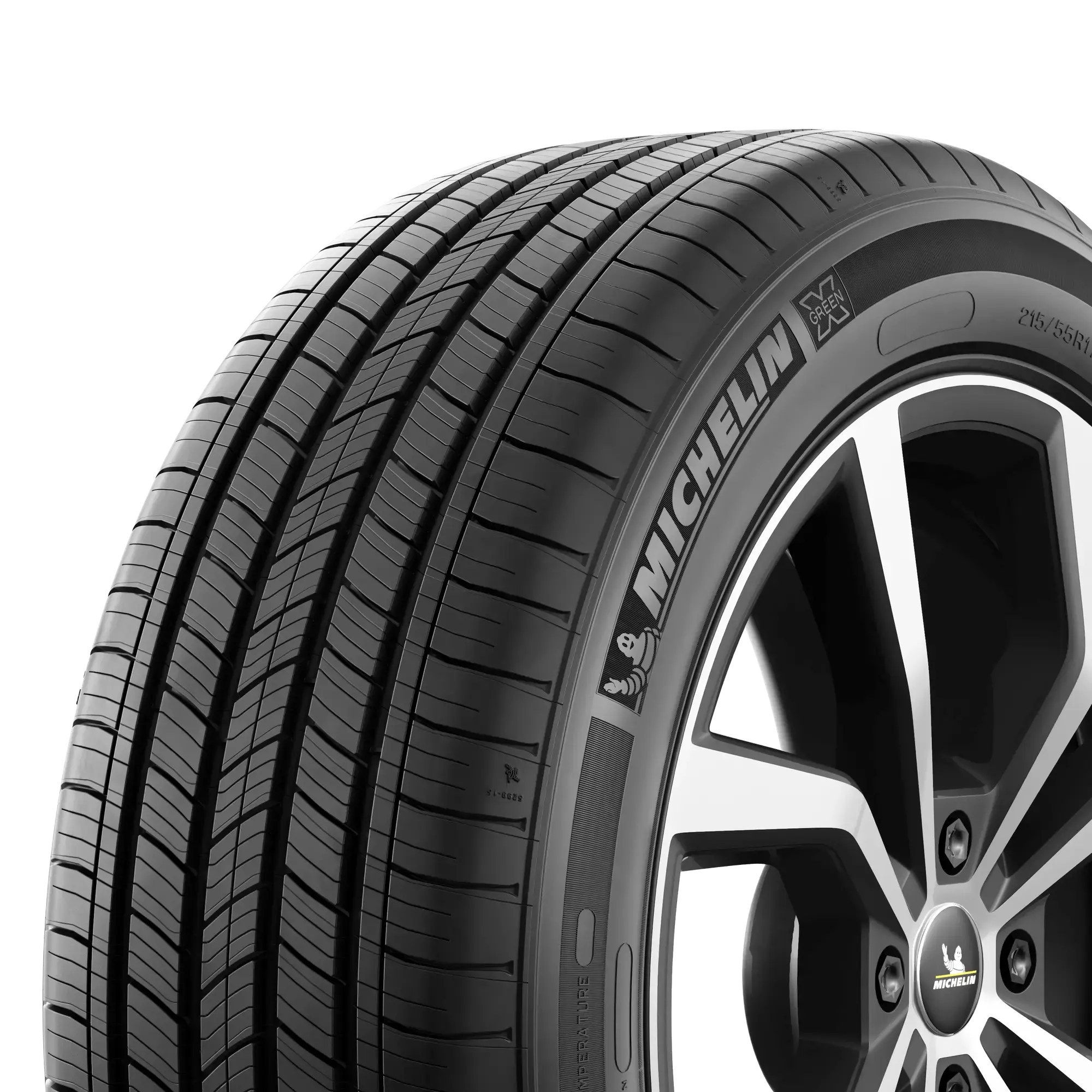
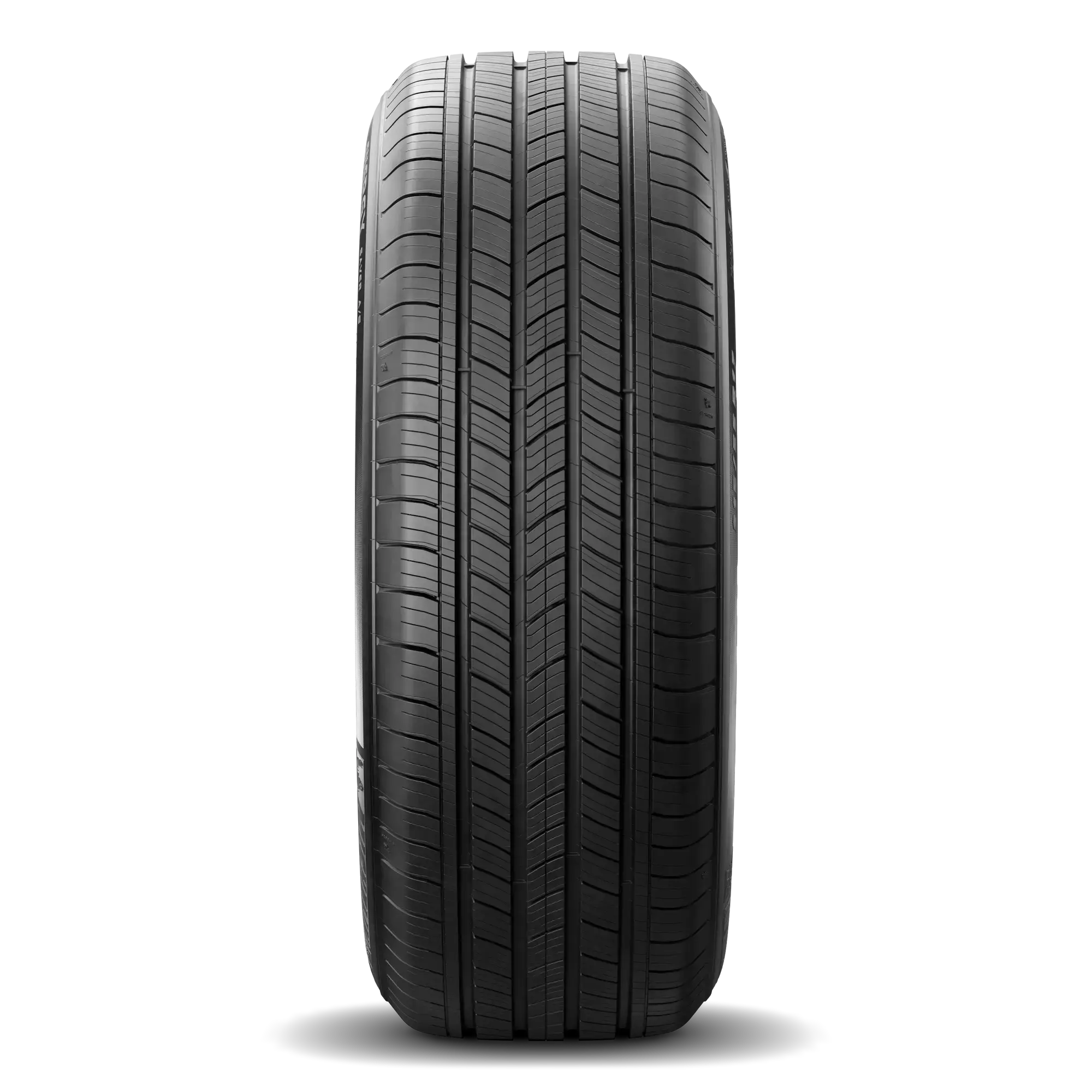
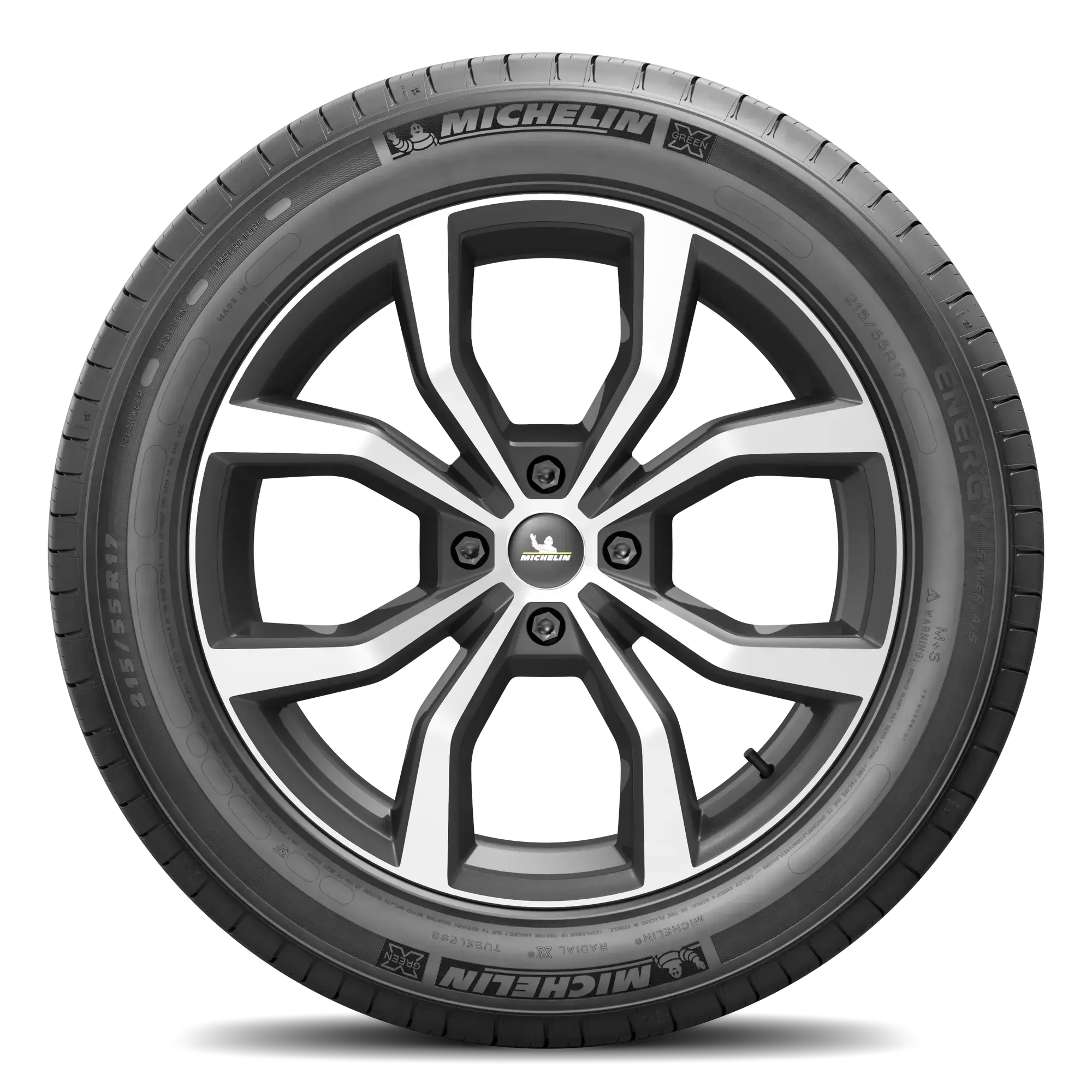
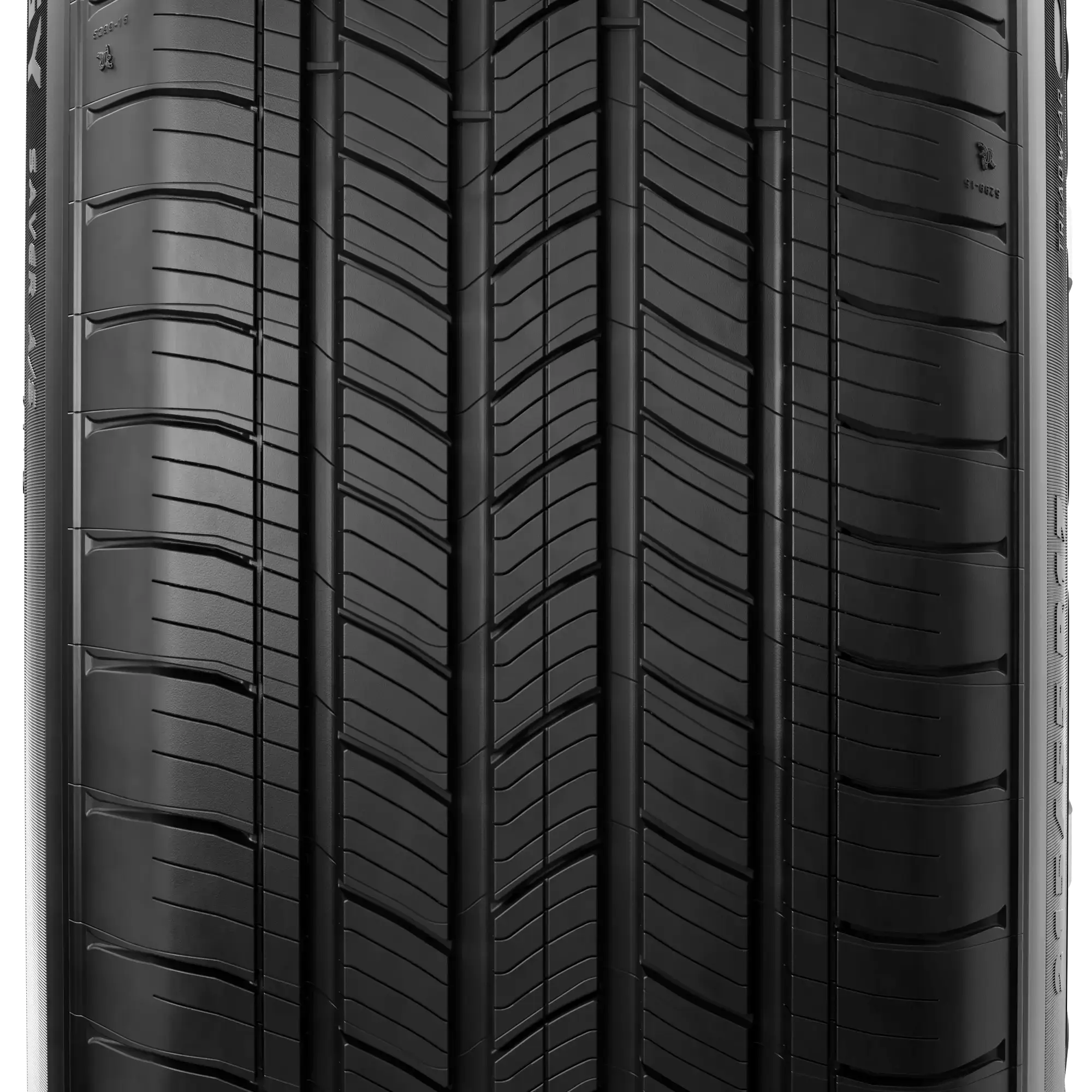
Our ultimate fuel-efficient passenger car tire is ideally suited for drivers looking to maximize fuel economy without compromising long treadlife and all season safety.
- Ultimate Fuel Efficiency
- All-Season Safety
- Long Treadlife
- Standard Limited Warranty: 6 years
- Supported by the Michelin Promise Plan of a 60-day satisfaction guarantee, roadside assistance, and a mileage warranty up to 65,000 miles.
MICHELIN
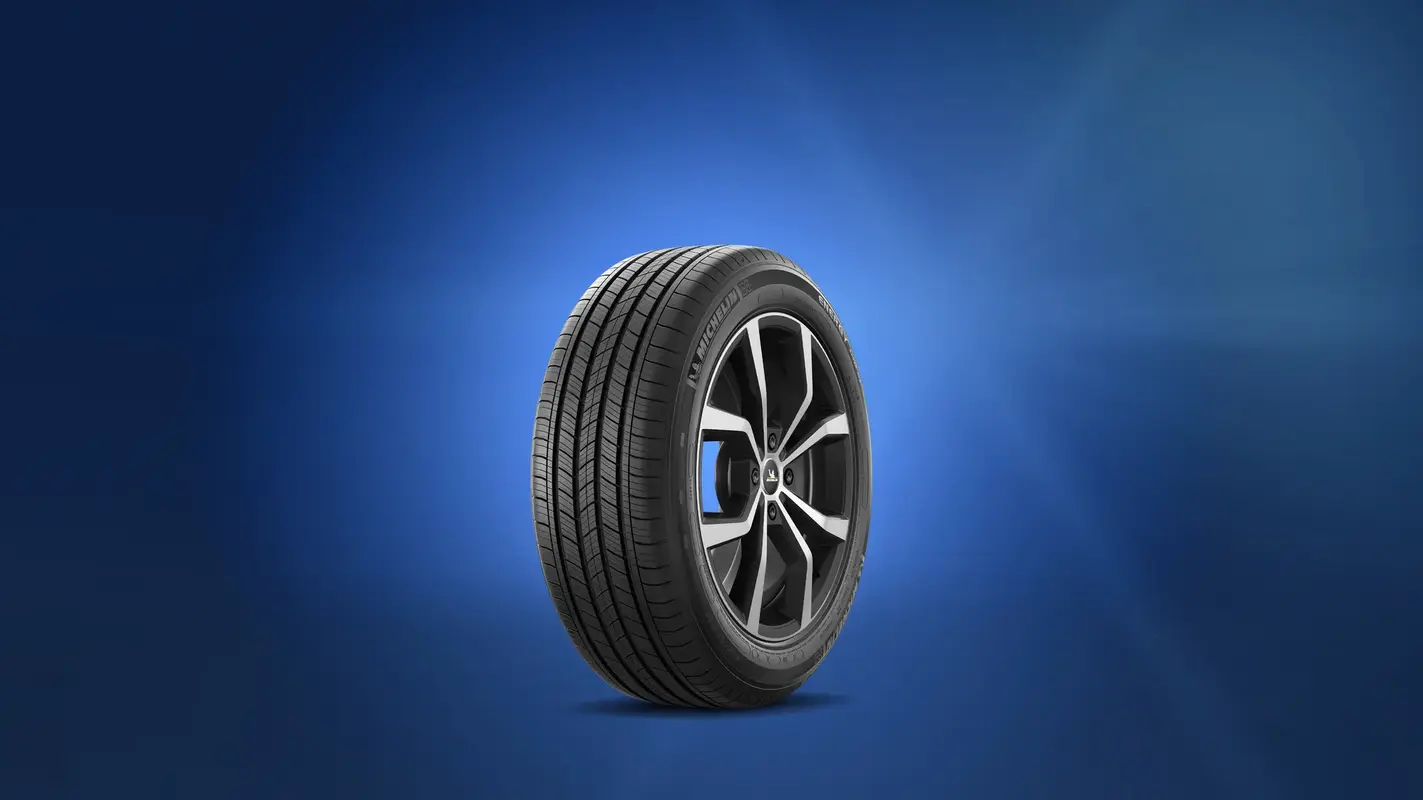
Key benefits for MICHELIN Energy™ Saver All-Season tire
Can save up to 400 USD in Gas Over the Life of Your Tires at 3.75 USD Per Gallon versus a Leading Competitor (1)
EnergySaver Construction,™ combined with a special type of tread rubber, keeps the tire cooler — helping your engine improve fuel efficiency and reduce CO2 emissions.
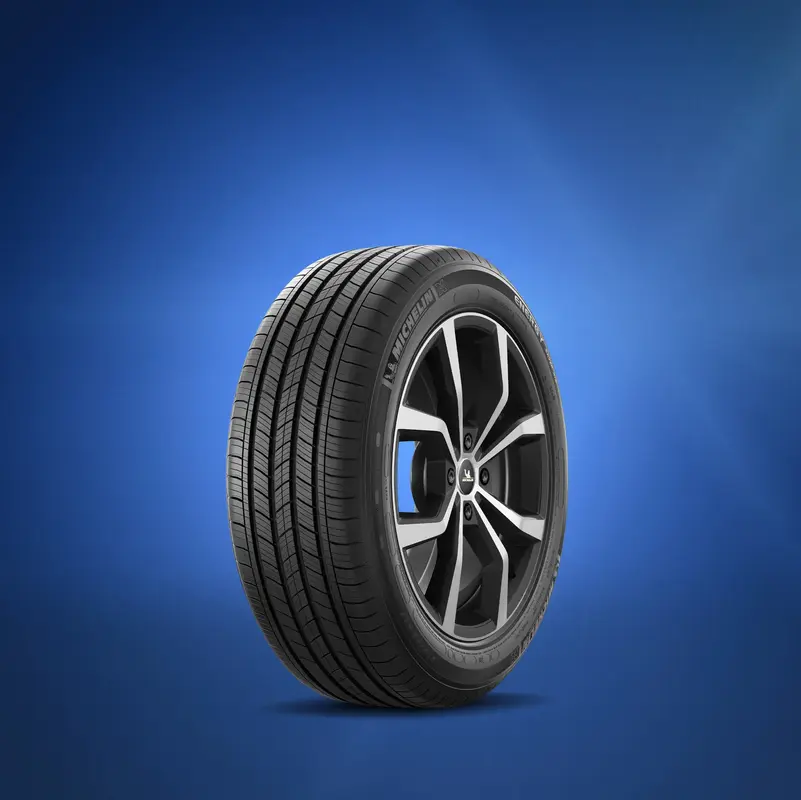
MICHELIN Energy™ Saver All-Season Warranties
We've got your back. A promise of this magnitude can only come from Michelin.
We want you to be 100% satisfied with your Michelin replacement passenger or light truck tires so they are backed by the Michelin Promise Plan™.
The Michelin Promise Plan™ includes the following benefits: 60-Day Satisfaction Guarantee, Roadside Assistance, Manufacturer's Limited Warranty & Treadwear Warranty.
Discover more 
Energy™ Saver All-Season TIRE REVIEW
There are 576 reviews for the Energy™ Saver All-Season

Rating Snapshot
When asked, 76% of reviewers recommend this tire
For any matter regarding customer service (in-store experience, after-sales service, delivery, etc.) please contact our Consumer Care team
Review Summary
Customers praise fuel efficiency gains of 1.5 to 2 MPG and smooth, quiet rides with improved rain grip and responsive handling. Many report exceptional longevity, though some experience premature tread wear below advertised expectations. A smaller group notes reliability concerns including unexpected flats and sidewall failures. Overall, most customers find the combination of fuel savings and comfort outweighs durability inconsistencies, making them a solid choice despite mixed tread life experiences.
AI-generated from the text of customer reviews
1-5 on 576 reviews

Posted on August 7, 2026 by Deere88
Collected by Bazaarvoice
These tires are not as good as the ones they replaced. Theoretically they’re the same tire, but they’re not. The new tires have a “b” rating where the previous ones were “a.” Also, these tires have more road noise than the previous tires. Even my Michelin dealer didn’t know that these tires were not the same until I pointed it out to them. Overall disappointing. But hopefully still retain the Michelin quality.
Vehicle Make: Nissan Leaf
Purchase date: 10/17/25
We're sorry to hear the Energy Saver All Season tires did not perform as well compared to your previous set. We appreciate you sharing these observations, as feedback like yours helps us continue to evaluate and improve our products. If you'd like to discuss your experience further, please contact our Consumer Care team at 866-866-6605 (Mon-Fri 8 AM-7 PM EST, Sat 9 AM-1 PM EST).
Michelin US
August 26, 2026
Posted on August 2, 2026 by Golf Pro
Collected by Bazaarvoice
Outer rubber ring, looks ridiculous!
I used to think of this company as quality, but my tires look ridiculous. I have on all 4 tires an outer ring of leftover rubber, I guess from when it came out of the mold. While this doesn't hurt performance, it looks absolutely ridiculous. The tires came with my new car, so I'm stuck. My beautiful looking car has this big eyesore. When I'm in a big parking lot, I look at tires, see many Goodyear tires, and never see this. Stay away, far away.
Vehicle Make: Honda Accord
Purchase date: 12/11/25
We're sorry to hear you're disappointed with the appearance of your Energy Saver All Season tires. The rubber ring you're describing is a normal result of the tire manufacturing process and does not affect tire performance, safety, or durability. We understand that appearance is important, and we appreciate you sharing your concerns. If you have additional questions, please contact Michelin Consumer Care at 866-866-6605 (Mon-Fri 8 AM-7 PM EST, Sat 9 AM-1 PM EST).
Michelin US
August 10, 2026
Posted on July 1, 2026 by ShreddyBoo
Collected by Bazaarvoice
Works for me.
Design
Safety
Performance
Vehicle Make: Chevrolet Bolt EV
Purchase date: 10/31/25
Posted on June 30, 2026 by Astérix
Collected by Bazaarvoice
Excellent produit!
J'aime beaucoup les pneus Energy Saver achetés au tout début d'avril. Très bonne douceur de roulement. Après tout de même quelques milliers de km, je n'observe aucune trace d'usure. Des pneus à recommander!
Posted on: michelin.com
Posted on June 24, 2026 by ShredBetty
Collected by Bazaarvoice
Useless "Self-Seal" Technology -- $1800 out the window!
My used 2023 Chevy Bolt EUV came with this brand of tire, Michelin Energy Saver A/S Self-Seal. Chevy puts them on stock. But after only 24,000 miles on the odometer, these tires were in need of a change as the tread was down to 3/8 on the dealership's assessment. The reason I went in to check the tires at all was a flat on one of the tires due to a nail puncture. It went solid flat overnight. Had to get a tow to the dealership. So much for the self-seal. Chevy does not include spare tires anymore, instead they give you self-sealing Michelin Energy Savers which are supposed to eliminate the need for spares as they are promised to handle punctures and keep working fine. Look at the marketing claims on this page. The irritating thing is that these are designed to self-seal. But this tire didn't self-seal the puncture. Not only didn't it self-seal, but the sealant made it impossible (according to the dealership and Michelin guidelines) to patch the puncture. So, with low remaining tread on the other 3 tires, replacing one tire would mean one is running on 8/8 tread while the others would be running on 3/8 tread, not good. So I invested $1480 in 4 new tires and, given that there is no place in the vehicle to hold a spare, I got the self-sealing Michelins again. I had faith....and they do generally ride nicely. Fast forward to today -- one month and one day after my $1480 investment in 4 new tires -- when my Bolt is yet again in the dealership with yet another puncture that the self-sealant did not seal. I mean seriously? I get it when the tread is low (the original ties were only 3/8 so a nail might go deep enough to break the inner sealant layer, but these are brand flipping new tires, less than 1000 miles on them, and one month and one day from "investing" in the new tires. Another puncture, another failure of the self-seal design, and another $360 for another brand new tire, because, again, these cannot be patched. So, in part, my bad luck for hitting two different nails exactly right that they puncture my tires, but seriously, what good is the self-seal technology if it does not actually seal. Rather than paying the cost of what could have been one puncture repair -- about $60 at a tire shop -- or two puncture repairs -- $120 total -- I have spent $1840 and am in the same spot. Well, to be fair, I do have 4 new tires -- I was not planning for -- and the ride is very nice with these tires. But come on. Honestly, I would have preferred -- had I known then what I know now -- to go with a new set of regular -- not self-seal -- tires and been able to use the puncture repair option down the road. Also, I would have preferred not to have spent $1480 a month ago unexpectantly. I would absolutely have preferred not to add another $360 today. Thankfully, the dealership did not charge anything for the replacement labor. Assuming these tires last long enough *as a set* to get to a point where it's necessary to replace all 4, I will not be replacing them with these Michelins, which is unfortunate, because they ride really nicely and increase my mileage rate... when they're not failing. I'm sorry but this is completely unacceptable. Just completely unacceptable.
Design
Safety
Performance
Vehicle Make: Chevrolet Bolt EUV
Purchase date: 05/22/26
Thank you for sharing your detailed experience. We are sorry to hear about the punctures and the frustration and expense you've encountered. We understand how disappointing it is when the tire does not perform as expected. We'd like the opportunity to review this further. Please give our Consumer Care team a call at 866-866-6605 (Mon–Fri 8 AM–7 PM EST, Sat 9 AM–1 PM EST).
Michelin US
June 30, 2026
Legal Mentions
1 Based upon rolling resistance testing versus Bridgestone® Turanza® EL400, P185/65R15 size tire. Fuel savings are estimates only. Actual on-road savings may vary.2 Based on third-party wear test results versus Bridgestone® Ecopia EP100, P185/65R15 size tire.3 Based on internal wet braking test results versus Bridgestone® Ecopia EP100, P185/65R15 size tire.4 Based on third party wet braking test results versus Bridgestone® Ecopia EP100, P185/65R15 size tires.
H-Speed Rated Sizes:
V-Speed Rated Sizes:
OE Code [Original Equipment Key]: FOR = Ford, CHR = Chrysler, HON = Honda, TOY = Toyota, NIS = Nissan, GM = General Motors, HYN = Hyundai, KIA = Kia
>> The sizes shown are average design values for tires measured on specified measuring rim widths. Some tires may vary from this value by +/-3% of the section height (affecting overall diameter), and +/-4% of the section width.
>> Section width varies approximately 0.2" (5mm) for every 0.5" change in rim width.
>> Tread patterns are often tuned to accomodate different tire widths. Tires for a particular dimension of a given tireline may vary in appearance from the tire shown in the photograph.
WARNING: Serious or fatal injury may result from tire failure due to underinflation or overloading. To ensure correct air pressure and vehicle load, refer to vehicle owner's manual or tire information placard on the vehicle. Serious injury or death may result from explosion of tire/rim assembly due to improper mounting. Only tire professionals should mount tires and they should never inflate beyond 40 psi to seat the beads. Before mixing types of tires in any configuration on any vehicle, be sure to check the vehicle owner's manual for its recommendations.
DANGER: Never mount a 16" diameter tire on a 16.5" rim.
Inflation pressure increase must not exceed the maximum pressure branded on the tire sidewall. When a customer requests a replacement tire with a lower speed rating than the original equipment tire, you must clearly communicate to him or her that the handling of the vehicle may be different, and that its maximum speed capability is limited to that of the lowest speed-rated tire on the vehicle. Exceeding the lawful speed limit is neither recommended nor endorsed.
For high-speed driving, additional inflation pressure and possibly reduced tire loading and/or upsizing is required. In the absence of specific recommendations by the vehicle manufacturer, use the following guidelines based on those in the European Tyre and Rim Technical Organization Standards Manual.
For speeds over 160mph (100 mph), load and inflation must be adjusted according to the table below.
T-Speed Rated Sizes:
| Maximum Speed (mph) | 100 | 106 | 112 | 118 |
| Inflation Increase (psi) | 0.0 | 1.0 | 2.0 | 3.0 |
| Load Capacity (% of max.) | 100 | 100 | 100 | 100 |
| Maximum Speed (mph) | 100 | 106 | 112 | 118 | 124 | 130 |
| Inflation Increase (psi) | 0 | 1 | 2 | 3 | 4 | 5 |
| Load Capacity (% of max.) | 100 | 100 | 100 | 100 | 100 | 100 |
| Maximum Speed (mph) | 100 | 106 | 112 | 118 | 124 | 130 | 136 | 143 | 149 |
| Inflation Increase (psi) | 0 | 1 | 2 | 3 | 4 | 5 | 5 | 5 | 5 |
| Load Capacity (% of max.) | 100 | 100 | 100 | 100 | 100 | 100 | 97 | 94 | 91 |
The images presented are provided for reference purposes only and do not constitute a contractual representation. They are used for illustration purposes and do not guarantee the exact conformity of the products or services offered.