Speed rating
The speed rating code indicates the maximum speed at which a tire can carry the load indicated by its load index under the conditions of use specified by the manufacturer.
Warning! Do not ride at speeds faster than the speed rating of your tires. Never exceed the legal speed limit or speeds reasonable for the riding conditions.
Load index
This is a numerical code that indicates the maximum load that a tire can carry at the speed indicated by its speed index in the conditions of use specified by the manufacturer.
Warning! Do not ride on overloaded tires. Riding on overloaded tires is dangerous.
FAQ
Read our Frequently Asked Questions.
The speed index (or rating) identifies the maximum sustained speed the tire is designed for when correctly inflated and loaded. Common letters: H = up to 130 mph, V = up to 149 mph, W = up to 168 mph. For speed-rated tires, the tire's maximum speed capability is reduced to that of the lowest-rated tire on the motorcycle. Never fit a tire with a lower speed rating than specified by the motorcycle manufacturer — it limits the vehicle's safe operating speed range in ways that may not be immediately apparent.
The load index is a standardized number representing the maximum weight the tire can carry when correctly inflated. It must equal or exceed the load specification in the owner's manual. The maximum load a motorcycle will carry includes rider, passenger, and luggage — ensure the tire load index covers the maximum loaded condition, not just solo riding. Fitting a tire with insufficient load capacity reduces its safe operating margin under full load.
A higher load index is generally acceptable — it indicates greater structural strength. A higher speed rating is also generally acceptable. However, neither should be assumed automatically safe without checking the owner's manual and confirming compatibility. Some motorcycle frames and suspension systems are calibrated around specific tire characteristics; very different tire specifications can change handling in ways that aren't immediately predictable.
The tire is being operated beyond its design limits. At sustained high speeds, heat builds in the tire faster than the rating allows for. Over time, this heat can degrade the internal structure, increasing the risk of failure. For a motorcycle where the consequences of a tire failure at speed are severe, respecting the speed rating is a more critical safety consideration than on a car.
Carrying a heavier load — two riders, luggage, additional equipment — compresses the tire more with each rotation and requires higher inflation pressure to maintain the correct operating profile. Most motorcycle manufacturers specify different inflation pressures for solo and two-up riding. Check the owner's manual and adjust pressure accordingly before any ride involving the maximum load the motorcycle will carry. Riding with a heavy load on solo pressure causes underinflation with the load applied.
The owner's manual is the definitive source. The motorcycle's information plate or frame sticker may also list the required specifications. The tire currently fitted to the bike shows its own speed and load ratings on the sidewall — these should match the manufacturer's specification. If you're uncertain or the current tires don't match the spec, an authorized Michelin dealer can confirm the correct tire requirements for your specific model.
Related articles
-
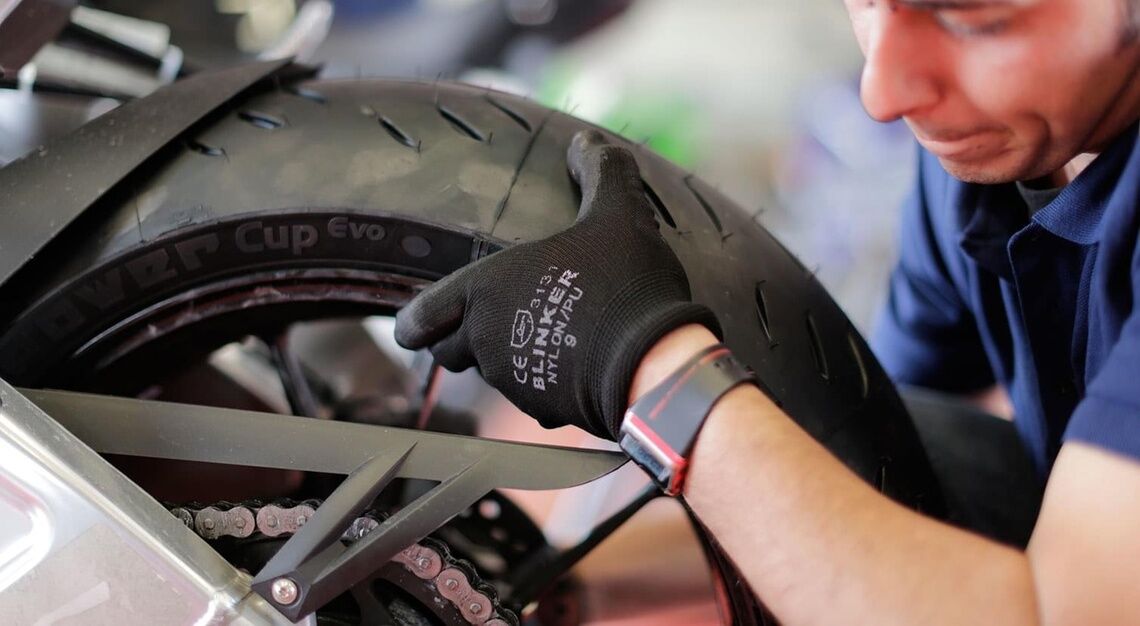
How do I read a tire size?
Your tire sidewall tells you everything relevant to safe replacement. A marking like 120/70 ZR17 58W tells you: 120mm wide, 70 aspect ratio, Z speed category (very high speed), radial construction, 17-inch rim, load index 58, and W confirmed speed rating. The four-digit DOT date code at the end of the sidewall shows when the tire was manufactured: the first two digits are the week, the last two are the year.View more -
The right tires for the right usage
A commuter tire is built for durability and wet-weather grip in stop-start conditions. A touring tire prioritizes long tread life and stable highway behavior. A sport tire prioritizes cornering grip and feedback, at the cost of faster wear. An adventure tire balances tarmac and off-road performance across mixed terrain. Fitting a sport tire on a touring bike or a touring tire on a sport bike delivers a worse experience in both performance and value than the correctly matched option.View more -
Radial or bias tires?
In a radial tire, the crown and sidewall behave as distinct zones: the crown stays rigid for grip and stability at speed, while the sidewall remains flexible for comfort and feedback. In a bias tire, the structure is uniform throughout, making it well-suited for cruisers, classic bikes, and applications where load durability matters more than high-speed performance. Never mix radial and bias construction on the same motorcycle: the difference in mechanical behavior creates unpredictable handling in cornering.View more